
Dolpo Nepal: How to Visit the Himalaya Film Region
 Sujata Pokhrel
Dolpo Nepal is often described as one of the last untouched travel destinations in the Himalayas. Tucked away in the far western Nepal, it isn’t your regular Himalayan trail but a world apart from the crowd.
With its dramatic high-altitude terrain, ancient monasteries, and deeply rooted Tibetan-influenced culture, Dolpo is not just a destination but an experience that unfolds slowly, revealing its beauty to those willing to venture off the beaten path.
For travelers seeking something raw and deeply authentic, Dolpo offers an experience that goes far beyond a typical trek; it feels like stepping into a living story. Go through the blog to find the best ways to visit Dolpo Nepal.
Overview of Dolpo, Nepal
Dolpo is one of Nepal’s most remote and least developed regions, known for its rugged terrain and strong Tibetan cultural influence. It lies within the vast expanse of Shey Phoksundo National Park, home to dramatic landscapes and rare wildlife like snow leopards and blue sheep.
What sets Dolpo apart is its isolation. Even today, many villages are only accessible by foot, and modern infrastructure is minimal. This remoteness has helped preserve both the environment and the traditional way of life.
Location
Dolpo is located in northwestern Nepal, bordering Tibet. It is divided into two main regions: Upper Dolpo and Lower Dolpo.
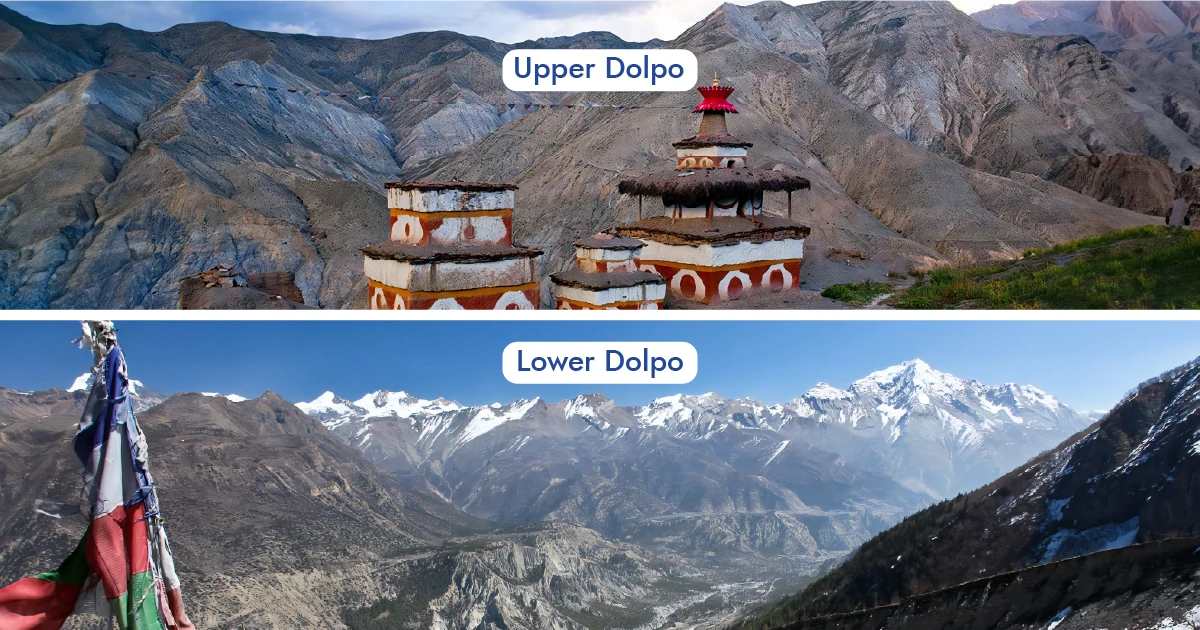
The region sits in a rain-shadow area behind the Dhaulagiri range, which gives it a dry, almost desert-like appearance, quite different from the lush hills found elsewhere in Nepal.
Reasons to Visit Dolpo
Dolpo isn’t for everyone, and that’s exactly its charm. People come here for experiences they simply can’t find elsewhere:
- Vast, untouched Himalayan landscapes
- Deep spiritual atmosphere with centuries-old monasteries
- A rare glimpse into traditional mountain life
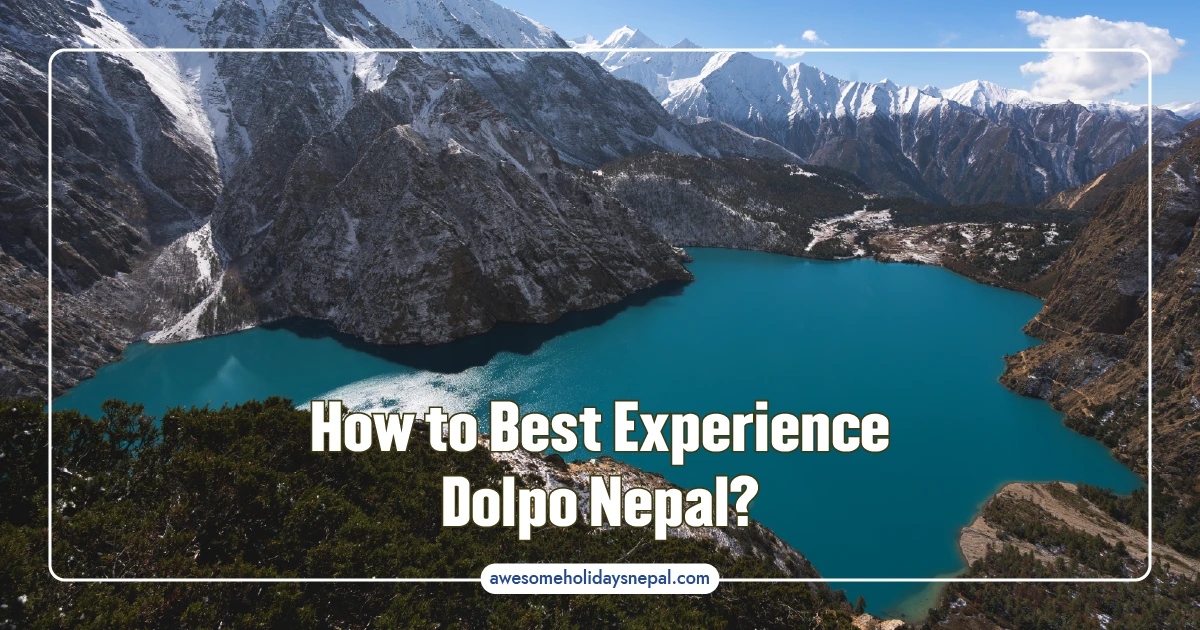
- The stunning beauty of Phoksundo Lake, one of Nepal’s most mesmerizing lakes
It’s a destination that rewards patience and curiosity rather than comfort.
Why is Dolpo Called the “Himalaya Film Region”?
Dolpo gained international recognition through the film Himalaya (Caravan) by Eric Valli. The movie beautifully captured the lives of salt traders navigating the harsh mountain terrain.
Filmed entirely in Dolpo with local villagers as actors, it showcased the region’s dramatic scenery and cultural depth to the world. Since then, Dolpo has often been referred to as the “Himalaya film region,” drawing travelers curious to see the landscapes that felt almost cinematic in their scale and authenticity.
Basics of Trekking to Dolpo Region
Trekking in Dolpo is very different from popular routes like Everest or Annapurna. Trails are longer, facilities are limited, and self-sufficiency is key.
Most treks involve camping rather than staying in teahouses (especially in Upper Dolpo). You need to carry supplies or traveling with a support team and also be aware of long days of walking through remote terrain.
Make sure to get the high-altitude passes and changing weather conditions. It’s less about ticking off viewpoints and more about immersing yourself in the journey.
How to Get to Dolpo?
Reaching Dolpo requires patience and flexibility. The usual route begins from Kathmandu, followed by a flight to Nepalgunj, and then another flight to Juphal.
From Juphal, the trek begins. There are no direct road connections to most parts of Dolpo, which is why trekking remains the primary way to explore the region.
Permits Required for Dolpo
Dolpo, especially Upper Dolpo, is a restricted area, so permits are mandatory. These are regulated by the Nepal Tourism Board.
You’ll typically need Restricted area permit (for Upper Dolpo), a National park entry permit and TIMS card (for trekkers).
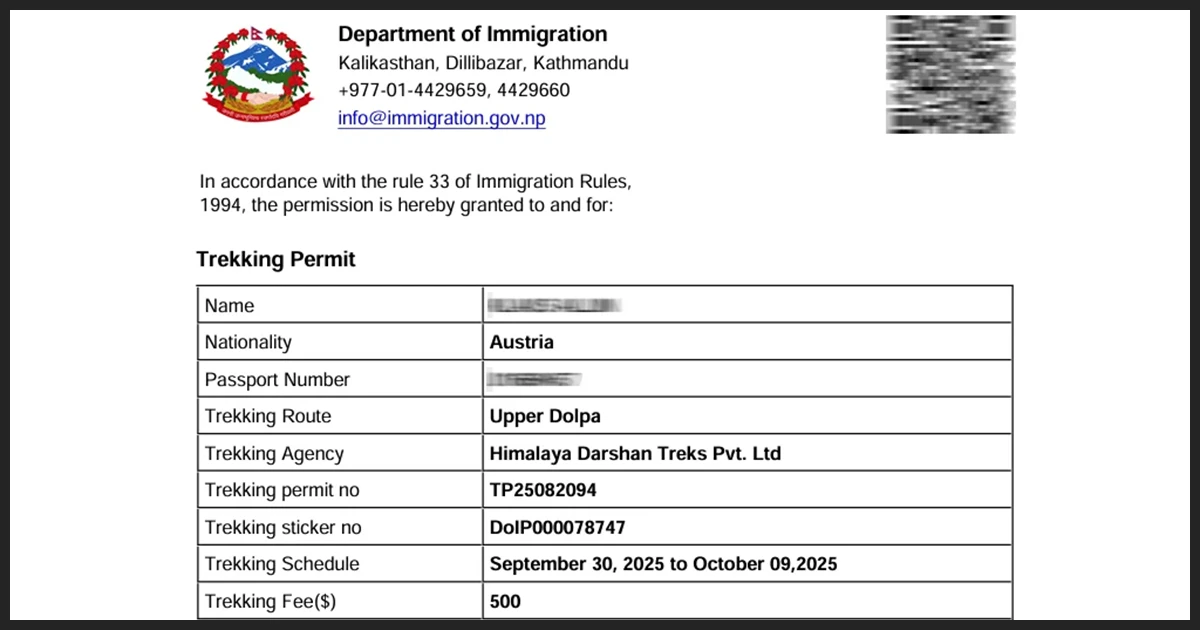
Traveling with a licensed guide is required for restricted areas, and permits can be relatively expensive compared to other trekking regions.
Best Time to Visit Dolpo
The best times to visit Dolpo are spring (April to June) and autumn (September to November). During these seasons, the weather is stable and visibility is excellent.
Interestingly, Dolpo can also be visited during the monsoon months because it lies in a rain-shadow region, meaning it receives much less rainfall than other parts of Nepal.
Food and Accommodation in Dolpo Nepal
In Lower Dolpo, basic teahouses are available, offering simple meals like dal bhat, noodles, and soups. However, in Upper Dolpo, camping is the norm.
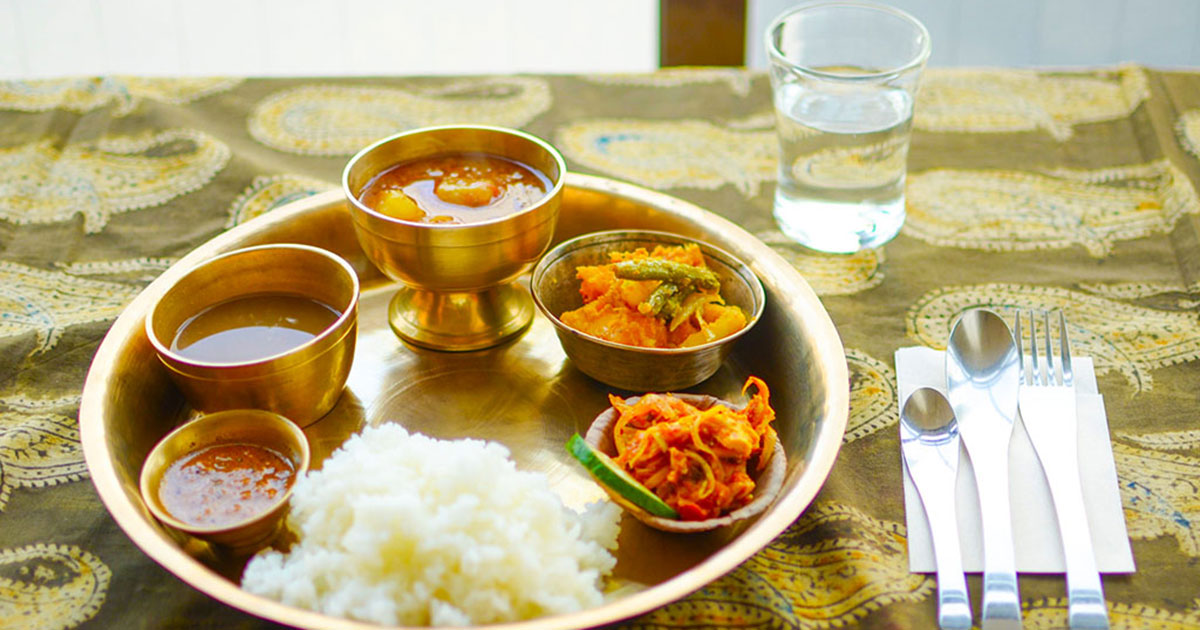
Food is often basic but nourishing, and options are limited due to the region’s remoteness. Supplies are either locally grown or carried in by porters or mules.
Accommodation focuses more on practicality than comfort but that’s part of the experience.
Culture and Lifestyle of Local People
Dolpo’s culture is deeply influenced by Tibetan traditions. Many communities still practice ancient forms of Buddhism alongside the Bon religion, one of the oldest spiritual traditions in the Himalayas.
Life here revolves around farming, herding, and trade. The historic salt trade routes, featured in Himalaya (Caravan) were once vital for survival.
Villages are built from stone, monasteries sit perched on cliffs, and daily life follows rhythms that have remained unchanged for generations.
Popular Treks in Dolpo Region
Dolpo region has a plenty of trekking options for you to give the best adventure experience.
Upper Dolpo Trek
This is the most iconic and challenging trek in the region. It takes you deep into restricted territory, crossing high mountain passes and visiting sacred sites like Shey Gompa.
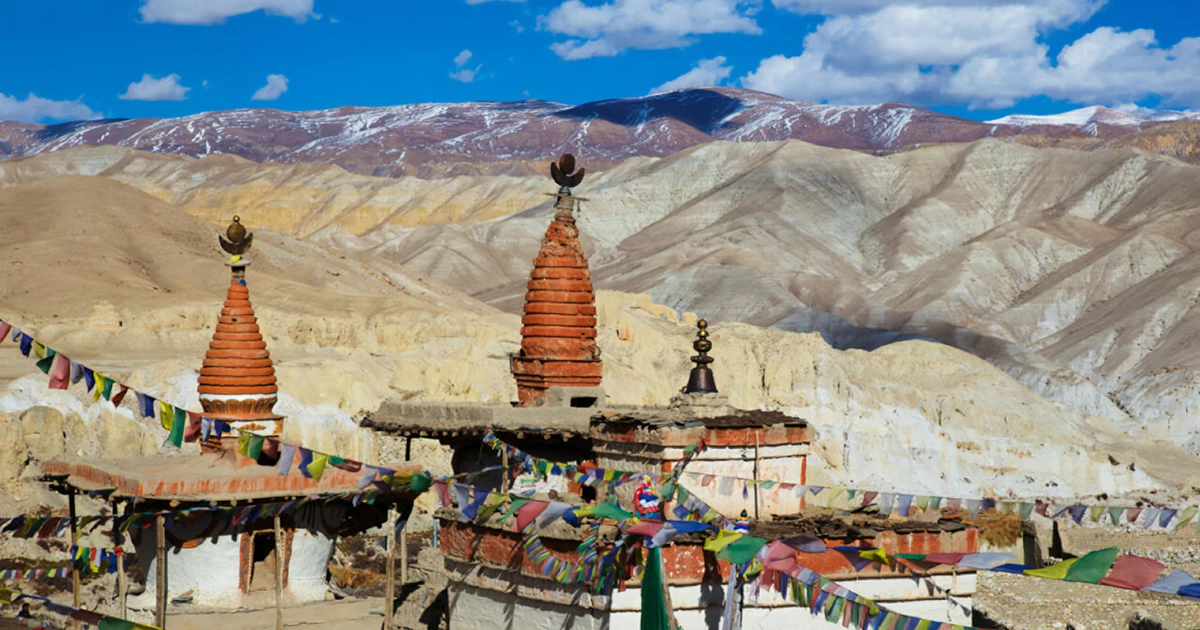
It’s long, remote, and physically demanding but incredibly rewarding.
Shey Phoksundo Trek
Centered around Phoksundo Lake, this trek is one of the more accessible options in Dolpo.
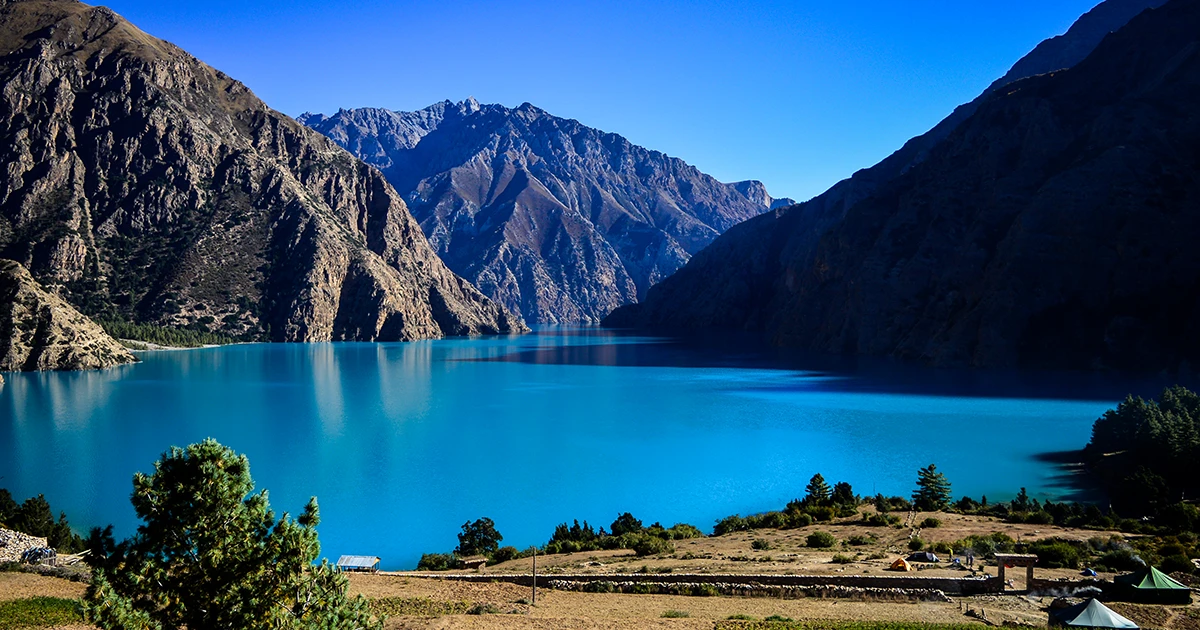
The lake’s deep turquoise color, set against barren cliffs, creates one of the most striking landscapes in Nepal.
Lower Dolpo Trek
Lower Dolpo offers a slightly easier introduction to the region. While still remote, it has more developed trails and occasional teahouse options.
It’s a great choice for trekkers who want to experience Dolpo without the full logistical challenges of Upper Dolpo.
A Dreamy Destination
Dolpo isn’t a destination you visit casually it’s a place you commit to. The journey is long, the conditions are demanding, and the comforts are few. But what you gain in return is something rare: a genuine connection to a place that still feels wild, spiritual, and untouched.
For those willing to go the distance, Dolpo reveals a side of the Himalayas that feels almost timeless where landscapes tell stories, and every step brings you closer to a world few have truly experienced.
FAQs
Expand AllWhy is Dolpo linked with the film Himalaya?
Dolpo is directly linked to the film Himalaya (Caravan) because it was shot entirely in this remote region. The film portrays the lives of local salt traders, using real villages and landscapes of Dolpo, which brought global attention to the area.
Is Himalaya the same film as Caravan or Himalaya Caravan?
Yes, they are the same film. It is officially titled Himalaya (Caravan) but is often referred to simply as Himalaya or Caravan in different countries.
Was the film nominated for an Academy Award?
Yes, Himalaya (Caravan) was nominated for the Best Foreign Language Film at the Academy Awards, which significantly boosted international interest in Dolpo.
Where was the film set?
The film was set in the remote villages of Dolpo, particularly in areas that reflect traditional trans-Himalayan trade routes and high-altitude lifestyles.
What is Dolpo known for today?
Today, Dolpo is known for its untouched Himalayan landscapes, strong Tibetan cultural heritage, ancient monasteries, and iconic sites like Phoksundo Lake.
Can travellers actually visit the region behind the film?
Yes, travelers can visit Dolpo, including many filming locations, but access especially to Upper Dolpo, requires special permits and proper planning.
Is Shey Phoksundo Trek in Dolpo?
Yes, the Shey Phoksundo Trek is one of the most popular trekking routes in Dolpo.
Where is Phoksundo Lake?
Phoksundo Lake is located inside Shey Phoksundo National Park in Lower Dolpo, and is famous for its deep turquoise color.
Is Shey-Phoksundo National Park the largest national park in Nepal?
Yes, Shey Phoksundo National Park is the largest national park in the country.
Does the park also have a buffer zone?
Yes, the park includes a designated buffer zone where local communities live and manage resources sustainably.
Is Phoksundo Wetland a Ramsar site?
Yes, the wetland area around Phoksundo Lake is recognized as a Ramsar site, highlighting its global ecological importance.
Is Shey Monastery in Dolpo?
Yes, Shey Monastery (Shey Gompa) is located in Upper Dolpo and is one of the most sacred sites in the region.
Does Dolpo have religious significance beyond scenery?
Absolutely! Dolpo is spiritually important due to its ancient Buddhist and Bon traditions, sacred monasteries, and pilgrimage routes.
Do trekkers need a licensed guide for Upper Dolpo?
Yes, a licensed guide is mandatory for trekking in Upper Dolpo.
Do trekkers also need a guide for Lower Dolpo?
While not always strictly required, hiring a guide is highly recommended due to the remoteness and navigation challenges.
Is TIMS required on Dolpo routes?
Yes, a TIMS (Trekkers’ Information Management System) card is generally required for trekking in Dolpo.
Which Dolpo routes are specifically named under the guide-and-TIMS rule?
Upper Dolpo routes are strictly regulated under restricted area rules, while Lower Dolpo routes typically follow standard trekking regulations, including TIMS.
Can free individual trekkers enter Nepal’s restricted areas on their own?
No, independent trekking is not allowed in restricted areas like Upper Dolpo.
Is there a minimum group requirement in restricted areas?
Yes, at least two trekkers are usually required to obtain a restricted area permit, along with a licensed guide.
Where are restricted-area trekking permits issued?
Permits are issued through registered trekking agencies and regulated by the Nepal Tourism Board and the Department of Immigration.
What is the Upper Dolpo permit fee?
Upper Dolpo permits are among the most expensive in Nepal, typically costing around USD 500 for the first 10 days, with additional daily fees thereafter.
What is the Lower Dolpo permit fee?
Lower Dolpo permits are cheaper, generally around USD 20 per week, depending on the season and regulations.
Do travellers also need a park entry fee for Shey-Phoksundo National Park?
Yes, all visitors must pay an entry fee to enter Shey Phoksundo National Park.
What is the Shey-Phoksundo National Park entry fee for foreign visitors?
Foreign visitors typically pay around NPR 3,000 per person.
What is the park entry fee for SAARC visitors?
SAARC nationals usually pay a reduced fee of around NPR 1,500.
Are children under 10 exempt from the park fee?
Yes, children under 10 years old are generally exempt from the entry fee.
Is Dolpo one of Nepal’s rain-shadow trekking regions?
Yes, Dolpo lies in a rain-shadow zone behind the Himalayas.
Does that make Dolpo more viable during monsoon than wetter southern routes?
Yes, Dolpo receives less rainfall, making it a good alternative for trekking during the monsoon season.
Is a travel visit different from a professional filming permit?
Yes, visiting as a tourist is different from filming. Professional filming requires special permissions.
If someone wants to film professionally in Nepal, which body handles that process?
Professional filming permits are handled by the Nepal Tourism Board along with other government departments.
Are drones automatically allowed in Nepal trekking areas?
No, drones are not automatically allowed. Special permits are required from aviation and government authorities before use.
Related blog posts
Discover a choice of tourist destinations loved by most of our visitors. Whether you're on a jungle safari to spot rare animals or walking through a world heritage site, these well-planned itineraries cover the major highlights of Nepal.

 call an expert at: