
Crampons and Climbing Boots for Nepal Trekking: Complete 2026 Guide
 Sristi Adhikari
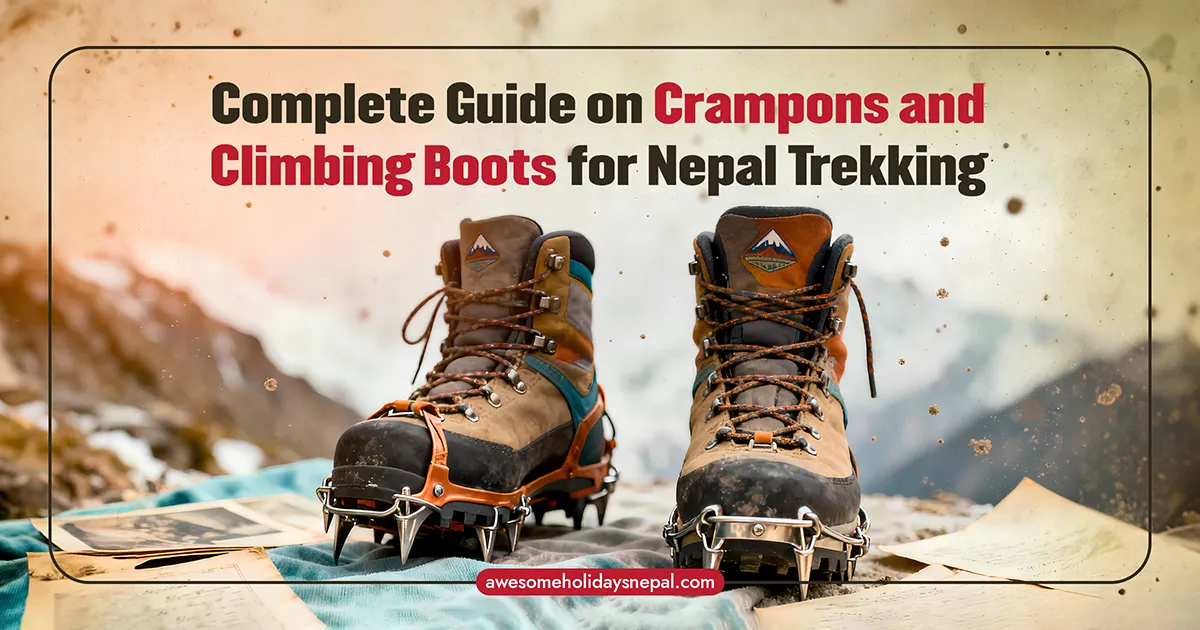
When it comes to serious exploration of the mountain, you must have an idea about the use of Crampons and Climbing Boots for Nepal trekking. The mountain not only tests your lung capacity, but they also test your feet and footgear.
Every step you take in the icy Himalayan landscape, you are filled with risk; one misstep on hidden ice makes your dreams miserable very fast. Having crampons and climbing boots is essential if you plan to trek in Nepal during the winter season or undertake a mountain expedition in 2026.
Whether you are trekking to the base camp of the tallest mountain in the world or stepping onto your very first high altitude mountain peaks like Everest, Annapurna, Lobuche East, Mera Peak, Island Peak, etc., these crampons and Climbing Boots for Nepal Trekking will surely help you choose the right footwear for your Himalayan adventure.
Climbing Boots for Nepal Trekking
Climbing boots for Nepal trekking are the best gear choice for beginner trekkers planning to explore the Himalayas. Nepal’s trekking routes are unique, offering trekkers a range from muddy, stone terrain at low altitudes to snow-covered passes, icy moraines, glaciers, and high-altitude environments where conventional trekking boots fail to perform.
Selecting the right climbing boots for Nepal trekking can determine whether your journey is comfortable and safe, or whether it becomes painful and risky. Whether you are planning the Everest Base Camp trek or trekking to peaks like Island Peak and Mera Peak, the right boots can make the difference.
Everest Base Camp trekking boots must be breathable, waterproof, and have a stiff sole for rocky terrain; they should be well broken in for the trek.
So, you must buy climbing boots for Nepal trekking that provide enough warmth, reliability, stability, and compatibility with crampons, which can handle extreme Himalayan weather conditions and altitudes.
Importance of Proper Climbing Boots in Nepal Trek
There is high importance of climbing boots for Nepal trekking as the terrain is highly variable. Some of the other important aspects of climbing boots in Nepal trekking to the Himalayan terrain are:
- High variety of rocky paths, frozen rivers, steep snow slopes, and glacial crossings in a single adventure.
- It helps in ankle support, which maintains balance with stiffness in the sole.
- Protects the foot from sharp rocks and ice.
- Reduced risk of frostbite and numbness in high altitudes.
- Retain warmth and protect feet from wind and snow.
- Reduce injuries, exhaustion, or forced turnaround of the mountain journey.
Boots: What to Choose for Your Nepal Trek
Trekking and Glacial Travel
If you are planning for non-technical high altitude treks like EBC, ABC, or Manaslu, you don’t need full mountaineering boots. Having climbing boots for Nepal trekking with good ankle support, sole traction, waterproof, and good crampon compatibility is beneficial.
Climbing boots for Nepal trekking are of three categories:
- Single climbing boots: light and suitable for moderate altitude and warm or peak season for EBC trek, ABC trek, etc.
- Insulated single boots: Ideal for high passes and late-season trekking with additional warmth.
- Double boots: Have a removable inner boot, best for extreme cold and expeditions above 6000 meters.
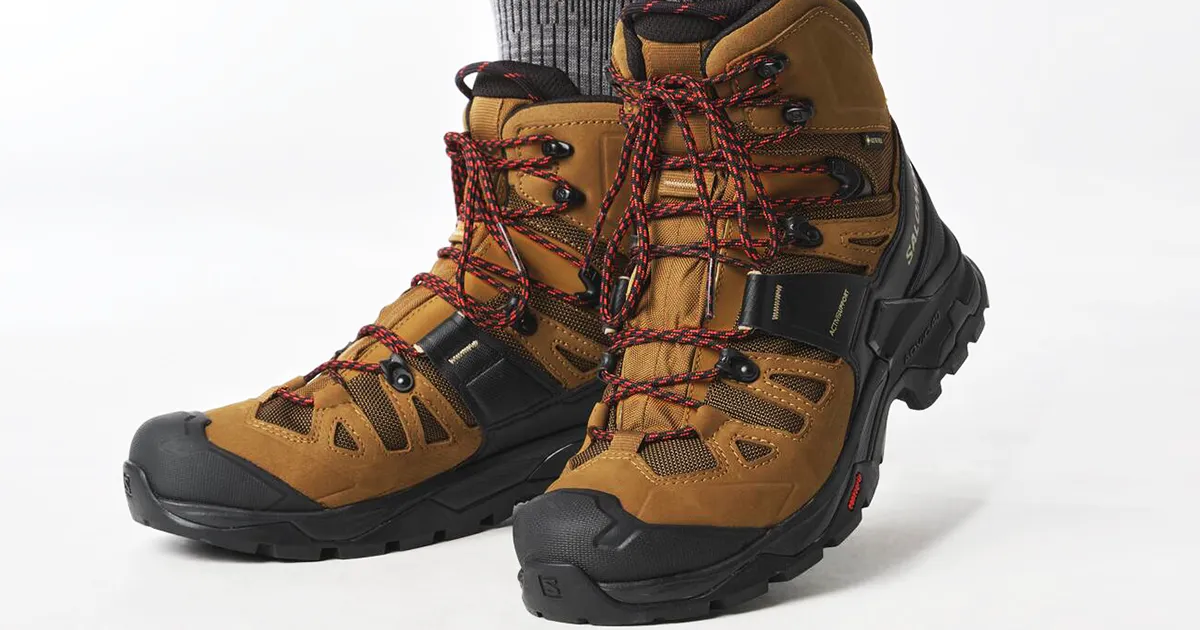
We suggest you buy trekking boots of brands like Salomon Quest 4 GTX, Lowa Renegade GTX Mid.
High-Altitude Peaks and Technical Terrain
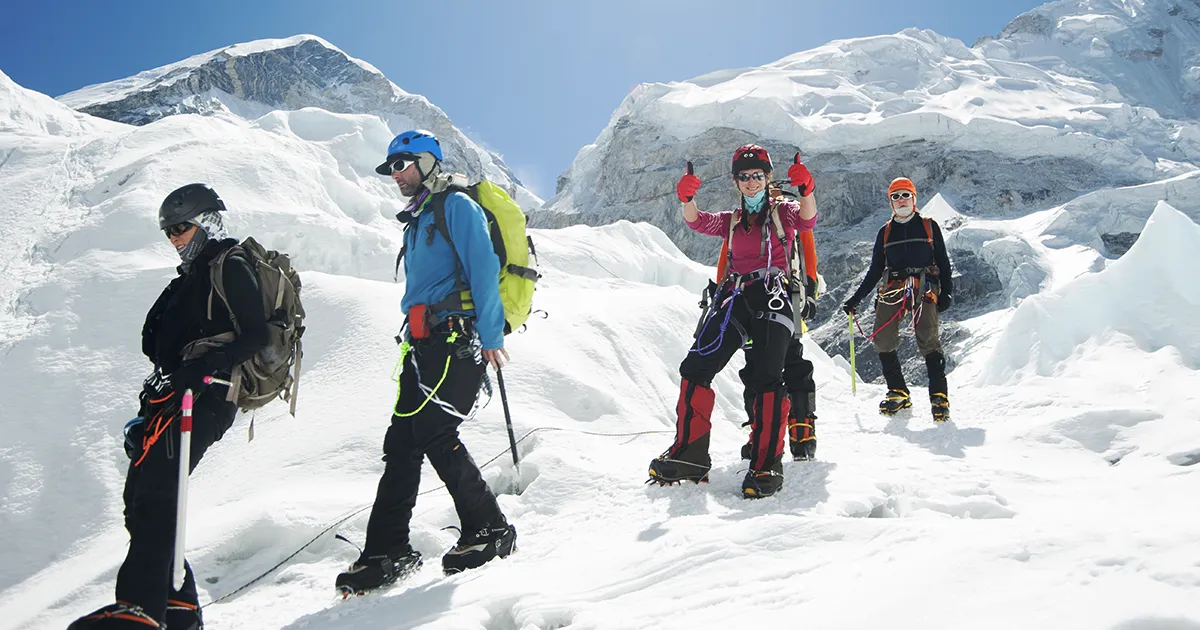
Trekking to Island Peak and Mera Peak are more serious adventure that takes you above an altitude of 5500 meters. So, you should have a stiff mountaineering boot that is designed with warmth at minus temperatures, rigid soles for front pointing with secure step kicking, and compatibility with semi-automatic or automatic crampons.
Buying Men’s Nepal EVO GTX Mountaineering Boots and Scarpa Mont Blanc Pro GTX will make your mountain journey more fruitful, and make sure to add in Nepal trekking gear list 2026.
Trekking Boots Vs Climbing Boots Vs Mountaineering Boots
| Feature | Trekking Boots | Climbing Boots | Mountaineering Boots |
|---|---|---|---|
| Major activity | Suitable for multi-day treks such as EBC and Annapurna Circuit. | Best for Rock/ice climbing moves or for short technical climbing. | High-altitude mountaineering, glaciers, snow, and ice. |
| Terrain | Rocky paths, dirty trails, uneven but firm and defined tracks | Steep rock faces, boulders, and short, steep technical sections | Mixed alpine, snowfields, glaciers, ice, steep rocker scree. |
| Sole stiffness | Moderate | Very flexible and thin | Very stiff, crampon use |
| Insulation | Light to moderate | Very low | High (above 5,000 m) |
| Crampon compatibility | No | No (Requires pairing or special attachments) | Yes |
| Weight | Light-moderate | Lightest | Heaviest |
| Ankle support | Good | Low | Excellent |
| Best for | Longer treks | Technical rock/ice moves, short climbs | Everest/Manaslu/Lhotse style summit attempts and glaciers |
| Comfort for long walking | High | Moderate | Lower |
| Typical use case in Nepal | Annapurna/Everest Base Camp, Langtang Base Camp trek | Technical pitches on rock and ice routes | Summit pushes to Everest, Cho Oyu, glacier travel |
What are Crampons and When it is Required?
Crampons are a piece of footgear that provides traction on snow and icy terrain. They are composed of metal or composite spikes, which is very important if you are trekking in the winter season, or glacial travel, or doing ice climbing, or mountain expeditions.
Crampons make you walk suitably over the icy or snowy, steep, and frozen terrain without any difficulty.
Types of Crampons used in Nepal Trekking and Climbing
C1: Strap On Crampons
It is the oldest style of crampons, which is more flexible and has adjustable straps. It can fit in every trekking boot and is best for snowy or icy treks.
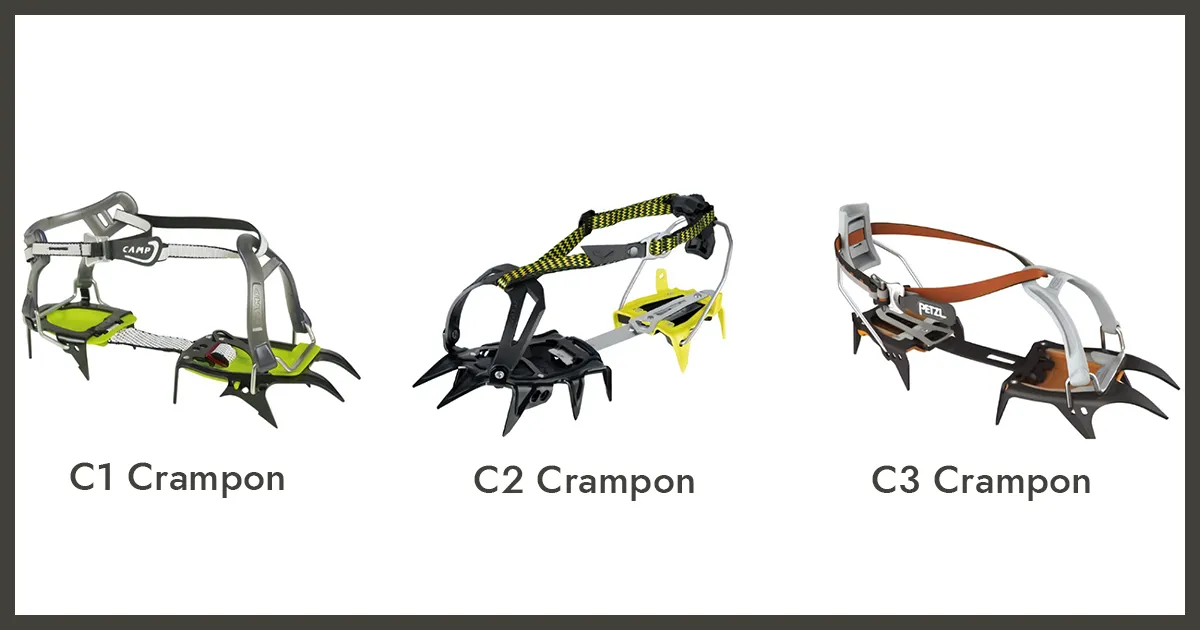
C2: Hybrid Crampons (Semi-Automatic)
It has combined straps and a clip at the heel, which fits boots with a toe welt but a flexible sole. It is best suited for intermediate trekking peaks and moderate mountaineering.
C3: Step In Crampons(Automatic)
These crampons are best suited for high-altitude Nepal peaks like Island Peak and Mera Peak climbing. It is very secure and stable, and it clips directly to rigid mountaineering boots with heel and toe bars.
C3: Technical or Ice Climbing Crampons
These technical or Ice climbing crampons are best for ice climbing routes, vertical couloirs, and mixed rock/ice terrain, such as Ama Dablam technical sections, Lhotse Couloir training. It offers excellent grip on vertical ice, which makes it perfect for crampons for high altitude trekking.
Boot Grading For Crampons
For climbing on snow or ice, boots must be suitable to attach to crampons, and trekkers must buy a proper crampon sizing guide. They are rated based on which crampon types they can accommodate.
Boots Graded B0
Boots rated B0 are not designed to use crampons. Their soles are too flexible, which can cause the crampons to shift or even come loose. Also, there is no sufficient stiffness in the boots above portion, which cannot support the ankle properly and offers zero rigidity.
Boots Graded B1
During the moderate snow and ice conditions, boots rated B1 can be used with strap-on C1 crampons. With stiff soles, it holds crampons securely, and its upper part provides good ankle support and enough rigidity for edging on snow without crampons. These boots are not stiff, and it makes it difficult to walking off the snow.
Boots Graded B2
Boots rated B2 are compatible with C1 or C2 crampons. Since C2 crampons have a rear clip lever, the boots need a protruding heel shelf for the lever to engage properly. B2 boots have stiffer soles than B1 boots, helping to keep crampons secure on moderate mountaineering climbs.
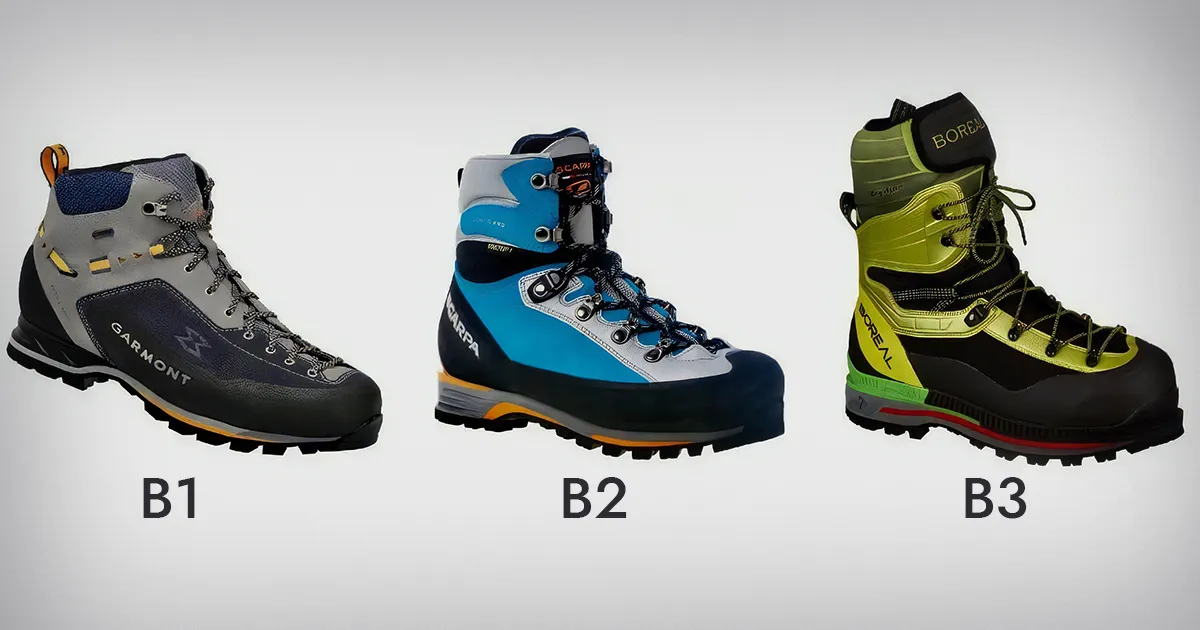
Some B2 models retain enough flexibility for approach walks, though this depends on the materials and construction of the upper.
Boots Graded B3
Boots rated B3 are designed for use with technical C3 crampons. It is full rigid, which allows the crampons to be used on steep or technical climbs. Its front points avoid being loose. B3 boots are usually very stiff and heavily insulated, making them uncomfortable for trekking or approach walks.
Mountaineering Boots Nepal
The boots, which are specially designed for technical climbs and high altitude expedition is called mountaineering boots. It withstands the extreme weather and demanding terrain and is built with crampon compatibility.
The sustainable mountaineering boots have a rigid sole, high-cut design, waterproof and breathable membrane, thermal insulation, and a mountaineering lacing system. Some of the popular brands of insulated mountaineering boots, such as La Sportiva, Scarpa, Lowa, Salewa, Millet, etc. will be the best boots for Island Peak Nepal.
Three types of mountaineering boots are suitable for Nepal :
Single Boots
This type of boot is used for 1-day or lower altitude climbs, and it is very lightweight and has no insulation. It is best for climbing where speed is prioritized. BOA lacing mountaineering boots has a lacing systems which can be use din both single and double boots.
Double Boots
It is best for high altitude climbing, like the Everest summit or Mera Peak climbing. This boot has a removable insulated liner and offers superior warmth in altitude above 6000m.
Super Gaiter Boots
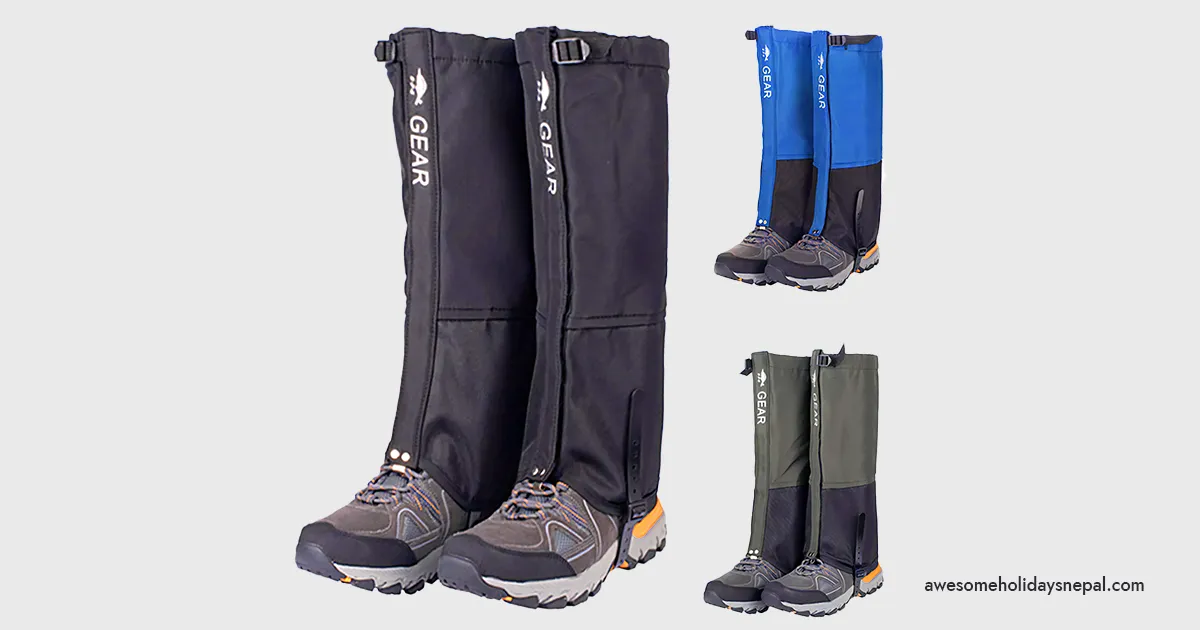
It has a built-in gaiter that protects from slippery snow and is best for technical alpine climbs. The boots offer full insulation and are very light.
Final Thoughts on Choosing the Right Climbing Boots for Nepal Trekking
When you choose proper crampons and climbing boots for Nepal trekking, your journey to the pristine mountain would be safer and more comfortable. The right footwear helps your foots safe from cold, ice, and uneven terrain of lower altitude to high passes of the Himalayas in Nepal.
The right climbing boots for Nepal trekking enhance the stability and performance of the trekkers and help you to focus only on the high altitude adventure rather than stressing over the foot pain or injuries due to improper footwear. If you wear crampons, climbing boots, or mountaineering boots according to the demands of your trek, you will pack only unforgettable journey back home.
You must have a detail knowledge regarding the fit, and crampon-compatible boots, and buy reliable ones before stepping on the trails. If you want to plan your next adventure with us, contact Awesome Holidays Nepal for more details.
FAQs
Expand AllWhat boots do I need for trekking in Nepal?
You will need mid-cut or high-cut hiking boots with waterproof protection and ankle support for trekking in Nepal.
Do I need crampons for Everest Base Camp trek?
Yes, you will need crampons for the Everest Base Camp trek if you are trekking in winter.
What is the difference between B1 B2 B3 boots?
The difference between B1, B2, B3 boots are:
- B1 boots: Flexible, comfortable, and warm enough for winter walking or low-level scrambling, compatible with C1 strap-on crampons
- B2 boots: Moderately stiff with a heel welt, ideal for summer Alpine mountaineering, winter walking, and easy scrambles, compatible with C2 step-in or C1 strap-on crampons.
- B3 boots: Extremely rigid, warm, and often heavy, designed for vertical ice climbing, steep mixed terrain, and high-altitude, cold environments along with the feature of front and rear welts for C3 or C2 crampons.
How to choose crampons for mountaineering?
If you want to choose crampons for mountaineering, you must match the crampon to your boot type and the intended terrain.
Are hiking boots enough for Nepal trek?
Yes, quality, broken-in waterproof hiking boots are enough for the Nepal trek.
How do crampons attach to boots?
Crampons attach to boots byusing a combination of metal toe/heel bails and nylon straps, selected based on the boot’s rigidity and welts.
What crampons fit my boots?
Crampons fit your boot depending on boot stiffness and heel/toe welts.
Can I use trail runners for Annapurna Circuit?
Yes, you can use trail runners for the Annapurna Circuit.
What does crampon compatible boot mean?
Crampon-compatible boots are specially designed footwear that has stiff midsoles (shanks) to securely hold crampons.
How stiff should mountaineering boots be?
Mountaineering boots should be significantly stiffer than hiking boots.
Do I need double boots for Nepal trekking?
Double boots are generally not required for Nepal trekking.
What footwear for three passes trek Nepal?
A robust, waterproof trekking boot with good ankle support and sturdy soles is required for the three passes trek in Nepal.
Can I rent crampons in Kathmandu?
Yes, you can rent crampons in Kathmandu.
Best boots for Mera Peak climb?
La Sportiva G2 EVO/SM, Scarpa Phantom 6000, or La Sportiva Baruntse are the best boots for the Mera Peak climb.
What shoes for Annapurna Base Camp trek?
Waterproof boots with high-cut, solid ankle support and good traction to handle steep, uneven stone steps, mud, and potential snow/ice will be best for the Annapurna Base Camp trek.
How to break in mountaineering boots before Nepal?
Mountaineering boots should be break by wearing them with proper hiking socks around the house, then on short walks/errands, and finally on progressively longer, steep training hikes before using them in Nepal.
Are plastic boots still used for Himalayan climbing?
Yes, plastic boots are still used for Himalayan climbing.
What is the best crampon brand for beginners?
Grivel, Petzl, and Black Diamond are among the best crampon brands for beginners.
Do I need steel or aluminum crampons for Nepal?
You will need a pair of steel 12-point best crampons for Nepal.
How cold rated should boots be for Nepal?
Boots rated with −20°c is best for Nepal.
Related blog posts
Discover a choice of tourist destinations loved by most of our visitors. Whether you're on a jungle safari to spot rare animals or walking through a world heritage site, these well-planned itineraries cover the major highlights of Nepal.



 call an expert at: