
A Safer Way to Everest Expedition? Original Hillary–Tenzing Route
 Sristi Adhikari
Do you know if a safer route to the Mount Everest Expedition is expected to open in the Spring of 2026? A safer alternative to Mount Everest Expedition is the hottest news in mountaineering. The revival of the Everest South Col route, also known as the Hillary-Tenzing route, is the most-awaited historic moment for mountain enthusiasts.
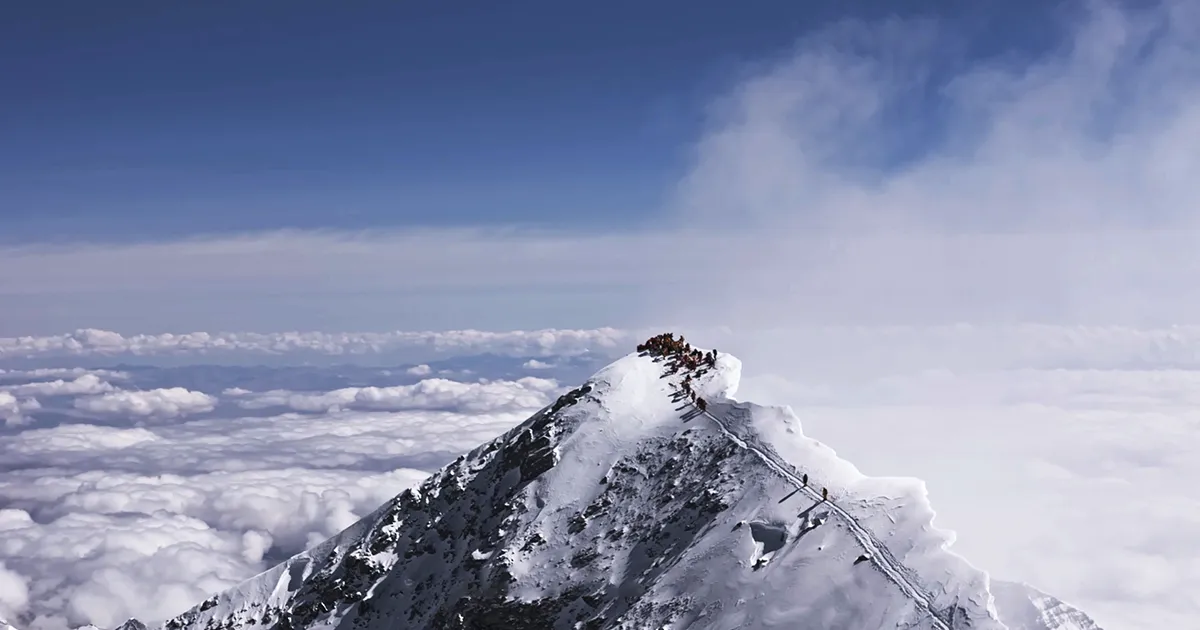
The rising threat on the commercial standard route, such as dangers of the Khumbu Icefall, Icefall collapses, overcrowding, and unstable glaciers, urges a safer, more controlled, and more sustainable alternative for future Everest expeditions. So, the long-forgotten original Hillary–Tenzing path is reigniting hope for a safer and more historic ascent of the world’s highest peak, Mount Everest.
Are you curious about the safest route to the Everest Expedition? Then, continue reading the blog:
Idea of Rediscovery of The Original Hillary-Tenzing Route
Tenzing Norgay and Edmund Hillary were the first people to climb Mount Everest on May 29, 1953. The historic ascent was completed from the Nuptse side. The opening of the deadliest Khumbu Icefall resulted in the closure of the Nuptse route in 1984. The Khumbu Icefall route, which continues up to Camp I, took the lives of many mountaineers, and out of all the deaths, it took the lives of about a quarter.
The frequent icefall and crevasses make the Khumbu Icefall route extremely hazardous. According to Himal Gautam, director of the Tourism Department, the 200-meter new route allows mountaineers to escape the deadliest Khumbu Icefall. This is much safer and more reliable than the Khumbu route.
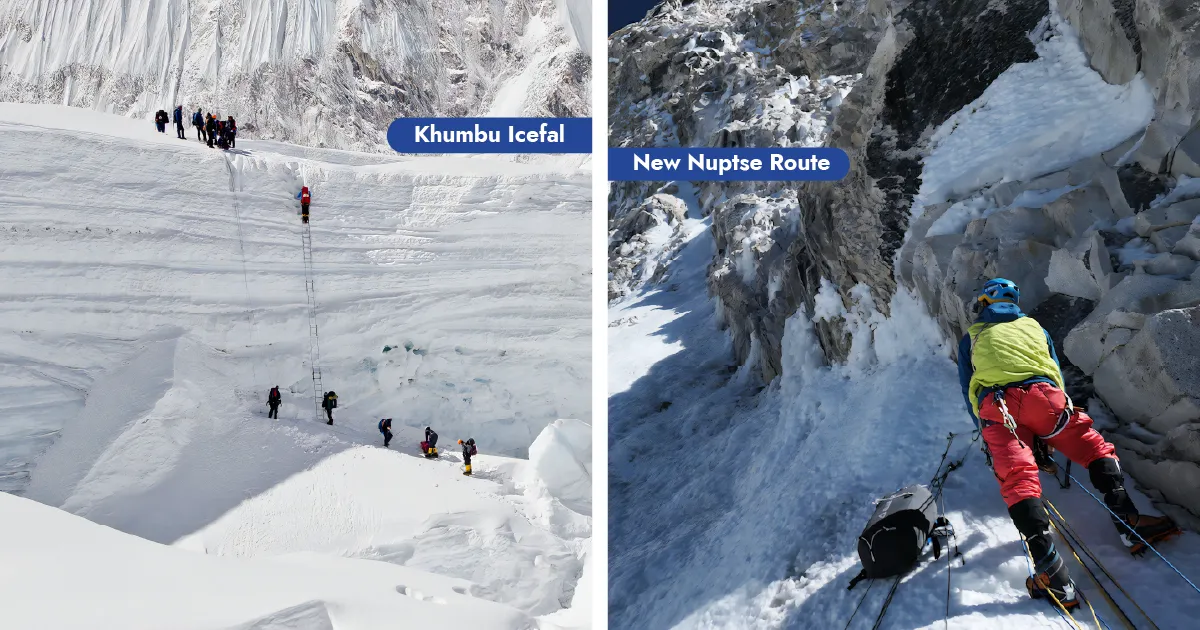
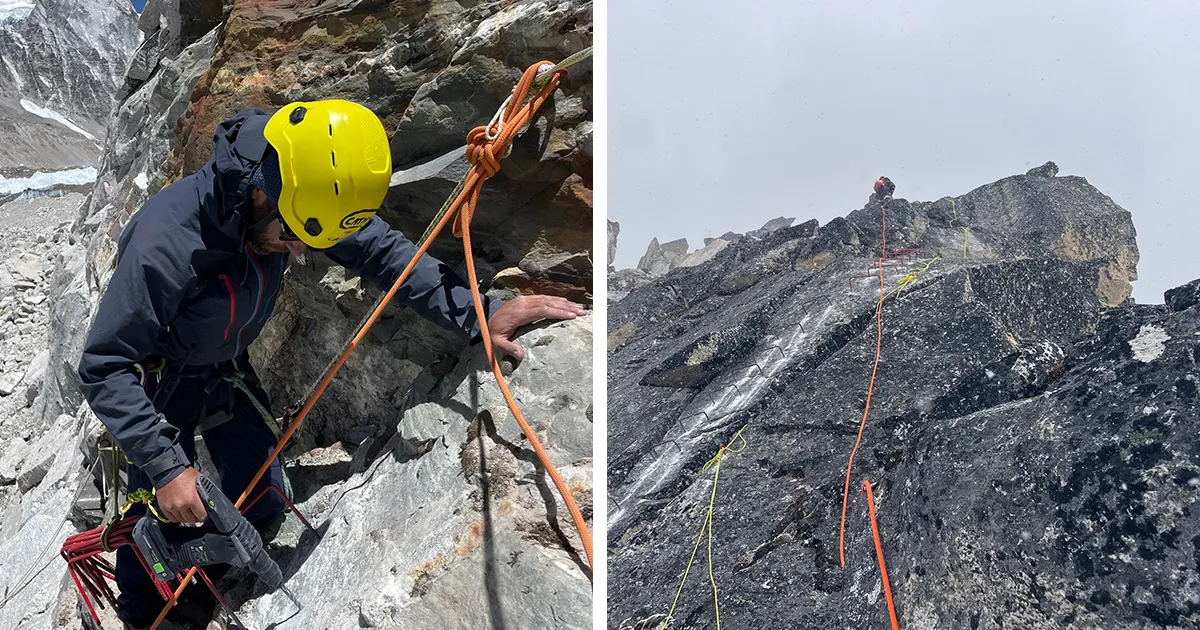
The department of tourism has been working with climber-researcher Kaji Sherpa of Nepal, French climber Marc Batard, and fellow French mountaineer Antoine Erol for the re-opening of the historic route. As of now, about 80 percent of the work is completed, and 20 percent will be completed by March-April. The new base camp is developed at the base of Nuptse without the financial investment from the Government.
The rediscovery and restoration of this historical path credit goes to the ten world-class climbers who have been working for more than three years. According to the researcher Kaji Sherpa, the reopening of this Nuptse route is not just a climbing route but a rebirth of Nepal’s history, pride, and identity. This success behind this project goes to local communities, Nepali and foreign climbers, international donors, and the government.
The Federal Government Approval
The Federal Government granted permission to Kaji Sherpa and Marc Batard’s team to reopen the route on January 5, 2025. They received the reopening of the Everest Climbing permit from the Department of Tourism for the trail extension up to 6,100 meters. The new Everest Expedition trail reopening will make it less crowded, quieter, and free from pollution in the expedition season. This new Everest climbing route is constructed with technical standards and follows the safety protocols.
Collaboration Between Local and International Parties
The reopening of historic Hillary-Tenzing routes was done in association with local and International bodies. The financial contribution was made by Bikram Pandekaji, ambassador of the Himalayan Expedition Lumbini Development Fund and Greek Honorary Consul. Similarly, technical and policy coordination was supported by Dr Narayan Prasad Regmi, a former Director General of the Department of Tourism.
According to the French mountaineer Antoine Erol, out of 270 fixed steps as the base of safety ropes and ladders, 220 steps are already installed. He estimated that the completion of the remaining 50 steps will be done by March-April of 2026.
Secure and Reliable Alternative
The dangerous Khumbu Icefall Route will be replaced by the Nuptse route, the safest way to climb Everest. The frequent avalanches and icefall take the lives of many foreign climbers as well as the Sherpa guides every year.
The Khumbu Icefall dangers have made climbers halt their Everest expedition in the middle. The opening of the Nuptse route will honor the legacy of the first Everest summit and will bring a big revolution in the mountaineering industry of Nepal.
Approximate Cost
The estimated cost for the reopening of this Hillary-Tenzing route is USD 400K, which is collected from private donors like French Mountain enthusiasts. As of now, USD 300K has been used, and the remaining will be spent on fixed-line setup, safety equipment, technical gear, and route maintenance.
Surging Global Interest in Everest Expedition
Mountaineering organisations and international donors view the original Hillary-Tenzing route as a “Historic Route Revival”. The construction of this new Everest Expedition route has been following the environmental conservation protocols, and it will bring positive energy and strength to the Sherpa Guides. This will give more job opportunities to the Sherpas and porters, followed by the flourishing of local businesses.
Bhumi Raj Upadhyay, who worked as the Chief Conservation Officer of Sagarmatha National Park, believes that it is an inspiration for Nepali youth and will surely reconnect them with our history.
Why the Traditional Everest Route Resurfaced?
The traditional route used by Hillary and Tenzing for their grand ascent is being resurfaced because of various factors like safety concerns, historical significance, better acclimatization, and pollution control. This route will help the new mountaineers to get reconnected with the very footsteps of the first summiters. Some of the otehr reasons are described below:
Better Acclimatization
The traditional Nuptse route provides better acclimatization for the mountaineers. It includes the hikes up to Jiri, which provide enough time to adapt to the mountainous environment. The gradual altitude gain offers lower physiological stress, and it helps in a better breathing rate.
Historical Revival
The traditional route will help the climber to reconnect with the exact path used by Hillary and Tenzing. This route will help to preserve the disappearing legacy and document it for future generations of mountaineers and historians. Also, it will restore the cultural pride to the local Sherpa communities.
Less Crowd
The revival of the Nuptse route used by Hillary and Tenzing will divide the mountaineers into two approaches which resulting in less crowds. This route will bring separate rotation schedules for acclimatization, and there will be a division of the Sherpa load. This traditional route will attract more skilled, veteran mountaineers, and there will be more room for emergency evacuation, safer tent spaces at critical altitudes.
Pollution Control
The opening of the Nuptse route will bring less traffic to the Khumbu Icefall, which is full of crevasses and is constantly shifting. Less traffic results in less waste dropping at these crevasses of the Khumbu Icefall, which helps in the protection of the deep glacier ecosystem.
The more stable Nuptse route will avoid the use of hundreds of meters of rope, Aluminum ladders, anchors, and metal fixtures, which results in less equipment waste, and less metal and plastic are discarded each season.
Traditional Route (Via Jiri) Vs Standard Route (Via Lukla)
The traditional route used by Hillary and Tenzing through the Nuptse South Col in 1953 is much safer than the present standard route.
| Category | Traditional Route (Via Jiri) | Standard Route (Via Lukla) |
| Historic Significance | Original 1953 Hillary–Tenzing route | Modern commercial climbing route |
| Starting Point | From Jiri by road to Jiri | Direct flight to Lukla Airport |
| Total Duration | Completed in 18–22 days | Completed in 10–14 days |
| Difficulty | Harder with many ascents and descents | Moderate, more direct trail |
| Acclimatization | Gradual ascent makes it excellent | Moderate |
| Risk of Altitude Sickness (AMS) | Lower | Higher (direct ascent to 2,800 m) |
| Crowds | Less traffic | Heavy traffic in peak season |
| Cultural Experience | Strong, authentic, rural Nepal | More commercial Sherpa villages |
| Scenery Type | Diverse: forests, villages, passes | Dramatic alpine scenery |
| Terrain Variety | High variety; multiple high passes | Valley hike |
| Environmental Impact | Lower (less traffic) | Higher (more trekkers, waste issues) |
| Cost of Start | Low-Budget transport (bus/jeep) | Expensive Lukla flight |
| Total Cost | Higher | Moderate |
| Weather Dependence | Road-based; reliable | Flights are often delayed/cancelled |
| Best For | Strong trekkers, culture lovers, history enthusiasts | For a beginner with limited time |
| Experience Level | Moderate to high fitness level | Beginner to moderate fitness level |
| Adventure Feel | High—remote and less commercial | Medium—tourist-friendly path |
| Popularity | Low | Very high |
Wrap It Up
Those who are planning to climb the Everest summit in the upcoming season, get ready to walk on the path paved by the legendary Hillary and Tenzing, renowned as the Nuptse route or South Col route. This new route will surely make your journey more adventurous and memorable.
With gradual ascent, this route makes your journey safer and more comfortable on your body. And to add up, the solace you experience in off-trail routes is something magical.
Do not waste your time and book the expedition right now!
FAQs
Expand AllWhat is base camp on Mount Everest?
The base camp on Mount Everest refers to temporary camps made for acclimatization, resting at night, and the starting point of the ascent.
Who discovered Everest?
Radhanath Sickdhar, an Indian mathematician and social reformer, discovered Everest as the highest peak in the world. He named it Peak XV, but Andrew Waugh, the British Surveyor General of India at the time, named it Mount Everest.
Where is Everest?
Everest is located in the Khumbu region of Nepal. It lies ion an altitude of 8848.86 meters from sea level.

How intense is Everest expedition?
The Everest expedition is an intense adventure, and it requires physical as well as mental preparation. The high altitude, adverse weather, challenging terrain, Khumbu Icefalland Lotse face are the reasons behind it.
Is Everest base camp dangerous?
Yes, Everest Base Camp is dangerous. The facts like high altitude, unpredictable weather, risky and slippery terrain, avalanches, and rockfalls make it hazardous.
When did Everest expedition open?
Everest expedition from the Tibet (North) side opened for foreigners in 1921, while from the Nepal(South) side opened in 1950.
In 1953, Tenzing Norgay and Sir Edmund Hillary became first ones to reach the top of Mount Everest from the south side.
Does Everest expedition have a single ridge line?
No. The Everest expedition has multiple ridgelines, which include the Southeast Ridge, the Northeast Ridge, and the West Ridge. The Southeast and Northeast ridges are currently being used for an Everest expedition.
How much did Everest Expedition cost?
The Everest Expedition cost varies from $40,000 to $100,000, depending on the package and luxury service.
Which Everest route is harder?
The Northeast ridge route from Tibet is harder due to technical sections like the second step and extreme weather. So, they chose Southeast Ridge operated from Nepal.
How long is Everest expedition?
The Everest expedition usually takes 60 to 90 days, but fast fast-track expedition with pre-acclimatization can be completed within 4 to 6 weeks.
How much does a standard Mt Everest expedition usually cost?
A standard Mount Everest expedition ranges between $45,000-$75,000 per person, which includes permits, logistics, guides, international flights, insurance, personal gear, tips, and base camp support.
Why does the permit fee vary across climbing seasons?
The permit fee across the climbing season varies because of high demand, safety protocol, and balancing tourism throughout the year.
What expenses are included in most guided Everest packages?
The expenses in most guided Everest packages include permits, domestic flights to Lukla, accommodation, meals, professional guides and Sherpa support, as well as high-altitude logistics such as oxygen and camping equipment. It also includes ground transportation, specialized gear rental, and emergency communication.
How much should climbers budget for oxygen and high-altitude gear?
Everest climbers should allocate a budget of $5,000–$9,000 for oxygen and $5,000–$15,000 for high-altitude gear.
Are there cheaper alternatives without compromising safety?
Yes, a cheaper alternative to Everest without compromising safety includes trekking to Everest Base Camp and Mera Peak or Island Peak.
How do logistics from Kathmandu to Base Camp influence the final price?
The transportation cost to Lukla and the increased rate of food and accommodation at higher altitudes significantly influence the final price of the logistics. The season and altitude also affect the hiring costs of porters and guides.
What insurance coverage is essential for an Everest climb?
The insurance for the Everest climb must cover high-altitude mountaineering, emergency helicopter rescue, medical treatment, and a minimum of $37,600 for body recovery. The insurance will help you cover trip cancellation and delays.
How much does hiring a personal Sherpa typically add to the budget?
Hiring a personal sherpa for an Everest expedition adds $15,000–$25,000. Specialised climbing sherpa’s daily pay ranges from $150-$200, which is used for their meals, lodging, and as a salary.
Does the cost differ between the Nepal and Tibet sides of Everest?
Yes, there is a difference in the Everest expedition from the Nepal and Tibet sides. Expedition from the Nepal side is more expensive as it includes a challenging trek to the base camp and high permit fees of $15,000.
The permit fee from the Tibetan side is $8000, and there is access to vehicles up to base camp, which makes it less expensive.
How early should climbers start budgeting and planning for the climb?
A climber should start at least a year in advance for budgeting and planning. The one-year time will give you enough time for research routes and training, major gear purchase ideas and testing, medical checks, and travel insurance preparation.
Related blog posts
Discover a choice of tourist destinations loved by most of our visitors. Whether you're on a jungle safari to spot rare animals or walking through a world heritage site, these well-planned itineraries cover the major highlights of Nepal.
 call an expert at: