
20 Everest Base Camp Trek Challenges (With Pro Tips to Beat Them)
 Sristi Adhikari
Thinking or planning for the Everest Base Camp Trek in 2026. Everest Base Camp Trek is a popular adventure, but the journey is full of challenges. Having a good insight into the Everest Base Camp Trek challenges makes you prepare mentally and physically before you start your adventure.
Everest Base Camp Trek is full of challenges like high-altitude terrain, limited oxygen availability, cold temperatures, long trekking hours, and unpredictable Himalayan weather. The overall experience of the Himalayan adventure depends on how you equip your gear and how prepared you are physically and mentally, followed by the guidance of the certified trekking agency.
With the right physical and mental preparation, knowledge about the proper acclimatization, hydration, and careful planning, the Everest Base Camp Trek challenges can be easily overcome. Let’s break down the detailed challenge concerns and tips to beat them:
High Altitude and Risk of Altitude Sickness
Suffering from altitude sickness is one of the common Everest Base Camp Trek challenges. As soon as you move from Namche Bazaar, you get more susceptible to altitude sickness. Trekkers start to feel Giddiness, headache, and palpitations, which are the early symptoms of altitude sickness.

The severity of altitude sickness differs from person to person; you have to address minor uneasiness you feel to your trekking guide, otherwise the conditions get worse. If neglected, your condition may change into dangerous conditions like HACE (high altitude cerebral edema) and pulmonary edema.
Tips to Avoid Altitude Sickness
- Ascend slowly and plan a rest day every 3 to 4 days of trek.
- Do not rush and exhaust your body.
- Sleep properly at night.
- Drink 3 to 4 liters of water daily.
- Eat high-carb foods as they maintain energy, and oxygen demand will be low.
- Avoid consuming alcohol, sleeping pills, and some anxiety medicines.
- Never ignore any kind of uneasiness, like a headache, dizziness, or so on.
Harsh Weather Conditions
The Everest Base Camp Trek problem takes you to an altitude of 5,364 meters, where rapid changes of weather are quite common. The chances of sudden snow, rain, or strong winds at Lobuche, Gorak Shep, and Kala Patthar make the temperature cold.
This results in the slippery trails followed by higher chances of rockfalls or avalanches. Similarly, morning fogs, clouds cause difficulty in navigation, and dry, dusty, and cold air irritates the respiratory system.
Tips to Deal
- Pack layered clothing and wear as per the weather demands.
- Make sure to use sunscreen, sunglasses, and a sunhat.
- Wear a down jacket and pack a 10°C to -20°C sleeping bag.
- Get weather updates through your trekking leaders.
- Start an early morning trek.
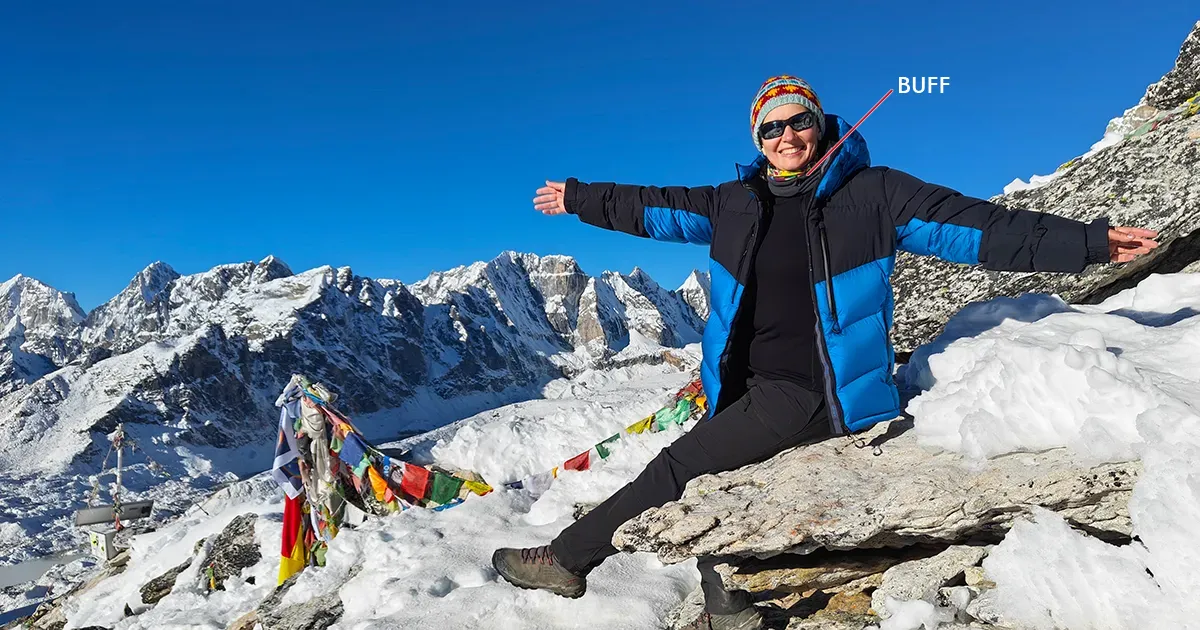
- Stay hydrated and use a buff or mask to save your lungs.
Long Walking Hours
Trekking to the Everest Base Camp requires 5 to 7 hours of walking; you need to walk 10 km to 15 km a day. There will be an altitude gain of around 300 to 800 meters, and trekking on a rocky path, glacial moraines, stone steps, steep ascents, narrow ridgelines, and suspension bridges is quite strenuous. You have to face the sudden weather changes and need to walk while carrying a heavy backpack of 5 to 8 kg.
How to Overcome
- Start fitness training 6 to 8 weeks before the actual trek with hiking, stair climbing, cardio, and leg-strength exercises.
- Make a walking pace in such a way that you can talk without gasping for air and take a short break every 30 to 40 minutes.
- Stay hydrated and consume high-energy foods.
- Use trekking poles in order to reduce pressure on knees and support balance.
- Carry a light backpack and pack only the necessary items.
- Have a good mindset and stay positive while enjoying the scenic routes and the Himalayas.
Limited Oxygen
The thin air of the Everest Base Camp trek also has less oxygen, which makes your body receive fewer oxygen molecules. The oxygen levels are only 50–60% of sea level at high altitudes like 5,364 meters in Kala Patthar and 5,364 meters in EBC itself at 5,364 m via Gorak Shep. It causes fatigue, shortness of breath, increased heart rate, headaches, insomnia, and altitude sickness.
How to Deal
- Trek with regular breaks
- Follow slow, deep breathing techniques
- Prioritise sleep and rest seriously
Khumbu Cough
Everest Base Camp trek challenges also include suffering from the Khumbu cough. The trek requires long hours of walking at high altitude, which makes the lining membrane of the lungs dry and results in Cough. Low humidity or dry air and extreme cold are the main reasons behind this cough.
Tips to Deal
- Cover your mouth and nose with a buff, mask, or scarf when walking.
- Take slow, steady breaths.
- Cover your chest, neck, and throat with layers.
Dehydration
Dehydration is normal in high-altitude regions like Everest. The Everest Base Camp trek challenge also includes dehydration. The dry air of high altitude increases water loss in high quantities.
How to Overcome
- Drink plenty of water, more than 3-4 liters
- Sip consistently
- Drink warm fluids
- Avoid dehydrating drinks like alcohol and caffeine
Flight Delays and Cancellations
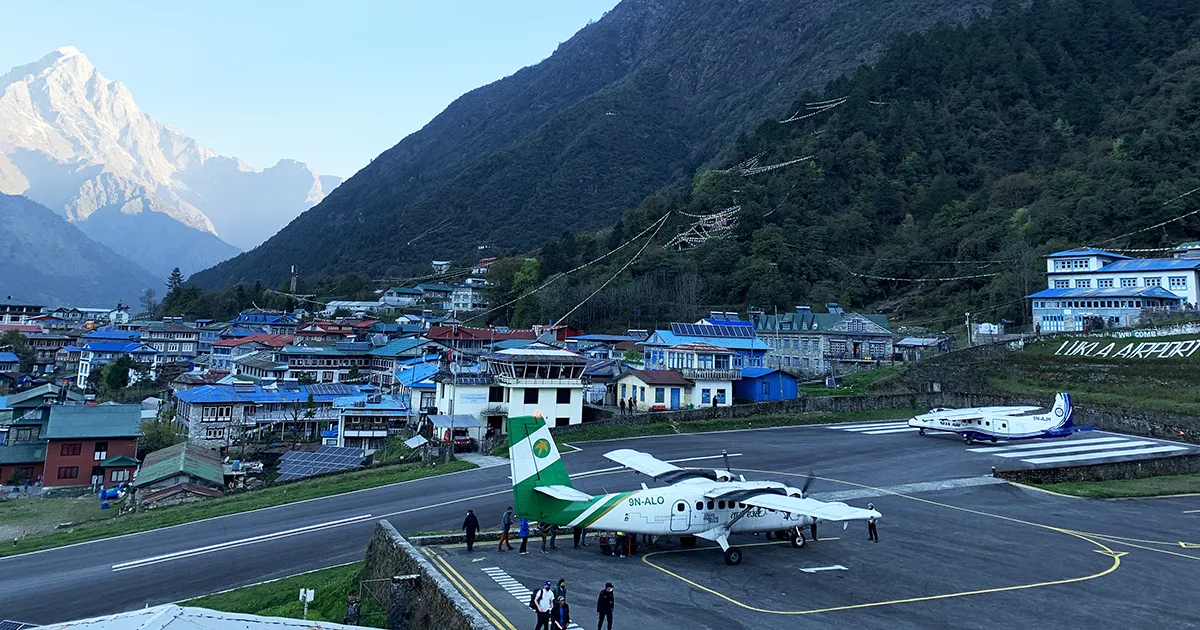
Flight delays and cancellations are normal Everest Base Camp Trek challenges. These treks require flights to Lukla, which is one of the most dangerous airports in the world. Lukla Airport, also known as Tenzing Hillary Airport, is located at an altitude of 2,864 meters. There is a sudden change in the weather; within a minute, the clear skies are converted into a snowstorm. So, most of the scheduled flights either get delayed or cancelled at the last minute.
During peak season, the flights to Lukla are also operated via Manthali airport. Manthali Airport is a distance of 4-5 hours by bus from Kathmandu.
How to Deal
- Add 1 to 3 days of buffer days on your scheduled EBC trek.
- Prefer booking early morning flights.
- Planning with a reliable trekking agency like Awesome Holidays Nepal, for quickly rebooking flights or arranging helicopter alternatives if needed.
- Choose reputable airlines for booking flights.
- Buy a Travel Insurance with Helicopter Coverage.
- Always carry extra cash and stay calm and patient.
Poor Wi-Fi Connection
Poor Wi-Fi connection is one of the most common Everest Base Camp Trek problems. There are a few places where Wi-Fi is available, but the network is too slow. Everest Link provides Wi-Fi services in the Khumbu region and offers prepaid services. The Wi-Fi connection depends on the elevation; its connectivity is slow at higher altitudes.
How to Deal
- Buy a local SIM like NTC or Ncell.
- Mobile data is more reliable than the Everest Link Wi-Fi.
- Save Google Maps Offline, Maps.me, and Khumbu region routes before heading to Lukla.
- Use low-data apps for communications like WhatsApp, Messenger Lite, or Telegram.
Crowded Trekking Routes
EBC in the peak trekking season, like spring and autumn, is very crowded. The pleasant temperature, clear skies, and dry weather favor trekking in the high altitude regions like the Everest region, so most of the travel enthusiasts prefer the EBC trek. The trails are covered with many trekking enthusiasts, and the narrow trails are mostly packed. Similarly, mules and yaks also make the trails more crowded. There will be a limited time for you to take a picture at the viewpoints.
Tips to Beat
- Wake up at 6 to 7 AM to avoid heavy crowds.
- Avoid peak season and opt for months like Late February to March, Early September, Late November to December.
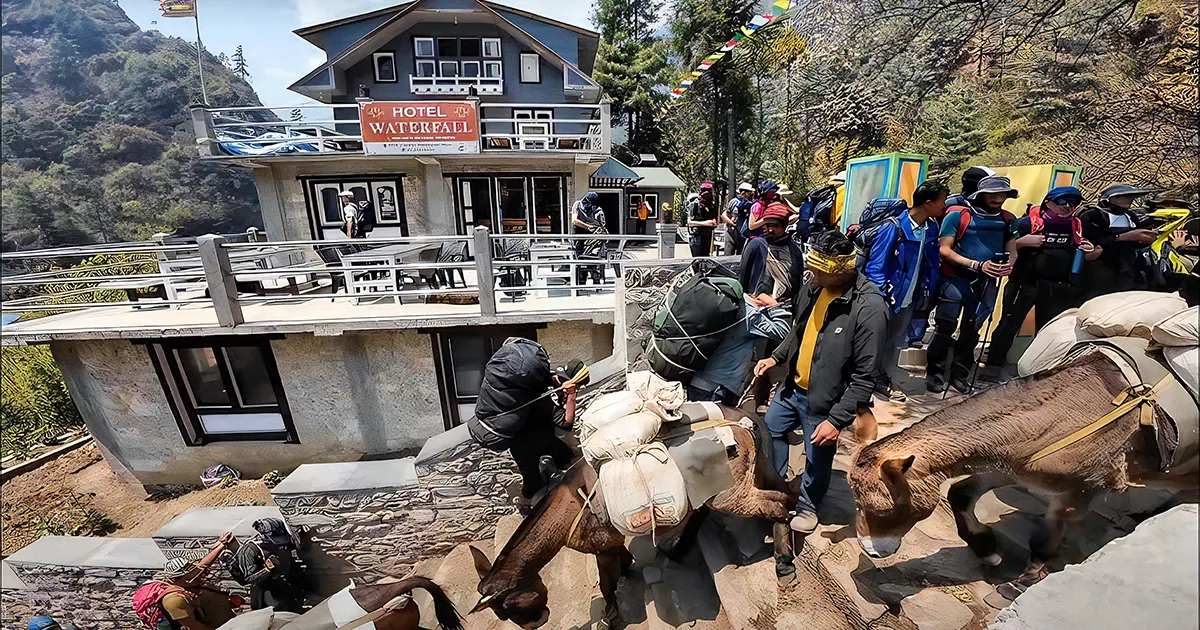
- Select other routes like Gokyo via Cho La Pass, Three Passes Trek, Phaplu–EBC route, instead of the Lukla flight
- Stay at less popular places like Monjo instead of Phakding, Phortse instead of Tengboche, Dingboche instead of Pheriche.
- Book tea houses and lodges that are far away from the crowded trails.
Hot Showers
The dream destination, Everest Base Camp, requires the sacrifice of overhead hot showers. Taking a shower daily is also not feasible. You need to pay an extra price for hot showers, so forgetting about hot showers is a good option. Most of the tea houses have outside toilets with Asian or squatting-type toilets.
Tips to Deal
- Have a hot shower in lower altitude regions like Namche, Dingboche, etc
- Escape shower option by wiping face, armpits, groin, and feet with wet wipes or a small washcloth.
- Wear moisture-wicking base layers so sweat doesn’t linger.
Non-Veg Option
Meat at higher altitudes is stored for a longer period of time. The tea houses and lodges offer meat items on the menu, but they are not fresh or safe. Meat is transported from lower villages like Kharikhola or even Kathmandu, as local Buddhists restrict animal slaughtering. The meat served on your plate is carried by yak, mules, or porter over several days.
How to Deal
- Carry high-protein snacks like nuts and protein bars at higher altitudes.
- Avoid raw or undercooked meat to avoid food poisoning.
Limited Medical Facilities
Medical facilities are very limited in the higher altitude regions, like the Everest Base Camp trek. Health posts are only available in Namche Bazaar, Pheriche, and Lobuche, but the services are very basic. This trek has a high risk of causing altitude sickness due to dry weather, limited oxygen, and dehydration.
Tips to Deal
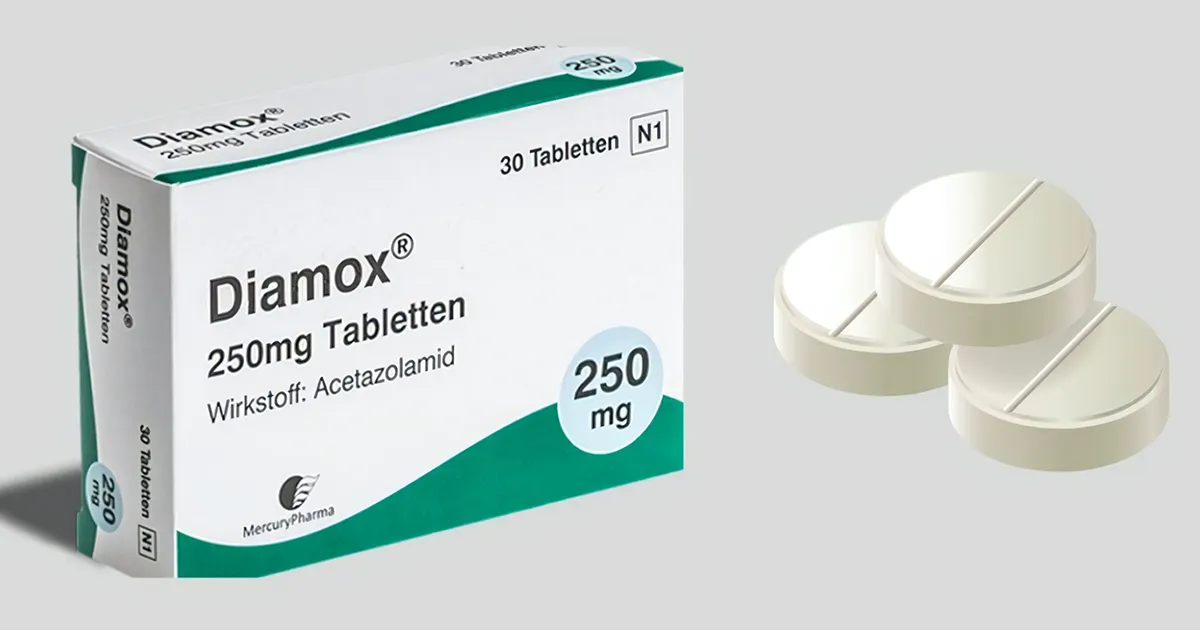
- Carry medical supplies such as Antibiotics (if prescribed), oral rehydration salts, antidiarrheal medicine, ibuprofen or paracetamol, and Diamox.
- Descend immediately if you feel uneasiness.
- Consume drinking water using tablets, filters, or boiling.
No Running Water
The tea houses above Namche Bazaar don’t have running water. You have to carry water in a bucket or a mug for washing your face.
How to deal
- Carry enough rolls of toilet paper, wet wipes, and hand sanitizers.
- Carry your own water supplies, like a collapsible water bottle or hydration bladder.
Sunburn and Snow Blindness
UV radiation at 3,000m to 5,500m is 2 to 3 times higher than at lower regions. The high exposure to sunlight from the reflection of snow and ice irritates both eyes and skin, resulting in sunburn and snow blindness. The thin air at higher altitudes filters fewer UV rays and affects the skin and eyes severely.
Tips to Deal
- Use SPF 50+ sunscreen with a broad-spectrum (UVA & UVB).
- Wear long-sleeved, breathable shirts, hiking pants, gloves, and neck gaiters.
- Wear sunglasses with UV protection of category 3 or 4.
- Avoid looking directly at bright snow
Altitude-Related Sleep Problems
The Everest Base Camp trek challenge includes high-altitude sleep problems. The limited oxygen levels at 3,000–5,500m make difficulty in breathing difficult, and cold and uncomfortable sleeping conditions, like a thin mattress, make you suffer from sleepless nights.
How to Overcome
- Bring a warm sleeping bag rated for -10°C or lower.
- Acclimatize properly and follow hike high, sleep low principle.
- Try deep breathing meditation before sleep.
- Avoid alcohol and excess caffeine.
Cultural and Language Barriers
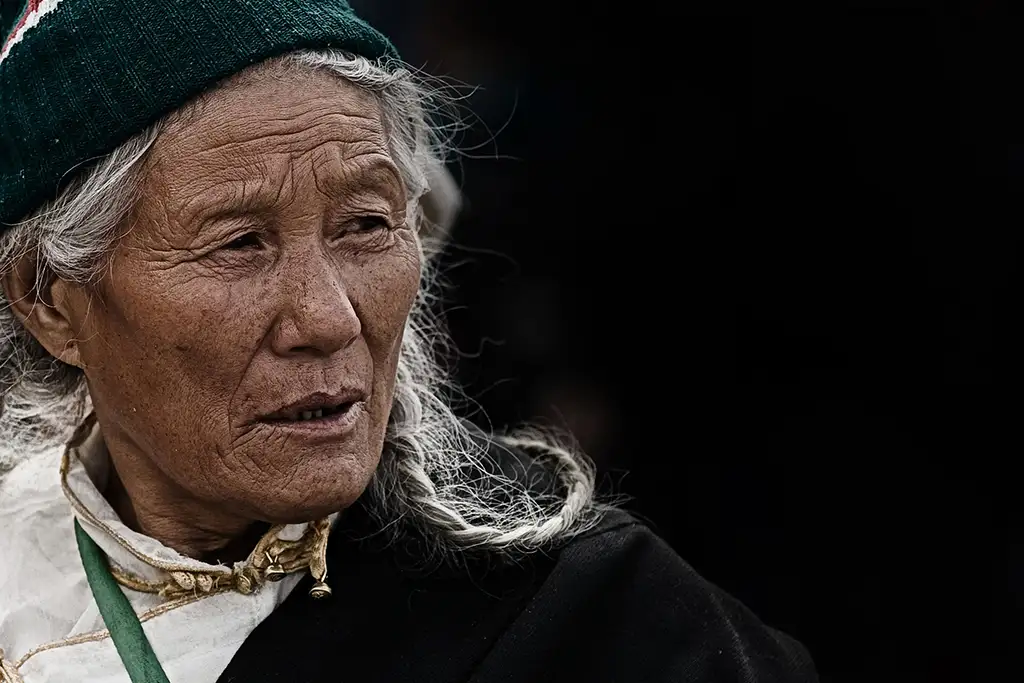
The EBC trek includes the exploration of the Buddhist Sherpa community. They find that pointing, touching religious items, or loud behavior may unintentionally be disrespectful. They also speak the Sherpa language in a Tibetan dialect.
How to Solve
- Learn basic Nepali phrases like Namaste and Dhanyabad.
- Travel with a guide or porter.
- Remove shoes before entering homes or monasteries and avoid touching religious items like prayer wheels, statues.
High Price on Limited Food Options
There is no road connection in the Everest region, so everything from food to fuel, medicines, and building supplies is either carried by porter, mules, or via flight. This increases the high price of food items displayed on sale by shopkeepers and tea house owners. The rate of food items, beverages, soap, detergent, etc, is expected to be higher on the Everest Base Camp Trails.
How to Deal
- Pack a protein bar like nuts, chocolate, protein bars, trail mix, instant noodles, and peanut butter.
- Opt for the cheapest and most filling, Dal Bhat.
- Stick to vegetarian meals after Namche Bazaar.
- Use purification tablets, filters, or a UV bottle to refill from taps or streams instead of buying bottled water.
- Plan a daily food budget and expect higher prices of items in high-altitude regions.
Cash-Only Payments
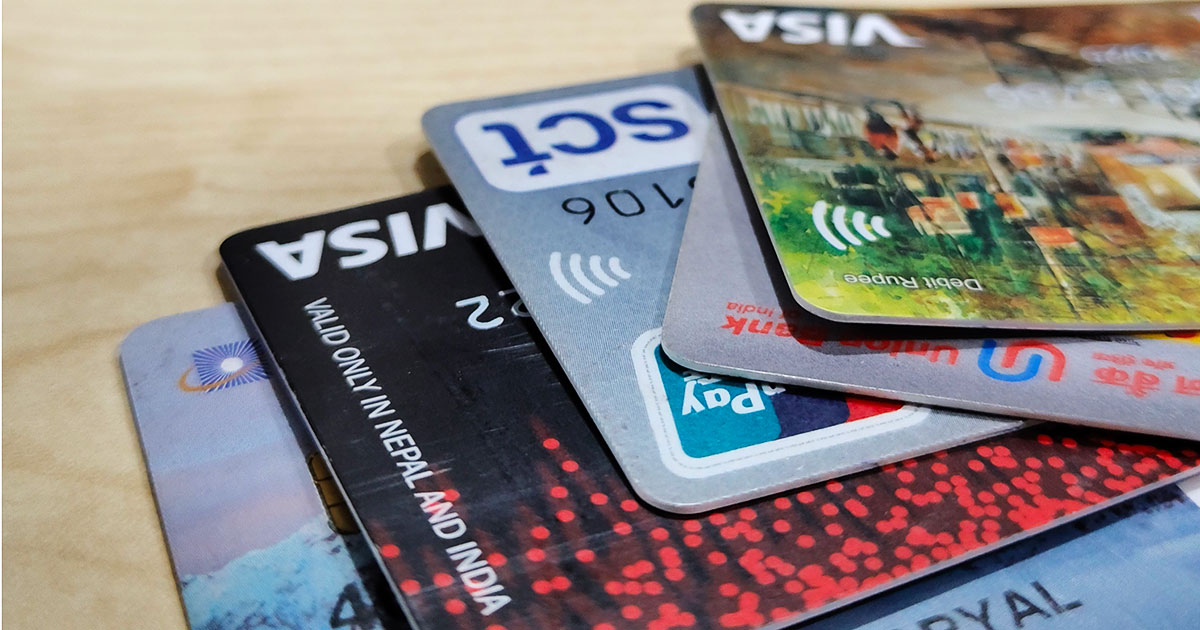
There are no ATMs above Namche Bazaar. While going for the Everest Base Camp trek, cash payment is only accessible, and there are no debit/credit cards or mobile payments.
How to Solve
- Withdraw cash from ATM’s in Namche or Lukla.
- Allocate extra cash for high-altitude costs and emergencies.
- Safely keep your cash inside the backpack.
Mental Challenges
Everest Base Camp trek challenges also include mental challenges. While trekking in the remote villages and long trails makes you feel lonely. Limited access to phone signals and the Internet makes you feel disconnected from friends and family. Similarly, you may get stressed about whether you will suffer from altitude sickness, injuries, or flight delays.
How to Overcome
- Trek with a group, guide, or porter.
- Record your experience in a journal.
- Communicate with locals for mood uplift and deeper insight into culture and heritage.
Drinking Water
High altitude trekking to the Everest makes your body lose fluids more rapidly than in lower regions. The increased respiration and physical exertion at higher altitudes make your body work so you need to drink water as much as possible. You must drink at least 3.5 to 4 liters of fluids per day, which includes water, soups, and hot drinks. Water from taps and springs is not safe to drink, so opt for boiled water, bottled mineral water, and use purification tablets, iodine, or chlorine dioxide, and SteriPENs.
How to Overcome
- Use a high-quality water purification method like water purification Tablets, UV Purifiers, or filter bottles.
- Drink only boiled water when staying in tea houses or lodges.
Final Thoughts
Everest Base Camp Trek challenges can be easily managed with the right preparation, mindset, and strategies. With smart planning and safe preparation, the difficult terrain, weather, altitude, and physical demands. Let every challenge push your limits, and only you will be rewarded with gorgeous scenery, dramatic landscape, and a wonderful cultural experience.
The Everest Base Camp trek can be completed by recognising the common obstacles like acclimatization issues, rough terrain, and long hiking days. With the right tips and proper planning, the EBC trek obstacles can be overcome; you only have to be strong and have a positive mindset.
FAQs
Expand AllHow do you prevent altitude sickness on Everest Base Camp trek?
You can prevent altitude sickness on the Everest Base Camp trek by walking slowly, drinking 3-4 liters of water daily, and avoiding alcohol and caffeine.
What happens if you get altitude sickness at Everest Base Camp?
If you get altitude sickness at Everest Base Camp, then you should immediately descend and take a rest.
Can you die from altitude sickness on EBC trek?
Yes. You can die from altitude sickness on the EBC trek. The death rate of altitude sickness on the EBC trek is estimated to be 0.03%.
How to deal with headaches during Everest Base Camp trek?
What are the symptoms of altitude sickness on EBC trek?
The symptoms of altitude sickness on the EBC trek include headaches, nausea, dizziness, fatigue, and difficulty sleeping.
Is Diamox necessary for Everest Base Camp trek?
Those who have a history of altitude sickness are necessary to bring Diamox for the Everest Base Camp trek.
How fit do you need to be for Everest Base Camp trek?
Moderate fitness with good cardiovascular endurance and leg strength is enough for the Everest Base Camp trek.
Can an unfit person do Everest Base Camp trek?
Yes. The unfit person can also complete the Everest Base Camp trek with necessary preparation and training.
What is the hardest part of Everest Base Camp trek?
The hardest part of the Everest Base Camp trek is acclimatizing to the high altitude, where there is a limited oxygen level, which increases the chances of suffering from altitude sickness.
How do I train for Everest Base Camp trek?
You can train for the EBC trek by focusing on building cardiovascular endurance, strength, hiking-specific fitness, and training before 8 to 12 weeks of the actual hike.
Is Everest Base Camp trek dangerous for beginners?
No, the Everest Base Camp trek is not dangerous for beginners. With necessary preparation and prior training, beginners can easily complete the EBC trek.
What are the biggest weather challenges on EBC trek?
The biggest weather challenges on the EBC trek are unpredictable weather and extreme winter temperatures.
What gear problems occur on Everest Base Camp trek?
Gear problems like inadequate layering, poorly broken-in boots, Lack of waterproof and warm gear, Poor quality sleeping bag, Insufficient hydration supplies, Inadequate backpack, and Lack of sun protection can occur on the Everest Base Camp trek.
How cold does it get on Everest Base Camp trek?
During warm months, the temperature ranges from -10°C to -20°C, while it drops to -15°C to -25°C in winter months on the EBC trek.
What happens if weather is bad during EBC trek?
The bad weather in the EBC trek causes delays and cancellations of flights to and from Lukla, landslides, poor visibility, and slippery trails.
What are common mistakes on Everest Base Camp trek?
Ignoring acclimatization, trekking too quickly, and improper hydration or nutrition are the mistakes on Everest Base Camp trek.
How do you deal with food problems on EBC trek?
You should avoid any meat products as they take more energy to digest avoid any spicy and oily food which may cause stomach issues on EBC trek.
What are the bathroom facilities like on Everest Base Camp trek?
The Everest Base Camp trek bathroom facilities vary from basic squat toilets with hand-flushing to more modern Western-style toilets.
Can you get sick from food on Everest Base Camp trek?
Yes. You can get sick from the EBC trek food as there is a chance of getting food poisoning from improperly prepared food or untreated water.
What if you can't complete Everest Base Camp trek?
If you can’t complete the Everest Base Camp trek, you should choose another trek or extend the trek for better acclimatization, or you can return another time.
How to handle communication problems on EBC trek?
You should rely on a local guide for communication problems on an EBC trek. Always keep a satellite phone for emergencies.
What are the sleep problems on Everest Base Camp trek?
The sleep problems on the Everest Base Camp trek include difficulty breathing and insomnia, and the cold temperatures of the teahouse rooms take extra time to make your body warm.
Is there medical help available on Everest Base Camp trek?
Yes. Basic medical help is available on the Everest Base Camp trek at places like Namche Bazaar, Pheriche, and Gorak Shep.
Related blog posts
Discover a choice of tourist destinations loved by most of our visitors. Whether you're on a jungle safari to spot rare animals or walking through a world heritage site, these well-planned itineraries cover the major highlights of Nepal.
 call an expert at: