
When is Teej 2026 in Nepal? Exact Dates for Haritalika Teej 2083
 Sristi Adhikari
When is Haritalika Teej 2026?
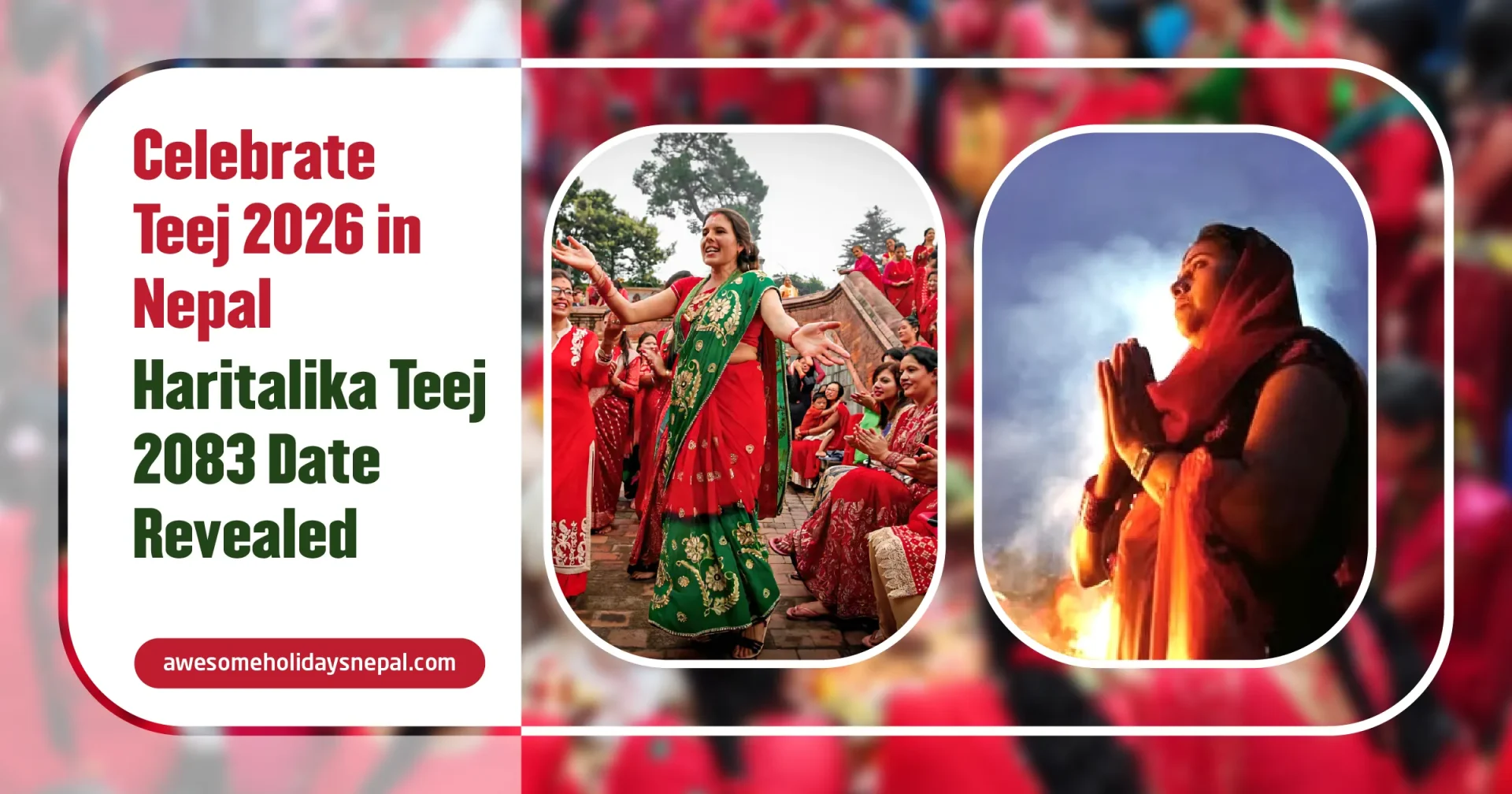
Teej festival is also known as Haritalika Teej falls in the month of August or September every year. Teej 2026 in Nepal is celebrated on the 13th, 14th, 16th of September.
According to Nepali calendar 2083, Teej falls on the month of Bhadra. This year, it is celebrated on the 28, 29, and 31 of Bhadra 2083. The Teej puja timing is 06:06 AM to 08:34 AM for the Pratahkala (Morning) Puja while the Pradoshkala (Evening) Puja auspicious timing starts from 06:27 PM to 08:47 PM.
Why Teej is Celebrated in Nepal?
The celebration of Teej 2026 in Nepal is not only a religious festival but it is also a symbol of womanhood, devotion, empowerment, and cultural identity. Every married and unmarried woman celebrates this festival while honoring the divine reunion of Goddess Parvati and Lord Shiva.
- Teej is also celebrated to embrace the lively spirit of monsoon season while wishing a longer age of their husband.
- Also, married women pray to Shiva and Parvati for family happiness, well being of their children, and longer marital life.
- Fasting without drinking water helps women to practice self-control and cleansing their whole body and mind.
- It also offers women an opportunity for introspection and reflection while sharing experience, supporting each other, celebrating in a happy atmosphere.
- This Hindu festival Teej emphasizes the beauty of nature and strengthens the community’s sense of unity with rituals, songs, dances.
Origin and History
The origin of Haritalika Teej festival dates back to Satya Yuga. The story of Teej began when Himalayan King, Himavan decided his daughter, Parvati to marry lord Vishnu. But she wanted to marry Lord Shiva and escaped her own house in the middle of night and started strict meditation while living in the deep forest.
According yo Hindu mythology, Parvati did strict penance and manifested Lord Shiva for a total of 108 births without eating a single grain of food and drops of water. However, Lord Shiva was unaware of her passion but when he knew about her strict penance he tested her by appearing as Lord Vishnu and persuaded her to marry her.
Parvati did not change her decision and at last, Lord Shiva changed his real identity from Lord Vishnu after seeing her devotion and agreed to marry her. This ultimate love story of Goddess Parvati and Lord Shiva, dedication, faith, and spiritual commitment is celebrated every year in Nepal as Teej festival.
How is Teej Celebrated in Nepal?
Teej festival is celebrated for three days in Nepal. It consists of Dar Khaney Din, a fasting (Barta basne din )day, and Rishi Panchami. You can see many married and unmarried women’s hands and feets decorated with different designs of Mehendi or Henna which is considered as the symbol of wealth, love, and marital bliss.
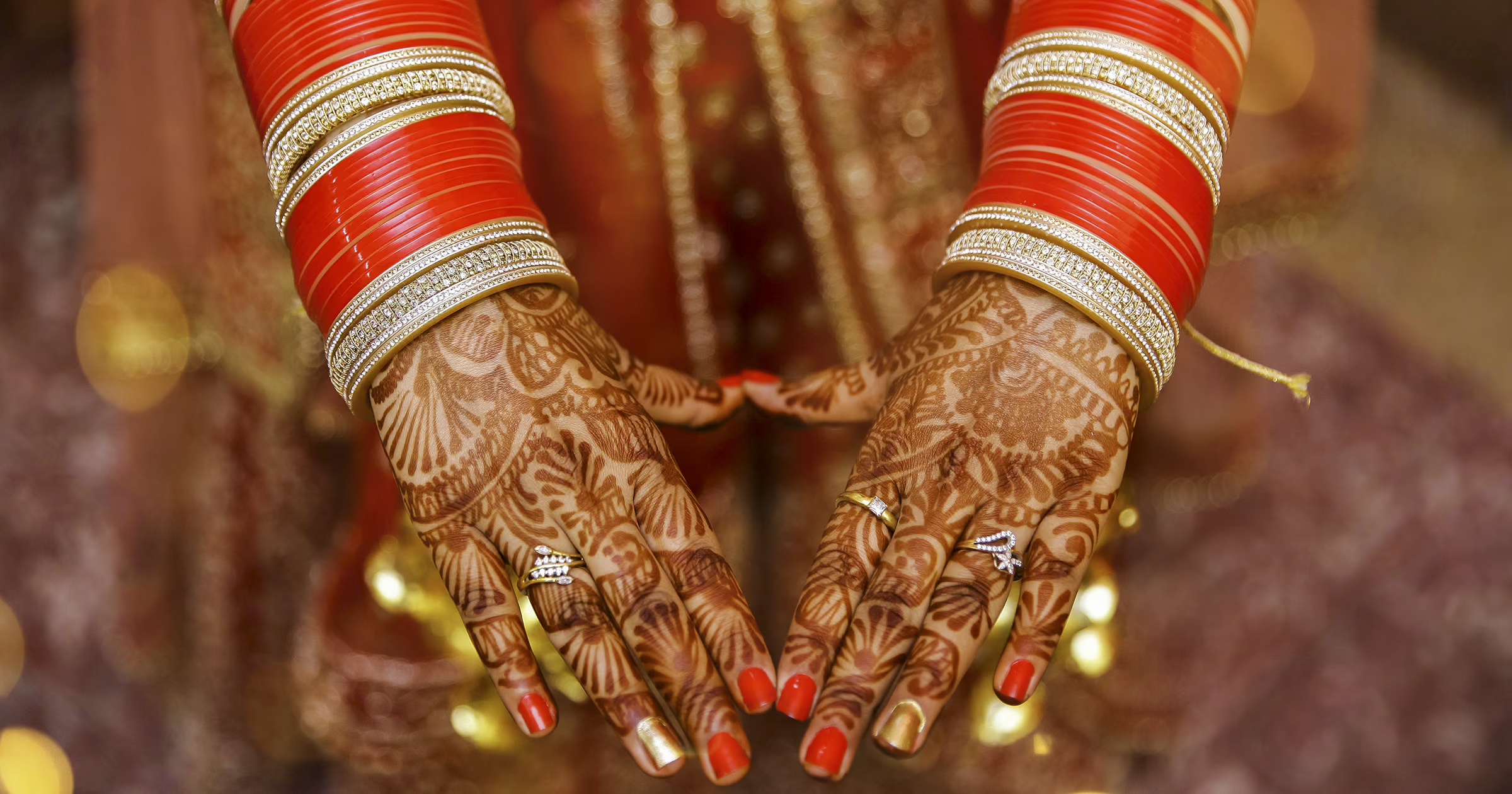
Application of Mehendi also symbolises artistic expression and there is a belief that, those mehendi stains darker, her husband or future husband will love them deeply.
First Day: Dar Khaney Din
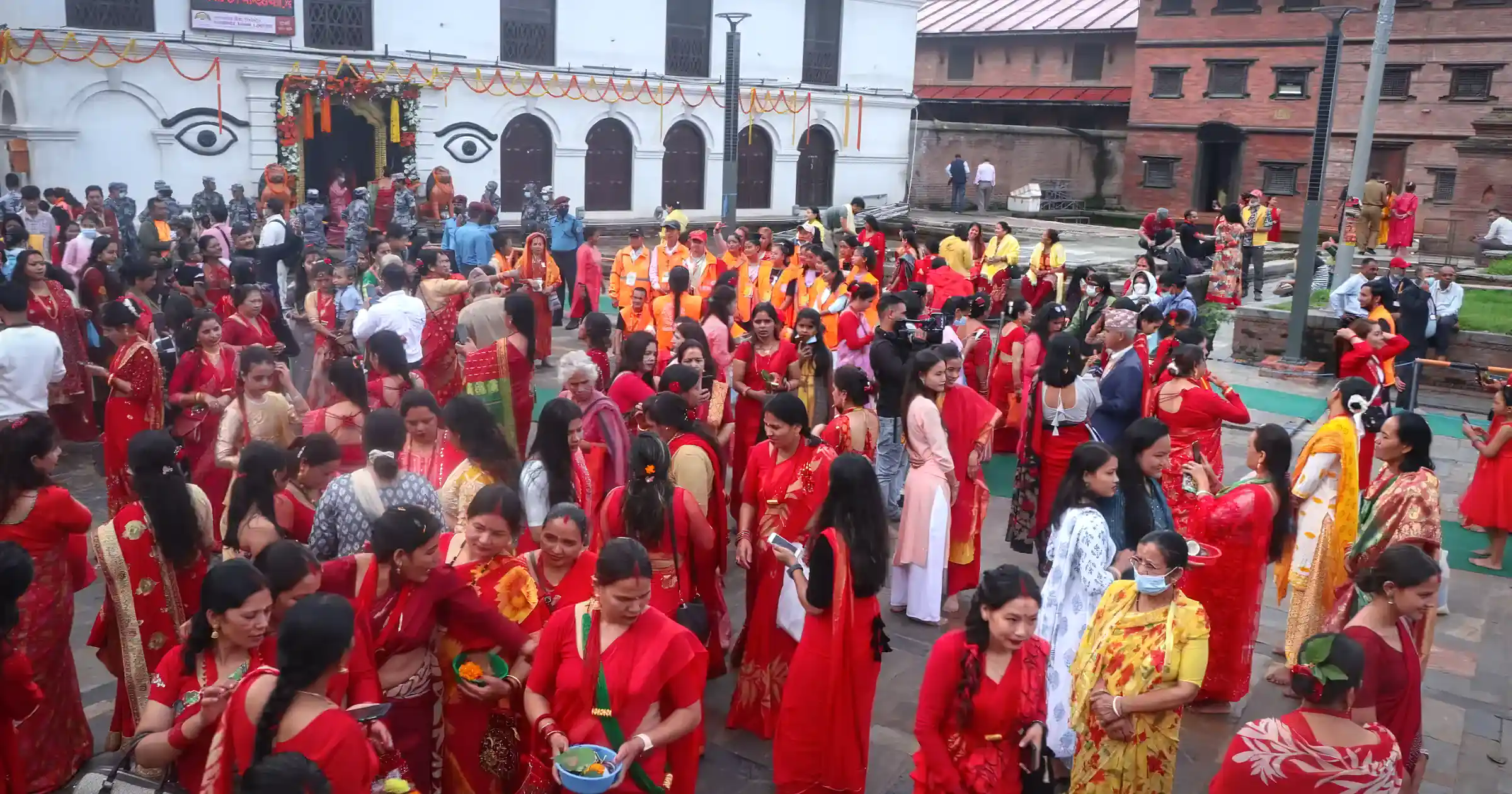
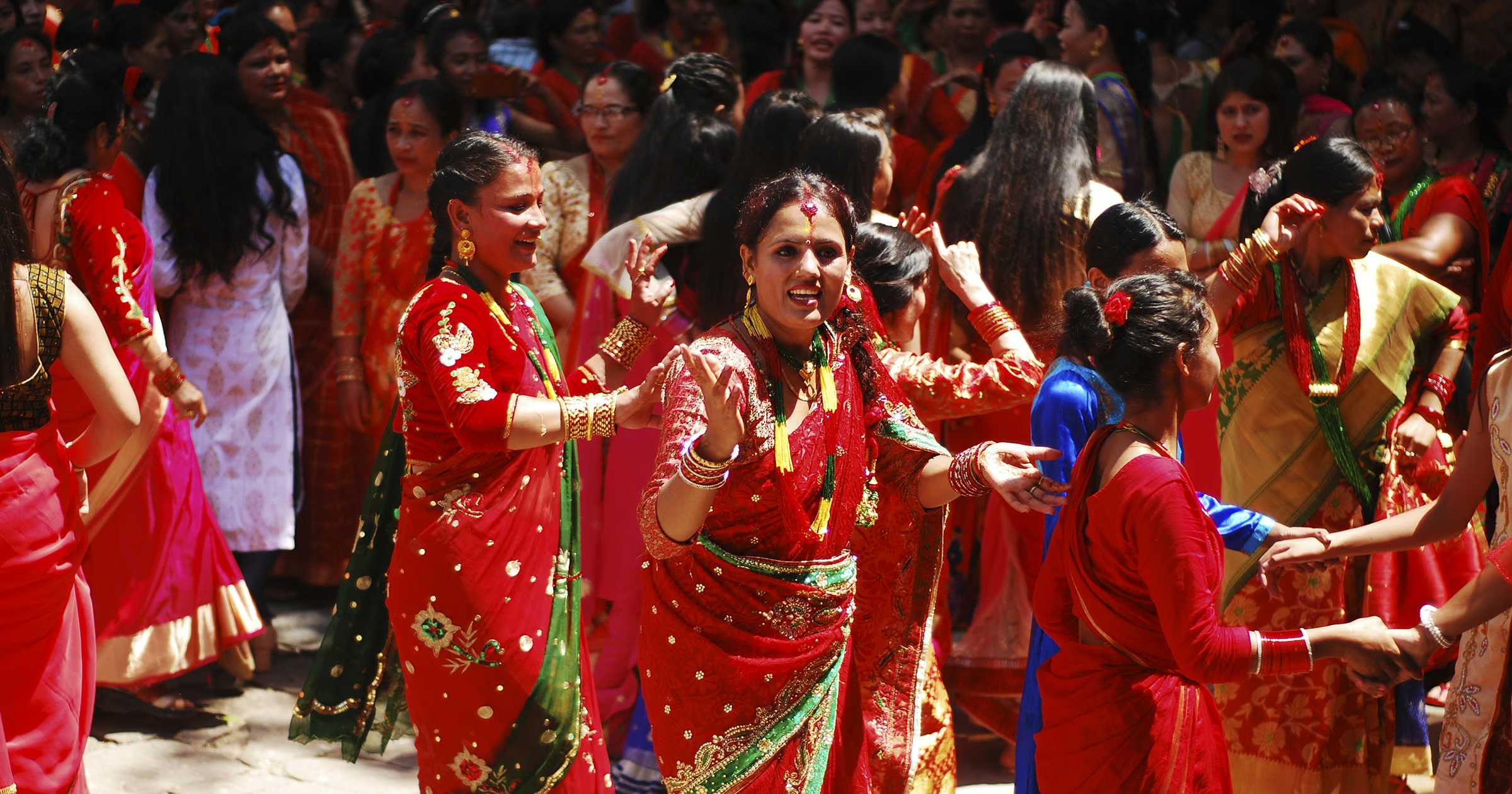
The Dar Khaney Din or Feast Day is the first day of the Teej festival. Dar Khaney Din 2026 falls on the 13th of September. During this day, especially married women gather in their mother’s house and get dressed up wearing a red saree, sindoor, bangles with make up and jewelry while looking like a new bride.
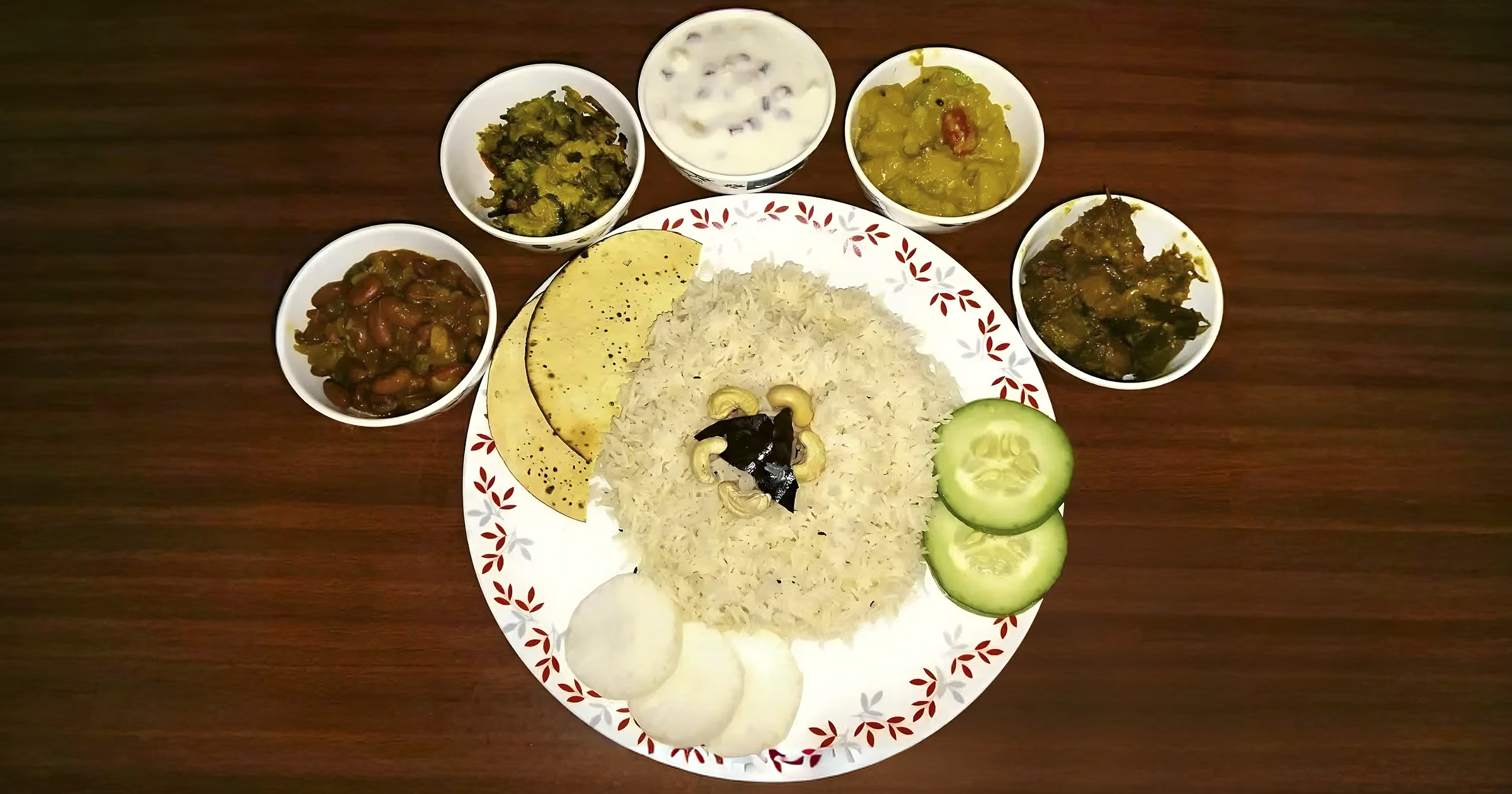
Then, they prepare a variety of foods and desserts, some hire cooks to prepare while in some house male members cook delicious meals for their mother, sister or daughter and enjoy the feast by dancing in the traditional Teej songs. Sel roti (fried rice bread), puri (deep-fried bread), aloo ko achar (spicy potato pickle), and a variety of sweets are included in the Dar feast.
Every woman forgets all of her life problems and dedicates this day as the day of relaxation and celebration. They dance like there is no tomorrow in a Teej song which reflects their joy, struggles, and life goals.
Nepali women used to get discriminated against by men and had to deal with domestic abuse or any kind of social issues in the past, so they used to raise their voice by singing these traditional Folk songs. Though this type of thing is still prevalent in rural communities of Nepal, today Teej songs have also become a symbol of women’s empowerment, freedom of expression, and aspirations.
Second Day: Fasting Day (Vrata Basne Din)
The second day of the Teej festival is called Fasting Day or “Vrata Basne Din “which is considered very spiritual among Hindu women. Teej Vrata 2026 falls on 14 September and in Nepali date it is on 29th of Bhadra, 2083.
The traditional Teej Puja Vidhi 2026 includes early morning bath as soon as they wake up is take a bath and then, dress up as a newly wed with red saree, red bangle, red sindoor along with gold jewelry and go to nearby Shiva temple.
They offer flowers, belpatra, fruits, and incense to Lord Shiva while wishing marital life bliss and husband’s longer age. Throughout the day, women avoid eating and drinking which is also known as “Nirjala Vrata” while some women fast by consuming water.
Unmarried girls also follow the same rituals and worship Lord Shiva wishing him to grant a loyal husband like Lord Shiva. Likewise, some men also keep fasting for their wife’s health and longevity as of now.
In the evening they end their fast by drinking sweet water, prasad and food from their husband’s hand. This symbolizes the dedication and resilience that characterize the relationships.
Third Day: Rishi Panchami
The most spiritual day of the festival is Day 3 which is known as Rishi Panchami. Rishi Panchami 2026 falls on 16th of September and 31st of Bhadra, 2083. On this day, Seven sages (Sapta Rishi), a great saint in Hinduism is worshipped.
Both married and unmarried women start their day by waking up early in the morning and going to a nearby river, pond, or holy water resources to take a bath in red mud which is found on the roots of the holy “Datiwan Bush” with leaves. This ritual is done to wash all the sin of this life as well as of past life and remove impurities related to menstruation.
In Nepali households, women are considered impure at the time of menstruation and are restricted to enter the kitchen, touching male members of the family and this holy bath is believed to wash all the sin done knowingly or unknowingly.
During the day, women gather in a nearby temple and sit in front of the priest in a semi circle form, and a priest performs rituals while reciting devotional prayers and fasting for whole days. They worship Goddess Ganesh along with seven saints and at the end of the day they break their fast by eating bean soup, mutton items, and other delicious feast.
Best Places to Experience Teej 2026 in Nepal
There are many places where you can experience Teej 2026 in Nepal. Teej is a national holiday where thousands of women gather at historic places like temples wearing a red saree, kurta with matching jewelry and bangles.
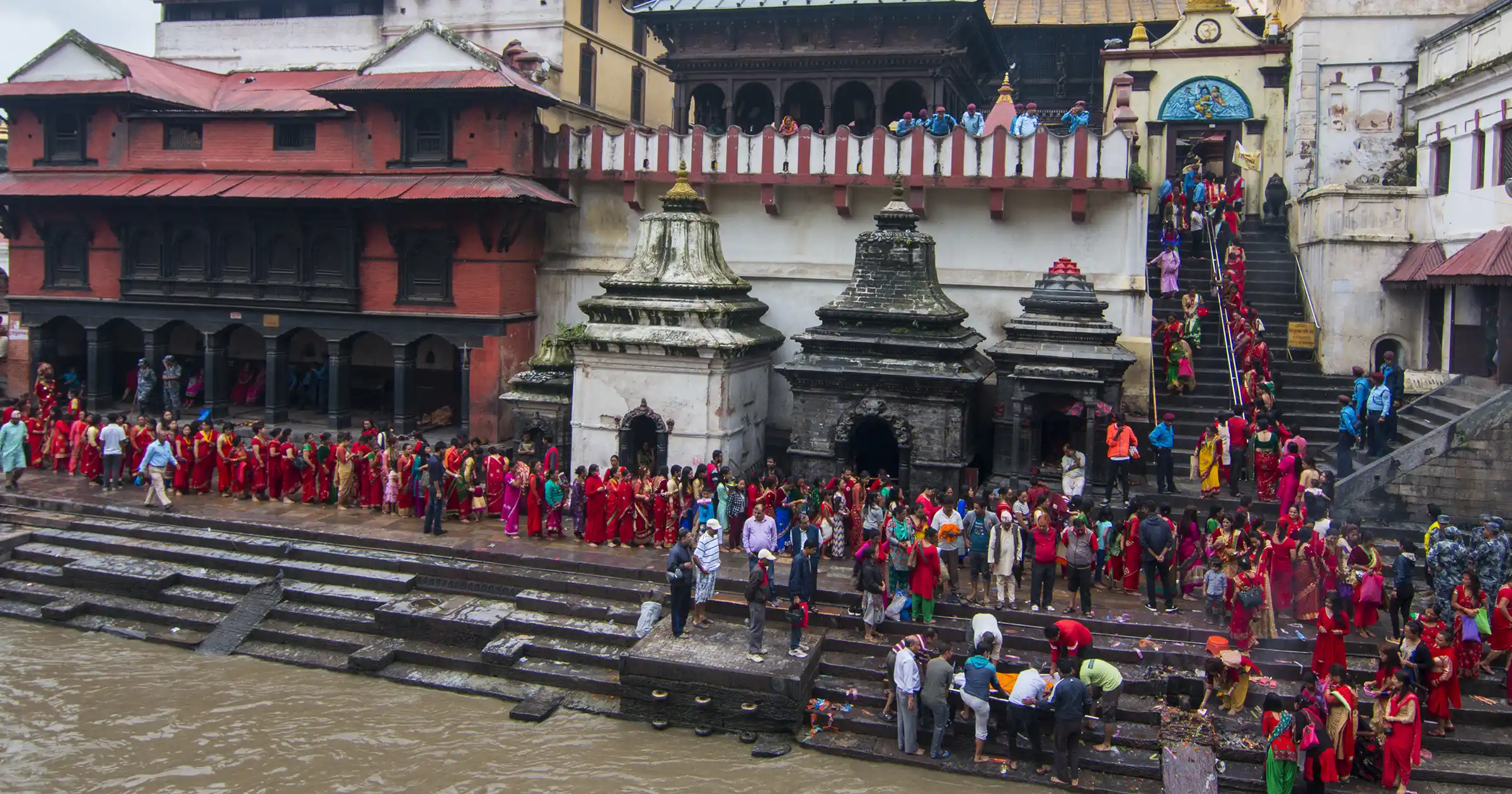
If you want to witness what real Teej celebration is, visit some notable temples of Kathmandu like Pashupatinath, Guhesywari temple, Basantapur, Patan and Bhaktapur. If you want to go beyond valley, Janaki Mandir in Janakpur, Bindhyabasini Temple and along the lakeshore in Pokhara, Dantakali Temple in Dharan, are some of the places where you will encounter married and unmarried women celebrating this holy festival with their family members and friends. You can also participate in Teej 2026 in Nepal by singing and dancing for a whole day while wearing traditional attire.
Practical Tips for Participating Teej 2026 in Nepal
During the Teej festival foreigners should respect the local custom and religious belief of the Nepalese. Here are some practical tips which you should follow when participating in Teej 2026 in Nepal:
- You should wear loose-fitted clothing which covers your shoulders and knees. Wearing revealing clothes is considered disrespectful when visiting temples and shrines.
- Always ask for permission before taking pictures and videos of women enjoying the festivals.
- Make sure to keep your camera lens off at the time of sacred rituals or prayers.
- When sharing your picture on social media, make sure you maintain other privacy and do not post pictures which feature others.
- Always show respect to local belief and norms even though you do not share the same religious belief.
- Remove your shoes and slippers before entering the temple or while participating in any kind of puja rituals.
Conclusion
Teej also known as Haritalika Teej 2026 in Nepal will be celebrated from September 13 to 16 nationwide by both married and unmarried women. While representing the love, devotion, and unity of Nepalese women and their families, it also honors the divine union of the Lord Shiva and Goddess Parvati in Satya Yuga.
Every year, it falls on the month of Bhadra, where women pray for their family, marital bliss, long life of husband dressing up like a newly wed in a red attire and matching jewelry and bangle. They worship without drinking a single drop of water by visiting nearby Shiva temples along with singing and dancing in folk Teej songs.
Every travelers who are planning to visit Nepal in the month of September, we suggest you to be a part of this festival and enjoy the vibrant colors, sacred rituals, joyful music, and spiritual atmosphere of Teej 2026 in Nepal. Contact Awesome Holidays Nepal to witness Nepal’s living tradition via Teej festival in 2026.
FAQs
Expand AllWhen is Haritalika Teej in 2026 in Nepal?
Haritalika Teej in Nepal will be celebrated on September 14, 2026. According to Nepali calendar, it will be celebrated on Bhadra 29, 2083.
What is the exact date of Teej 2083 in the Nepali calendar?
According to Nepali calendar, Teej 2083 will be celebrated on Bhadra 29.
When is Dar Khane Din in 2026?
Dar Khane Din 2026 will be observed on September 13.
What date is Rishi Panchami in 2026?
Rishi Panchami 2026 falls on 16th of September.
When does the Teej fasting start and end in 2026?
The Teej fasting starts before sunrise on September 14, 2026, and ends the next morning after completing puja rituals.
What items are required for Teej Puja (Puja Samagri)?
You will need idols of the Shiv Parivar (Shiva, Parvati, and Ganesha) made from clay or sand, a traditional Kalash (sacred pot), ghee, camphor, incense sticks, fruits, sweets, and Panchamrit for Teej Puja (Puja Samagri).
What is the story behind Haritalika Teej?
Goddess Parvati’s deep devotion and penance to attain Lord Shiva as her husband is the main reason behind Haritalika Teej.
Why do Nepali women wear red on Teej?
Red symbolizes love, prosperity, marriage, happiness, and good fortune, so Nepali women wear red on Teej.
Who is worshipped during the Teej festival?
Lord Shiva and Goddess Parvati are worshipped during the Teej festival.
How is Teej different from Karwa Chauth?
Teej focuses on the worship of Shiva and Parvati with singing and dancing traditions, while Karwa Chauth celebrates moon worship for husbands’ long life.
How do women fast on Haritalika Teej?
Women observe a strict fast, often without food and water, while praying, singing devotional songs, and visiting Shiva temples on Haritalika Teej.
Can unmarried girls fast on Haritalika Teej?
Yes, unmarried girls fast on Haritalika Teej.
What happens if you drink water during the Teej fast?
Drinking water during a nirjala Teej fast traditionally breaks the strict fasting ritual.
Can pregnant women keep the Teej fast?
Yes, pregnant women also can keep the Teej fast but they are advised to drink water and consume fruits.
How to break the Haritalika Teej fast?
Haritalika Teej fast is broken by drinking sweet water, sweets, prasad with the hand of husband after doing evening puja.
What traditional foods are eaten during Dar?
Kheer, mithai, halwa, and sometimes malpua, snacks like sel roti and puri, meat dishes like mutton or chicken, fresh seasonal fruits and refreshing sugary drinks are eaten during Dar.
What is Dar Khane Din?
The festive feast day before Teej when women gather to enjoy food, music, and celebrations before fasting is known as Dar Khane Din.
Why do women dance and sing during Teej?
Women dance and sing to celebrate womanhood, express their devotion to Goddess Parvati and Lord Shiva, and build community during Teej.
What gifts are given to daughters and sisters on Teej?
Clothes, jewelry, sweets, fruits, and money are given to daughters and sisters as gifts on Teej.
Do husbands fast on Teej?
Yes, some husbands also choose to fast in support of their wives on Teej.
Related blog posts
Discover a choice of tourist destinations loved by most of our visitors. Whether you're on a jungle safari to spot rare animals or walking through a world heritage site, these well-planned itineraries cover the major highlights of Nepal.

 call an expert at: