
Swayambhunath Symbolism Explained: What the Eyes, Dome, and 13 Tiers Really Mean
 Sristi Adhikari
Have you ever stood before the iconic stupa and wondered what deeper meaning lies behind the sacred design of Swayambhunath?
Swayambhunath Symbolism Explained is not just about understanding a monument, but it is all about opening the door to a deep spiritual journey where every element, such as the serene dome, the all-seeing eyes gaze, and rising tiers, invites you to listen to the story of wisdom, awareness, and enlightenment.
In this blog, we will discuss Swayambhunath Symbolism closely while uncovering the meaning behind the most fascinating sacred sites of Nepal in detail.
Understanding the Essence of Swayambhunath
Swayambhunath also known as Monkey temple is one of the most oldest Buddhist stupa is perched in the hilltop of northwest of the Kathmandu Valley is also enlisted in UNESCO World Heritage Sites. The name “Monkey Temple” emerged when foreigner found it difficulty to pronounce the name Swayambhunath and began calling it in around 1970s.
Swayambhunath stupa was built in 460 A.D by Licchavi king Vrsadeva, but legends believed that there was a huge lake in this area where a beautiful flower of lotus grew in the middle of the lake, and light emerging from this lotus flower created the stupa. Swayambhu means “one who is self-created.”
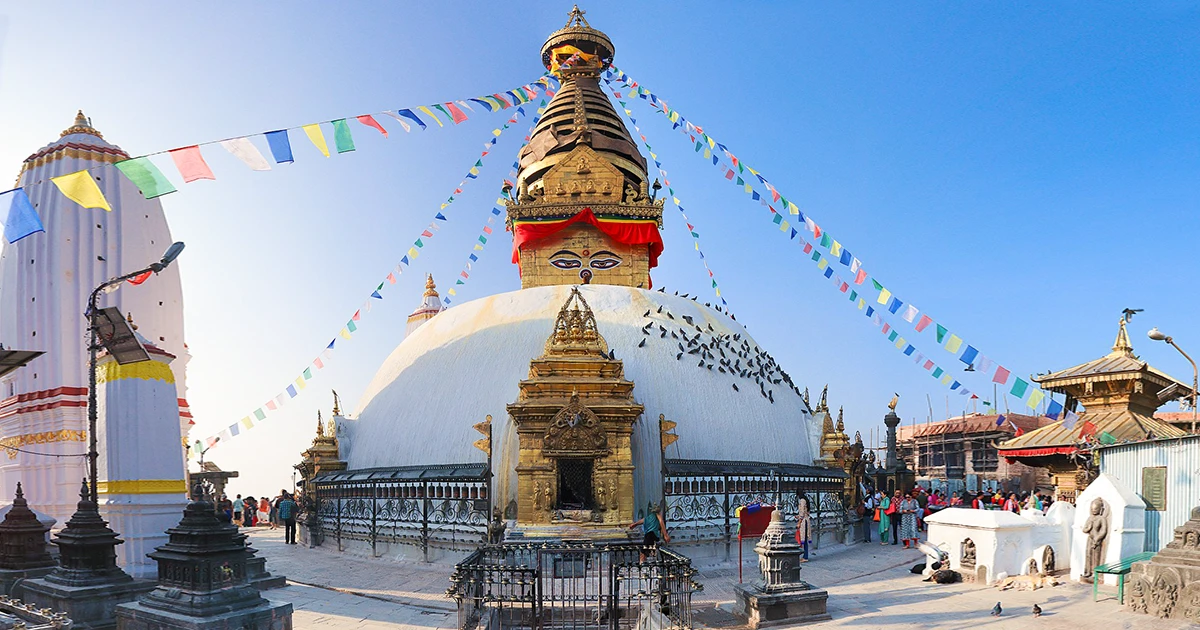
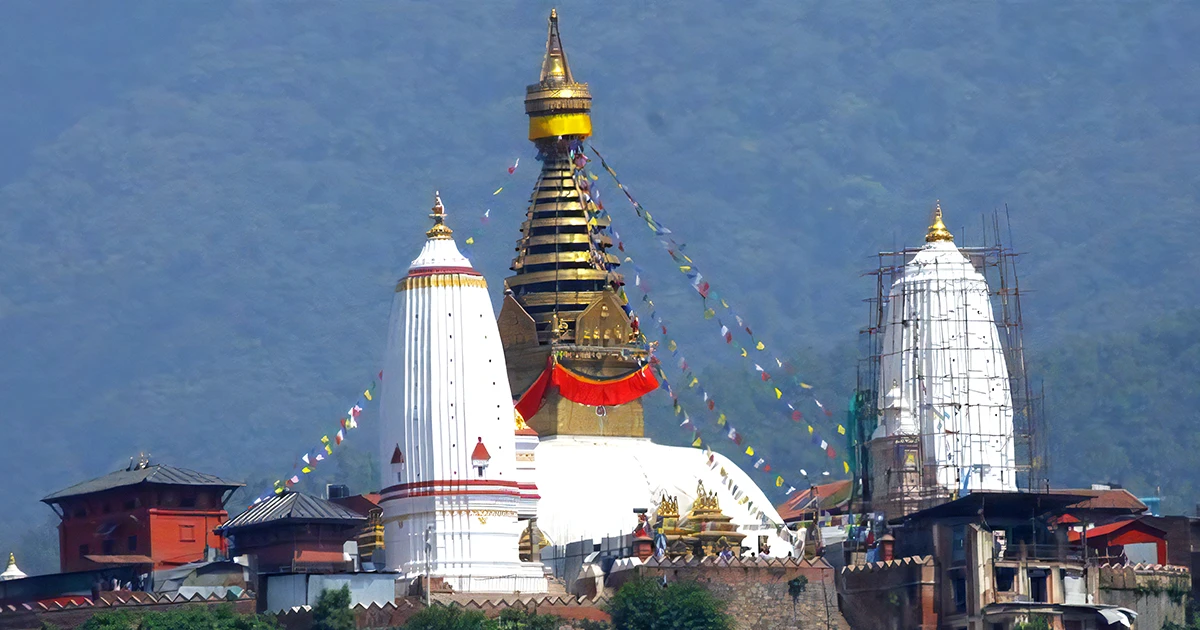
With the height of 36 m, Swayambhu is standing tall with Buddha’s eyes gazing in all four direction and white domes. The stupa is surrounded by multiple Buddhist monasteries, prayer wheels, and Chaityas.
This stupa serves as the harmonious bend of both Hindus and Buddhist and is also dedicated to the Hindu goddess Harati. Before diving deeper into Swayambhunath Symbolism Explained, we should know about the stupa, what it represents towards the path to enlightenment in Buddhism. Swayambhunath is not just architecture but it has a lot of philosophy which is carved in stone.
The Dome: Representation of the Universe
The largest part of Swayambhunath stupa is base that is white and rounded, known as dome is the major highlight of Swayambhunath Symbolism Explained. The bottom was constructed from soil and clay followed by white lime plaster coating. It represents the ground element and symbolizes the five cosmic elements like ground, water, fire, air, and ether.
While representing the universe and human mind, it also symbolizes purity, completeness, and the potential for enlightment. Nearby it, there is a statues of the Pancha Buddhas, also renowned as the five Dhyani Buddhas where you can encounter a special hand mudra with the representation of cosmic elements that stands for their spiritual strength in Vajrayana Buddhism.
The Eyes of Buddha: Wisdom and Compassion
The pair of large eyes painted in all four side of the stupa is also the most important feature highlighted in Swayambhunath symbolism explained. While representing the wisdom and compassion, the eyes also watch over everything in every direction of Kathmandu.
The third eyes above them represents insight and higher awareness. There is a belief, the third eyes radiates energy which spread knowledge and make you free from suffering.
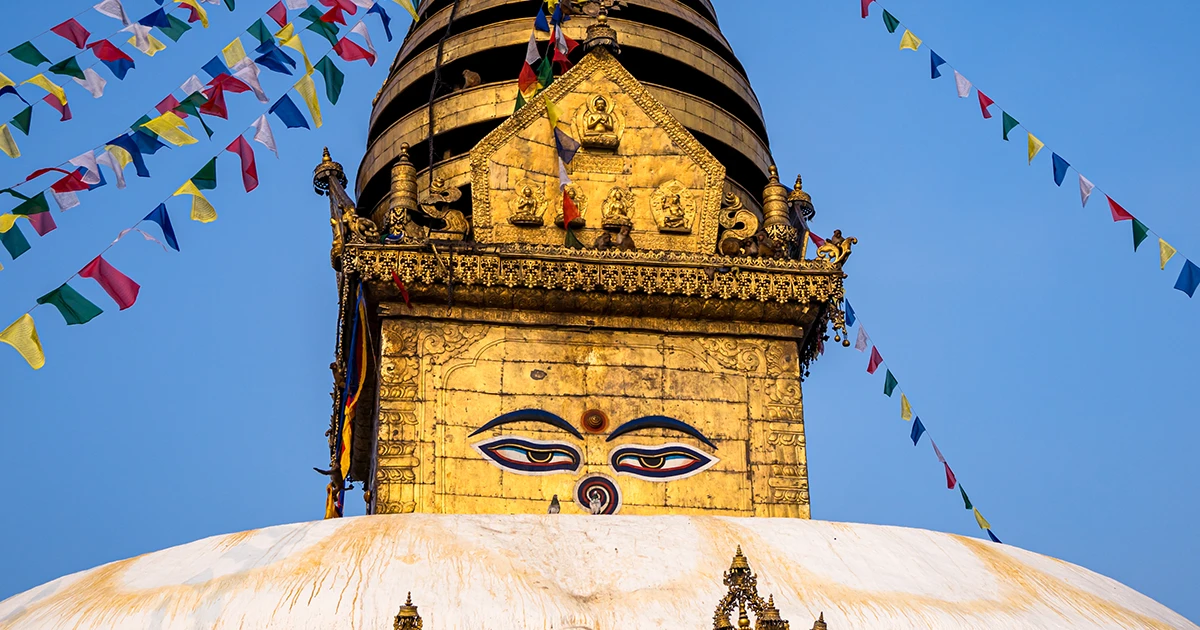
You can see the unique symbol just below the pair of eyes which resemble the question mark, it means Nepali number १. This symbolizes the unity and oneness of all life. These eyes remind us that true awakening comes from seeing the world clearly along with both compassion and understanding.
The Harmika
The square platform which consist of four opening located above the dome of the stupa is called Harmika, which represents physical form of earth as well as the stability and directions in Swayambhunath Symbolism Explained. It’s four side faces North, South, east, and West direction. This is the region where all seeing eyes of the Buddha, third eyes, and Nepali १ is painted.
The 13 Tiers: Steps to Enlightenment
The golden spire rising above the stupa also known as the Trayodashabhuvana is another profound aspects of Swayambhunath Symbolism Explained. This golden spire consist of 13 spire each spire represents a stage in the spiritual journey toward enlightenment or Nirvana.
These 13 tiers are gradually decreasing in the size represents the progress towards the goal of spiritual growth from ignorance to ultimate wisdom. All 13 tiers is painted in color gold which is a symbol of purity, enlightenment, and absolute wisdom.
The Umbrella, Crescent Moon, and Sun
These 13 tiers is covered by a golden umbrella which looks like a bowl and in Swayambhunath Symbolism Explained, the umbrella symbolizes the respect, spiritual protection, and final part of getting enlightment.
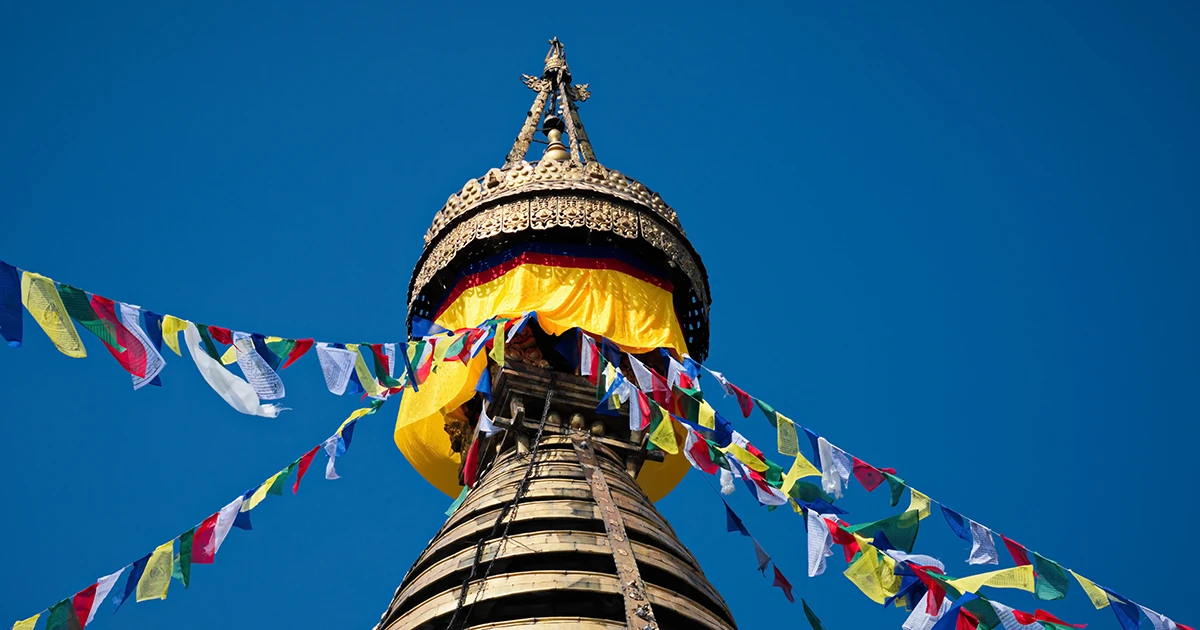
You can see crescent moon and the sun just above the umbrella which shows the balance between male and female energies along with the harmony between wisdom and compassion. These moon and sun is also symbolizes how emptiness transformed into the whole universe’s creation along with reaching the enlightment.
The Mandala Platform
The mandala like design with a three-tier platform in which whole stupa is built in Swayambhunath Symbolism Explained. While representing the universe’s structure in Buddhism, every tier has their own importance. This mandala platform provides a sturdy base for the stupa and set a holy atmosphere around the stupa which makes it visible easily from far away.
Major Attraction of Swayambhunath Stupa
Shrines and Guardian Statues
You can find many shrines an guardian statues in the periphery of Swayambhu. These statues is dedicated to dieites which protect this sacred stupa environment from negative energies.
The 365 steps
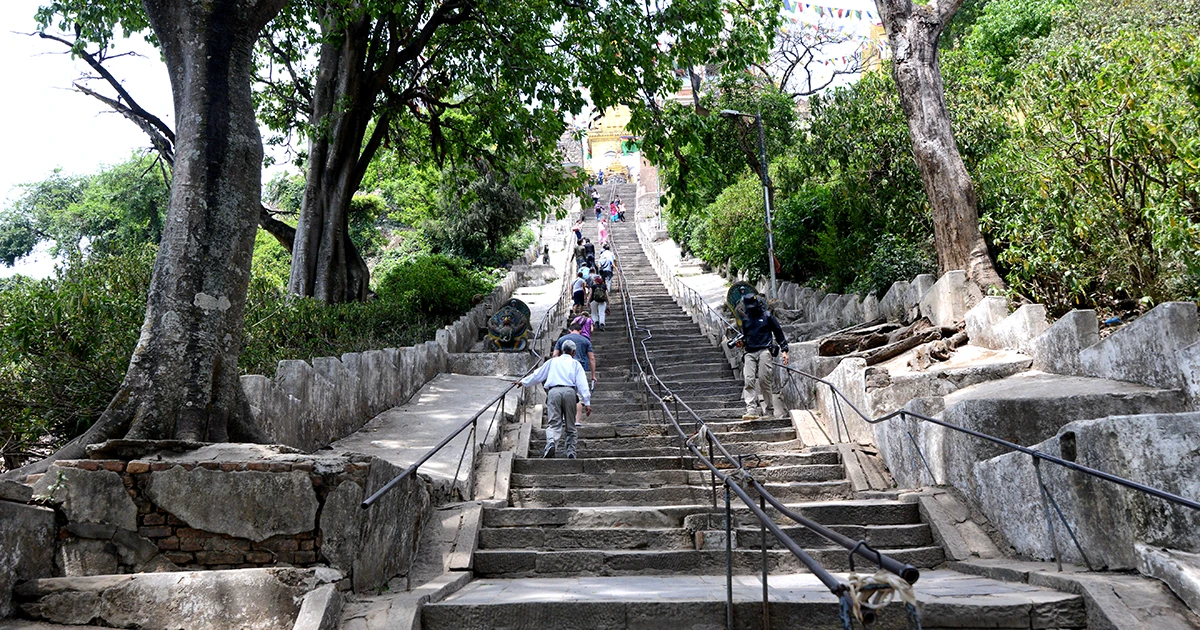
The 365 steps located in the eastern side of the hill was constructed by King Pratap Malla in the 17th century. These steps rpresents the 365 days of the year which also symbolizes effort and dedication you need to have in order to gain enlightment.
Dongak Chhyoling Monastery
The place where monks study, chant, and practices meditation is in Dongak Chhyoling Monastery. You should visit this monastery and enjoy the Buddhist tradition.
Harati Temple
This temple is dedicated to goddess Harati and it is also known as Ajima Temple. You shouldn’t take picture inside the shrines but you are free to take picture in the outside areas.
Harati goddess also represents the diseases small pox and legends believes that she is the one who provided remedies for it.
Pratapura and Anantapur Temples
These two temple is located southern part of the stupa. Both of the temple are considered powerful guardian of this sacred sites and are built in Pagoda styles.
The Journey from Earth to Enlightenment
Swayambhunath is a symbolic map of spiritual awakening and if you understood step by step, you will learn how the transformation of an ordinary human being into an enlightened soul happen. The base of stupa, dome is a symbol of earth and the cycle of human life which is usually filled with desire, struggle, and attachment.
Likewise, dome is the starting part of every individual spiritual journey which is always grounded in the real world. And the all-seeing eyes of Buddha located in the Harmika represents awareness, wisdom, and compassion. These eyes remind us that awakening begins when we start observing our thoughts and actions with clarity and mindfulness.
Lastly, 13 tiers represents a stage towards enlightment in upward direction which reflects gradual spiritual growth, where one moves beyond ignorance and ego step by step. Altogether, these elements show a path’s completion from earthbound existence to ultimate liberation while making Swayambhunath a powerful visual representation of enlightenment itself in Swayambhunath Symbolism Explained.
So, when you are in Kathmandu do not forget to visit this historic monument so that you can embrace the beauty of greenery, monkey being playful around you and immerse in the spiritual energy of the Swaymbhunath temples and let the wisdom guide your soul. Also, contact Awesome Holidays Nepal to make your Nepal journey more memorable in 2026.
FAQs
Expand AllWhat does Swayambhunath mean?
Swayambhunath means one who is self created refers that the stupa was emerged naturally from the ancient valley lake.
Why is Swayambhunath called self-arisen?
Swayambhunath is called self-arisen because, it appeared spontaneously from a emerging light of lotus that bloomed in the Valley lake.
What do the Buddha eyes at Swayambhunath symbolise?
The Buddha eyes at Swayambhunath symbolise wisdom and compassion while watching over all beings in four direction.
What does the curly symbol between the eyes mean?
The curly symbol between the eyes mean represents the Nepali number one which signifying unity and the oneness of all existence.
What does the third eye on the stupa represent?
The third eye on the stupa represents spiritual awakening and higher insight beyond ordinary perception.
Why are there 13 tiers above the stupa?
The 13 tiers above the Swayambhunath stupa represent the thirteen stages of spiritual realization that human beings must pass through to reach Nirvana (enlightenment).
What is the meaning of the vajra at Swayambhunath?
The meaning of vajra at Swayambhunath is indestructible truth and spiritual power in Vajrayana Buddhism.
Why do pilgrims walk clockwise around the stupa?
Pilgrims walk clockwise around the stupa to aligns with the natural flow of energy and the cosmic order along with showing respect to the Buddha
What is the meaning of spinning prayer wheels at Swayambhunath?
The spinning prayer wheels of Swayambhunath means spreading mantras and positive energy into the universe.
What is the story of the lotus and the ancient Kathmandu lake?
According to the legends, Swayambhunath emerged from a lotus light which grew in the middle of the ancient lake of Kathmandu valley.
Who is Manjushri and why is he important at Swayambhunath?
Manjushri is the bodhisattva of wisdom who is believed to have drained the ancient lake to make the valley habitable.
Why is Swayambhunath important in Vajrayana Buddhism?
In Vajrayana Buddhism, Swayambhunath is one of the oldest and most powerful spiritual centers to practice Vajrayana.
Why do Hindus also worship at Swayambhunath?
Hindus worship at Swayambhunath because the site is considered sacred by both Buddhists and Hindus which reflecting religious harmony.
What is Harati Ajima and why do visitors stop at her temple?
Harati Ajima is a protective goddess of children, and visitors stop in this temple to pray for childrens health, safety, and blessings.
What is Panchapur at Swayambhunath?
Panchapur of Swayambhunath refers to the five sacred Buddha representations symbolizing the five wisdoms.
What do the Five Buddhas at Swayambhunath represent?
The Five Buddhas of Swayambhunath represent different aspects of enlightened wisdom and cosmic energy.
Why is Swayambhunath considered one of Kathmandu’s holiest sites?
Swayambhunath is considered one of Kathmandu’s holiest sites because it combines ancient history, spiritual symbolism, and active religious practice in Nepal.
Is Swayambhunath a UNESCO World Heritage Site?
Yes. Swayambhunath is a UNESCO World Heritage Site.
Can non-Buddhists visit Swayambhunath respectfully?
Yes, non-Buddhists can visit Swayambhunath respectfully.
Is sunrise the best time to visit Swayambhunath?
Yes, sunrise the best time to visit Swayambhunath as you can witness the the golden light and peaceful atmosphere enhance the spiritual experience in Kathmandu.
Related blog posts
Discover a choice of tourist destinations loved by most of our visitors. Whether you're on a jungle safari to spot rare animals or walking through a world heritage site, these well-planned itineraries cover the major highlights of Nepal.

 call an expert at: