
A Beginner’s Guide to Nepali Temple Etiquette
 Sristi Adhikari
Are you a beginner planning to visit spiritual places, like temples, and curious about the Nepali temple etiquette you should follow to make your experience even better in 2026? Then, this guide is just for you.
Nepal offers a lot more to travelers than just snow-capped mountains and scenic trekking routes. Temples are places where you will feel a quiet energy in the air, the scent of incense drifting around, and the soft rhythm of bells and prayers. Being hesitant or confused about what to do, where to stand, or how to behave without accidentally offending anyone are some obvious things you will feel as a beginner.
But you don’t have to worry about these anymore, as we will help you understand not just the rules, but the meaning behind them, so your temple visit feels less like a checklist and more like a genuine cultural connection that will become a lifetime memory.
Popular Nepali Temples and Monasteries
There are many sacred places, like temples, shrines, monasteries, and gompas, which reflect deep spiritual roots that blend both the traditions of Hinduism and Buddhism. You can visit temples and monasteries built in ancient times, such as:
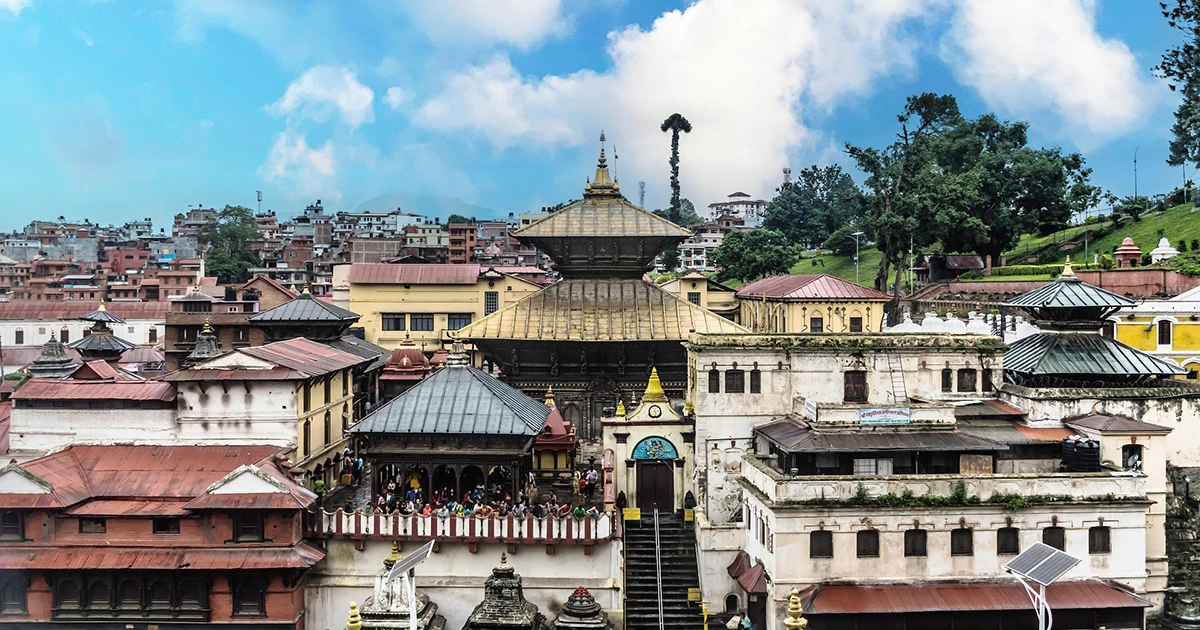
Pashupatinath Temple
It is one of the Hindu temples dedicated to Lord Shiva. The temple sits along the Bagmati River and is also known for its powerful spiritual atmosphere, daily rituals, and sacred cremation ghats, which become crowded during Maha Shivaratri, throughout the month of Shrawan, and Teej.
Swayambhunath
Swayambhunath also known as the “Monkey Temple,” is an ancient stupa which provides stunning views of the Kathmandu Valley. You can get a mix of Buddhist and Hindu symbolism, and it is filled with prayer flags and spinning wheels.
Boudhanath
It is one of the largest stupas in the world, and Boudhanath is a major center of Tibetan Buddhism. If you are in Bouddha, we suggest you walk around it, where you will get a glimpse of monks wearing a robe with a book in one hand. Also, you will get an experience of a calm and peaceful environment during evening prayers.
Muktinath Temple
Muktinath temple is located in the Himalayas and is sacred to both Hindus and Buddhists pilgrimage. Pilgrims from all around the world visit to cleanse their sins under the 108 water spouts and experience spiritual liberation.
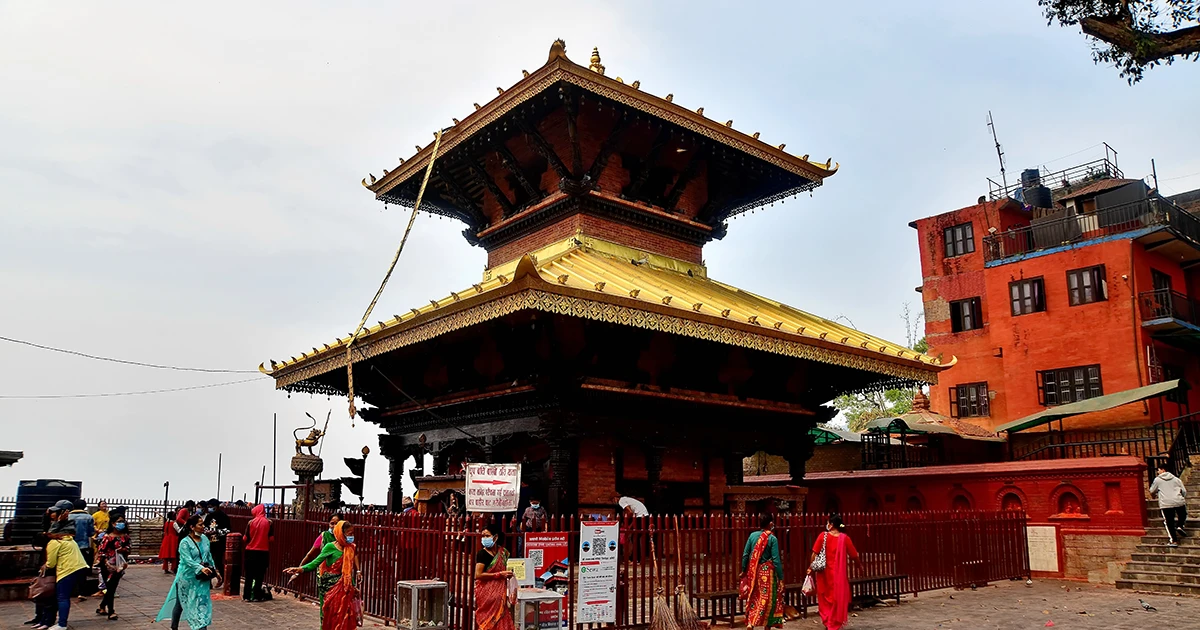
Manakamana Temple
The temple is popular for fulfilling wishes, and you will experience a scenic cable car ride to reach the temple. Both local and internal Devotees visit to pray to the goddess Bhagwati for good fortune and blessings to themselves and for their loved ones.
Lumbini
The birthplace of Lord Buddha, Lumbini is one of the most important pilgrimage sites in the world. It features peaceful monasteries built by different countries and the sacred Maya Devi Temple.
Kopan Monastery
Kopan Monastery is located near Bouddhanath on a quiet hilltop. It is known for meditation retreats and Buddhist teachings and you should go there when you are in Kathmandu, as it is a perfect place if you’re looking for peace and spiritual learning.
Tengboche Monastery
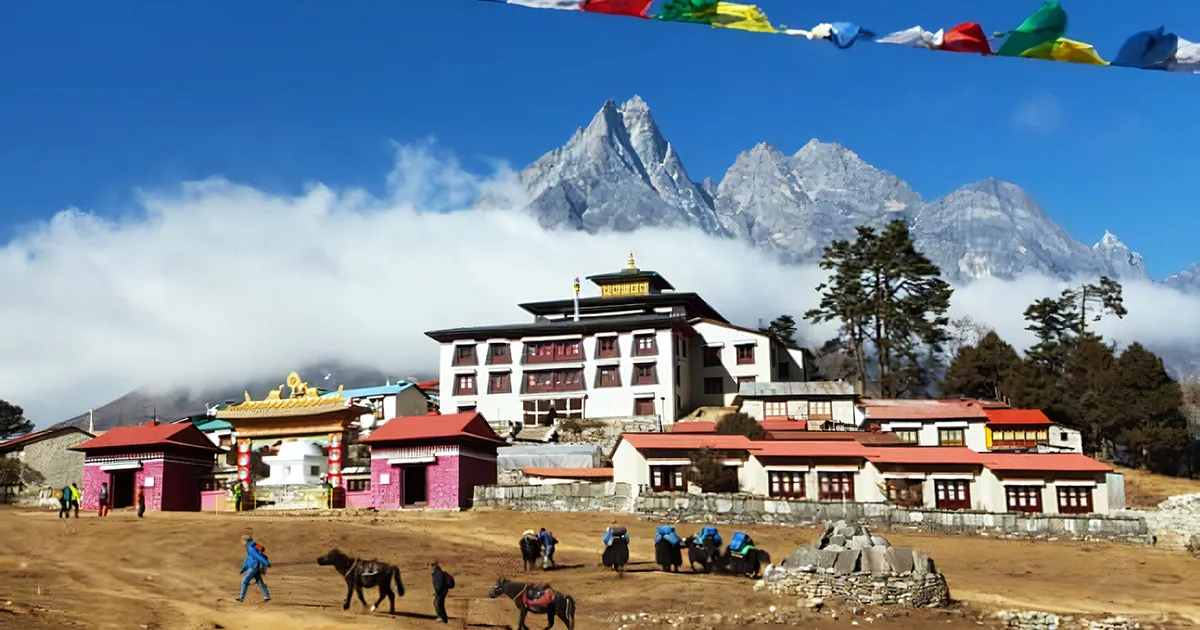
The monastery is surrounded by Himalayan peaks and is the largest monastery in the Everest region. It offers breathtaking views and a serene atmosphere, especially during morning prayers.
Why Temple Etiquette Matters
The temples and monasteries are not only landmarks, but they are living places where locals worship while following their own religious culture and ritual everyday. Visiting them once in a lifetime with respect and curiosity is highly expected no matter where you are from and what background you belongs to.
- It shows respect for local beliefs as Temples in Nepal are places of worship which happens daily, which happen daily.
- Maintaining the peaceful and spiritual environment inside temples helps in preservation of sacred atmosphere.
- Also, it prevents unintentional offense like wearing shoes or taking photos at the wrong time.
- It helps you to connect with locals in a positive way.
- Following Respectful behaviour helps protect cultural heritage for future generations.
- Enhances your own experience as you will know about the meaning behind customs.
Different Temple Etiquette
Dress Modestly
The temple dress code also plays a vital role in how you’re perceived at a Nepali temple. Nepalese are quite conservative when it comes to their culture, especially in religious places.
- You should always cover your shoulders and knees.
- Avoid wearing tight or revealing attire.
- Carry a scarf or shawl and keep it above your head when you are attending prayers and rituals.
What to wear to a temple or any religious sites includes dressing modestly, as it is not about strict rules but it’s a simple gesture of respect toward the sacred environment of Nepalese temples.
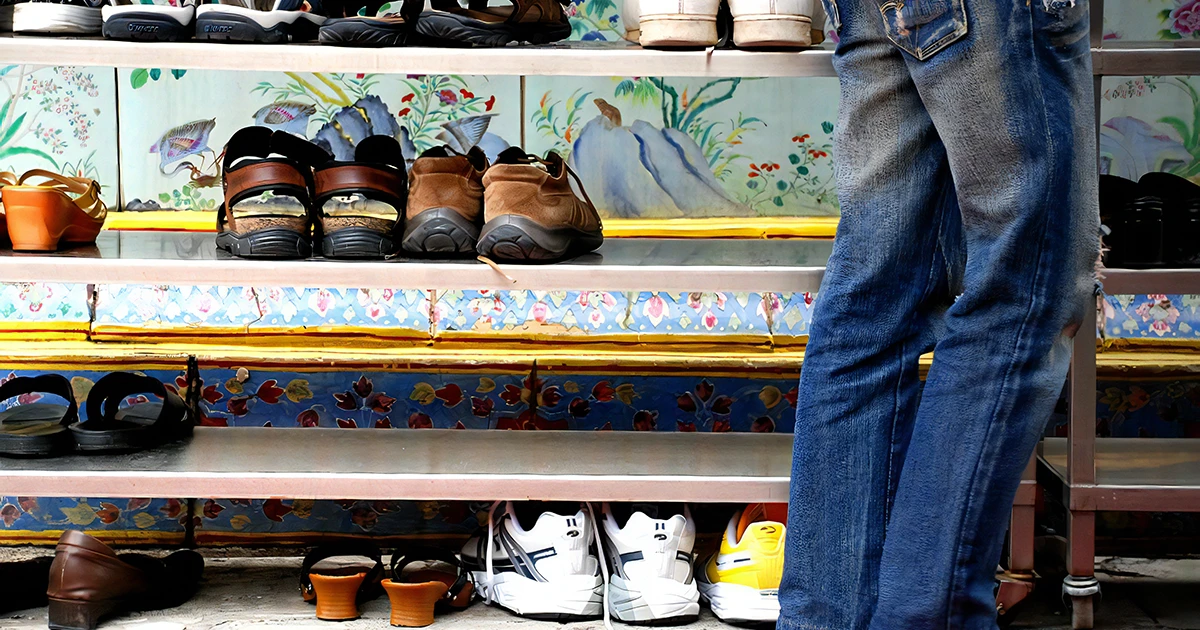
Remove Your Shoes
You must always take off your shoes when entering any temple or shrine, which is another temple etiquette you should follow in Nepal. This practice symbolizes purity and respect.
There are areas near the entrance where you can leave your footwear. Walking barefoot might feel unfamiliar at first, but it’s an essential part of the experience in Nepal.
Understand Entry Restrictions
Not all temples in Nepal are open to everyone. Some Hindu temples only allow Hindus inside the inner temple. For this, you have to look for:
- Signs at the entrance
- Observe what others are doing
- Ask politely to locals or pilgrims.
Respecting these boundaries is crucial, and you can just enjoy the holy temple environment from outside.
Walk Clockwise Around Sacred Places
When you are inside or around temples, stupas, or shrines, make sure you always walk in a clockwise direction as it harmonise devotee with cosmic energy. Walk Clockwise also known as Kora or Parikrama signifies placing the divine at the center of life, with the right side toward the shrine to absorb positive energy, which is usually done three or more times.
This tradition reflects spiritual harmony and respect. You’ll notice locals and fellow pilgrims follow this practice naturally, and just follow their lead, as it is another temple etiquette you should consider.
Be Mindful of Your Body Language
In Nepali culture, you have to be careful of your body gestures as certain things can be disrespectful even though it is unintentional:
- You should avoid pointing your feet toward shrines or statues
- Don’t touch religious objects or offerings
- Make sure to use your right hand when giving or receiving items
Even small actions carry meaning in sacred spaces, so staying aware of your movements goes a long way.
Avoid Noise and Behave Calmly
Temples are peaceful environments meant for prayer and reflection in every parts of Nepal. If you maintain a calm behavior, it will help preserve the spiritual atmosphere for everyone around you.
- Always speak in soft voice
- Keep your phone in silent
- Avoid loud conversations or laughing out loud.
Ask Before Taking Photos
While temples are visually stunning, photography is not always allowed. You should be mindful, especially in inner areas or during rituals in the temple and monastery.
- Always look for signs
- Ask permission from locals or priests if you want to capture them.
- Avoid photographing people without consent
Following this temple etiquette shows respect for both the place and the people.
Avoid Leather Items and Smoking
Leather items such as belts or bags are discouraged or prohibited, as they are considered impure and you should always follow this temple etiquette in Nepal. Also, do not smoke or drink alcohol in temple areas. Make sure to avoid eating inside sacred spaces. These actions are seen as disrespectful and can offend worshippers.
Accept Rituals with Grace
If offered tika (a colored mark on the forehead) or prasad (blessed food), accept it politely and make sure to use your right hand for receiving. You’re not required to participate, but acknowledging these gestures respectfully is appreciated and helps you connect with local traditions wherever you are, whether it is in the capital city or in some remote region of Nepal.
Embracing Respect: The Heart of Nepali Temple Etiquette
When visiting a temple or any kind of religious and cultural sites, you are expected to follow some temple etiquette in Nepal. You have to be observant, follow what locals do, and carry a respectful attitude as temples like Pashupatinath, Muktinath and Manakamana or monasteries like Kopan, Tengboche, etc are places where culture, faith, and daily life come together.
Dressing modestly, removing shoes before entering shrines or temples, avoiding noise, asking permission before taking a picture are examples of some rules that are rooted in kindness, humility, and cultural understanding. Not everyone is born perfectly, but you have to be quite aware of the surrounding and doing what locals does will make you follow temple etiquette along with more spiritual essence rather than awkward moments.
Whether you’re a first-time visitor or seeking a deeper spiritual journey, make sure to contact Awesome holidays Nepal, as our expert team will help you make your journey more respectful, authentic, along with unforgettable experience in 2026.
FAQs
Expand AllDo I need to remove my shoes before entering a temple in Nepal?
Yes, you need to remove shoes before entering a temple in Nepal.
Where exactly should I take my shoes off at a temple or stupa?
You should take your shoes off at the designated entrance area or before stepping onto the temple or stupa.
Should I walk clockwise around temples and stupas in Nepal?
You should walk clockwise around temples and stupas in Nepal.
Can tourists enter all temples in Nepal?
No. Tourists cannot enter all temples in Nepal as some are restricted to Hindu pilgrims only.
Are non-Hindus allowed inside Pashupatinath Temple?
No. Non-Hindus are not allowed inside Pashupatinath Temple.
Can I still visit Pashupatinath if I cannot enter the main temple?
Yes. You can still visit Pashupatinath even though you cannot enter the main temple. You are free to explore the surrounding complex and riverbank areas.
What should I wear when visiting temples in Nepal?
You should wear modest clothing that covers your shoulders and knees when visiting temples in Nepal.
Can I wear shorts or sleeveless tops to a temple in Nepal?
No. Wearing shorts or sleeveless tops is generally discouraged in temples in Nepal.
Are leather items allowed inside temple areas?
No. Leather items are not allowed inside temple areas.
Can I take photos inside temples in Nepal?
No. You cannot take photos inside temples in Nepal.
Is photography allowed at Pashupatinath?
Photography is not allowed inside the main temple of Pashupatinath.
Can I take photos at Boudhanath and Swayambhunath?
Yes, you can take photos at Boudhanath and Swayambhunath.
Should I ask permission before taking photos at sacred sites?
Yes, you should ask permission before taking photos at sacred sites.
Is it okay to photograph monks, worshippers, or rituals?
No, it is not okay to photograph monks, worshippers, or rituals without their consent.
Can I film ceremonies or prayer rituals in Nepal?
You can film ceremonies or prayer rituals only after asking permission.
Do I need to keep quiet inside temples and monasteries?
Yes, you should keep quiet inside temples and monasteries.
Is it rude to point at statues, shrines, or religious objects?
Yes. It is rude to point at statues, shrines, or religious objects
Should I avoid sitting with my feet pointing towards shrines or idols?
Yes, you should avoid sitting with your feet pointing toward shrines or idols.
Can I touch statues, prayer wheels, or sacred objects?
No, you should not touch statues or sacred objects.
What kind of offerings can visitors bring to temples?
Visitors can bring simple offerings like flowers, fruits, or incense to temples.
Related blog posts
Discover a choice of tourist destinations loved by most of our visitors. Whether you're on a jungle safari to spot rare animals or walking through a world heritage site, these well-planned itineraries cover the major highlights of Nepal.

 call an expert at: