
Monastic Education in Boudhanath: How Buddhist Monks Study Around Kathmandu’s Sacred Stupa
 Sristi Adhikari
Have you ever heard of Monastic Education in the Boudhanath Stupa of Nepal? If yes, then you have seen monks wearing maroon-robed walking in the Stupa periphery with a book in one hand.
Monastic Education in Boudhanath is not just about religion, but it is a complete system of intellectual, spiritual, and practical training that has been preserved for centuries while adapting to modern needs. The peaceful, incense-filled streets, along with the soft sound of spinning prayer, create a serene atmosphere around the Boudhanath stupa, which has attracted visitors from all around the world.
If you are curious about how monks study, where they learn, or whether you can join this journey, then continue reading this blog, as we will help you guide from daily routine to admission for Monastic education in Boudhanath for 2026 in detail.
What is Monastic Education in Boudhanath?
Monastic Education in Boudhanath is a disciplined path where you will study about Buddhist philosophy, meditation, ethical training, and modern academic subjects. Monasteries around Boudhanath are not just places of worship but they are also educational institutions for monks which is fully functional as of now.
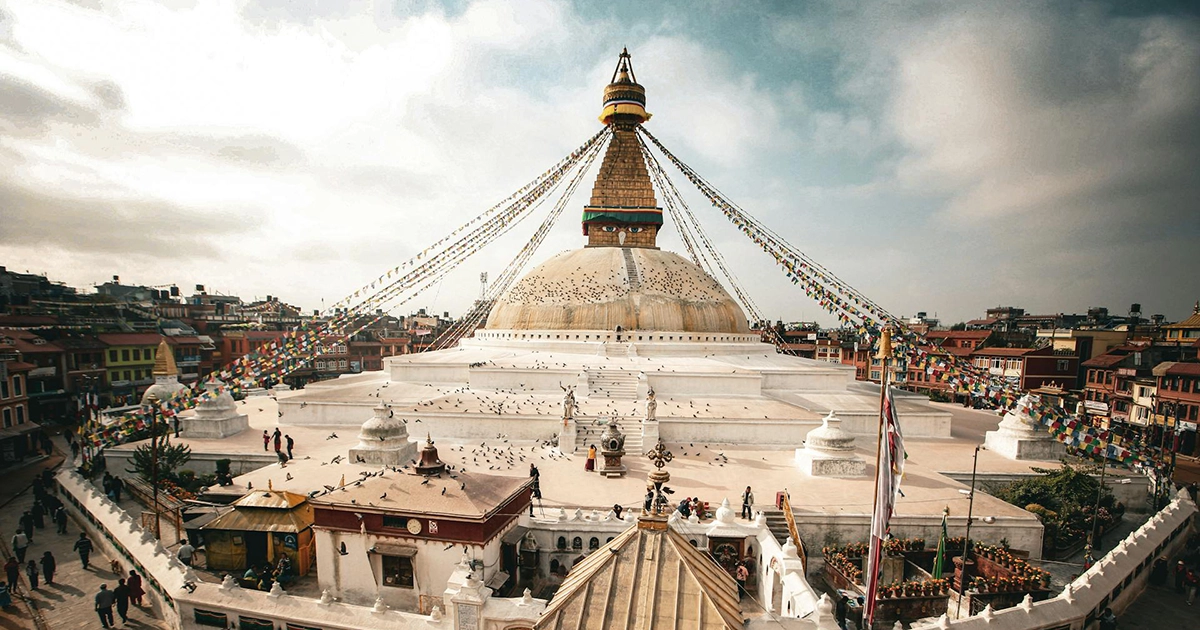
Monks begin their education from the age of 7 and learn both spiritual and secular subjects. The main goal of Monastic Education in Boudhanath is quite simple yet very intense:
- Training the mind through wisdom and compassion from a young age.
- Preservation of Buddhist teachings from generation to generation.
- Prepare monks so that they can serve their society.
Key Monasteries Offering Monastic Education in Boudhanath
Kopan Monastery
Kopan Monastery is one of the most popular centers of Monastic Education in Boudhanath. It offers a structured and internationally recognized program of Tibetan Buddhism.
- Combines Buddhist philosophy with modern education.
- Offers a Geshe degree, which is equivalent to a PhD in Buddhist studies.
- Free education, food, and accommodation for monks
Monks here study for years, progressing from basic memorization to advanced philosophical debate.
Samtenling Monastery and School
It is located near Boudhanath and focuses on younger monks from age 6 to 26.
- Provides education from kindergarten to grade 8.
- Blends modern schooling with monastic discipline
- Students aged 6–26.
This is a great example of how Monastic Education in Boudhanath begins at an early age.
Nunneries Around Boudhanath
Monastic education doesn’t mean you have to be a monk. Nunneries like Khachoe Ghakyil Ling is where you can study it as it provide equal opportunities to women or nuns.
- Offer education of philosophy, debate, and ethics.
- Follow the same curriculum as monks.
- Can earn Geshe-ma degrees.
- Trungram nunnery
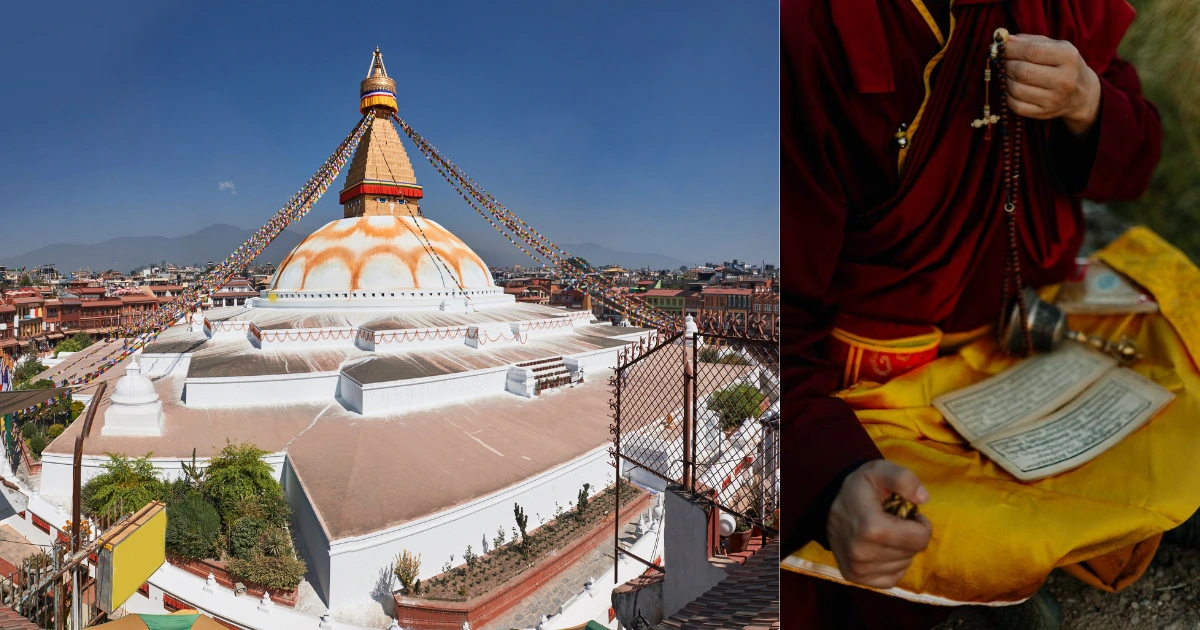
What Do Monks Study?
The curriculum in Monastic Education in Boudhanath is quite unique and rigorous.
Buddhist Philosophy
This includes deep study of:
- Logic and reasoning
- Madhyamaka also known as Middle Way philosophy
- Abhidharma, which includes the study of psychology and metaphysics.
Debate Practice
Debate is central to Monastic Education in Boudhanath. Monks practice debates daily with fellow students as it helps to sharpen and polish their understanding.
- Helps develop logic and clarity.
- Considered a mark of intellectual excellence.
Memorization
Students focus on memorizing prayers, texts, and philosophical treatises related to Tibetan Buddhism.
- It helps test their concentration and memory power.
- Important for forming the foundation for deeper understanding among them.
Meditation and Rituals
Daily meditation and rituals are also part of learning.
- Monks engage in Morning and evening prayers daily.
- It also involve retreats and spiritual practices.
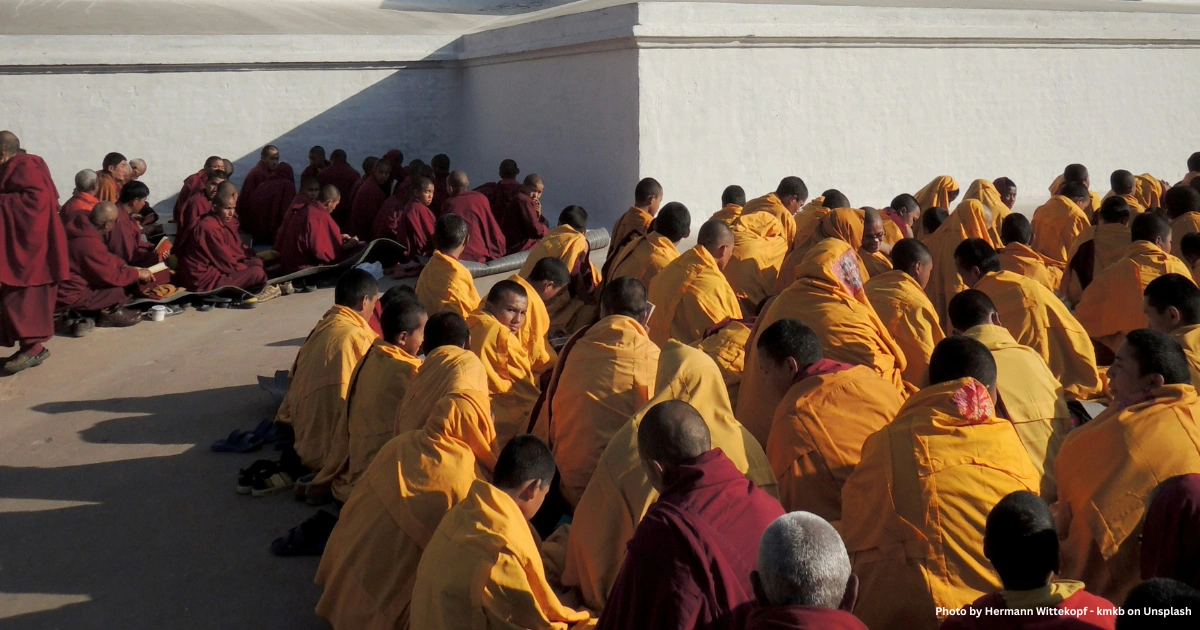
Modern Education
To help monk adapt to the modern world, Monastic Education in Boudhanath also includes study of:
- English, Nepali, and Tibetan languages.
- General Knowledge, Mathematics and science.
- General school curriculum.
Daily Life of a Student Monk
A typical day in Monastic Education in Boudhanath is highly structured:
- Early morning prayers
- Classroom study (9:30 AM – 4:00 PM in some monasteries)
- Memorization sessions
- Debate practice in the evening
- Meditation and rituals
This scheduled lifestyle helps monks and nuns to build focus, humility, and resilience.
How Long Does Monastic Education Take?
Monastic Education in Boudhanath is a long-term course. It involves:
- Basic education which requires the period of 10–12 years.
- Advanced philosophy studies where an additional 10–15 years is required.
- A Geshe degree can be obtained after studying for decades.
Some monks continue to monastic universities in India for higher education.
How can you Join Monastic Education in Boudhanath?
If you’re interested in experiencing Monastic Education in Boudhanath, there are several ways to join such as:
Become a Monk or Nun
Being a monk or nun is not a joke; it requires ordination and commitment to monastic life. It normally starts at a young age, but adults can also join.
Short-Term Courses
There are monasteries like Kopan where you can take a short term courses like:
- Meditation retreats.
- Buddhist philosophy courses.
- 10-day to 1-month programs.
These are best suited for beginners exploring Monastic Education in Boudhanath.
Volunteer or Study Programs
There are monasteries that allow volunteering, language exchange, and informal learning with monks.
Can Foreigners Study Monastic Education in Boudhanath?
Yes, and it’s increasingly popular. Many monasteries like Rangjung Yeshe Institute and Kopan Monastery:
- Offer teachings in English.
- Welcome international students
- Provide structured courses for non-monastics
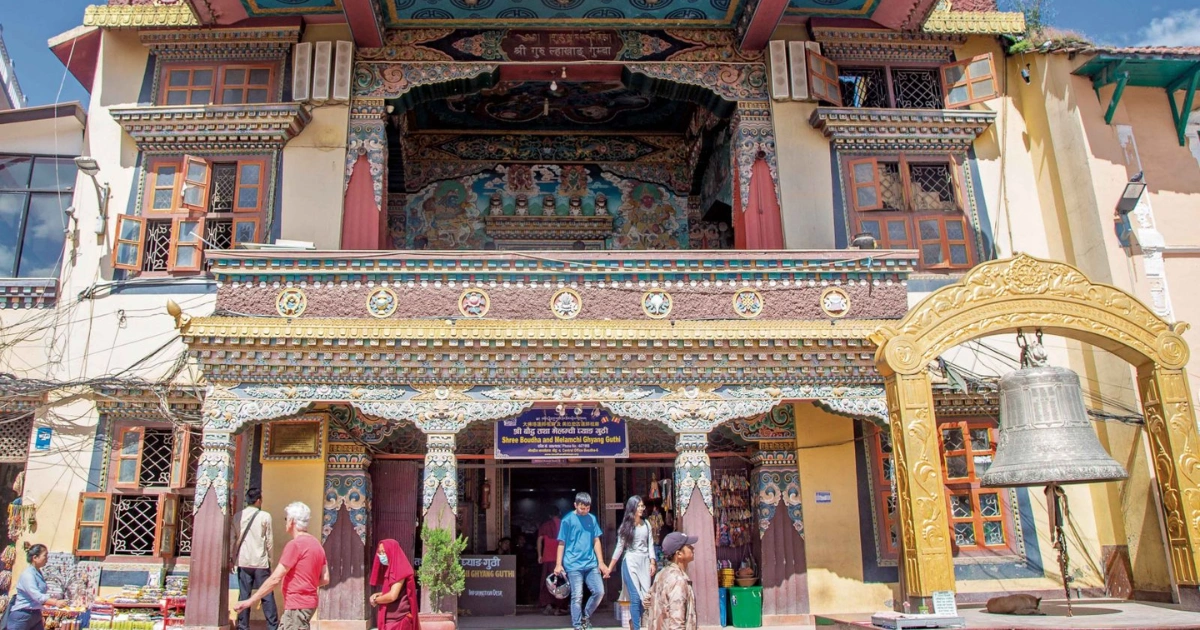
Boudhanath is one of the easiest and most popular places to access authentic Buddhist teachings globally.
Why Choose Monastic Education in Boudhanath?
There are many reasons why Monastic Education in Boudhanath stands out:
- Direct access to authentic Tibetan Buddhist traditions
- Highly respected teachers and lineage
- Combination of ancient wisdom and modern education
- Peaceful environment around a sacred UNESCO site.
Above all, it offers a rare opportunity to transform both mind and life.
Challenges in Monastic Education
Despite its strengths, Monastic Education in Boudhanath faces challenges:
- Limited resources and infrastructure for large number of young monks and nuns.
- Need for qualified teachers.
- Balancing tradition with modern education.
- Mostly depends on the donations from tourism and fluctuations in tourism can directly affect food, study materials, and living conditions.
- Noise pollution as it is close to the roadways which create distractions that can affect a focused study environment.
- Many young ones join monasteries for education at an early age, and adapting to strict discipline and life away from family can be emotionally challenging to them.
Yet, these institutions continue to evolve and grow as of now.
Final Thoughts
Monastic Education in Boudhanath has a lot to offer than just an academic system, as it teaches young individuals to learn the way of life. Monks and nuns learn everything while living inside the periphery of monastery walls like memorizing ancient texts to debating complex philosophies.
Their life inside the monastery shapes their character, intellect, and compassion, which last till their last breath. It doesn’t matter whether you want to become a monk, are interested in enrolling in a short course, or are just curious about Buddhist learning; Monastic Education in Boudhanath offers a deeply enriching path right at the heart of Kathmandu.
If you also want to walk around Boudhanath Stupa at dawn and want to experience the monks chanting eco in the thin air, then contact Awesome Holidays Nepal for planning a vacation, as our certified guides will make your journey filled with unforgettable memories.
FAQs
Expand AllWhat is monastic education in Buddhism?
Monastic Education in Boudhanath is a disciplined path where you will study about Buddhist philosophy, meditation, ethical training, and modern academic subjects.
What do monks study in Buddhist monasteries?
M onks study Buddhist Philosophy, Debate Practice, Memorization, Meditation, Rituals, Modern Education, Language and Texts, and General Knowledge in Buddhist monasteries.
Is photography allowed inside monasteries?
No. Photography is not allowed inside monasteries.
At what age can someone become a monk in Nepal?
Someone can become a monk if they are in between six and sixteen years old in Nepal.
Do monks attend formal classes?
Yes, monks in Nepal attend formal classes.
What language is used in Buddhist monastic studies?
Language used in Buddhist monastic studies includes Tibetan for Mahayana/Vajrayana traditions, Pali for Theravada, and Sanskrit for academic, historical studies, often supported by Nepali or English.
Do monks study philosophy?
Yes. Monks study philosophy.
What is the purpose of Buddhist debate practice?
The purpose of Buddhist debate practice is to deepen understanding of philosophical teachings, sharpen critical thinking, and overcome misconceptions to establish a correct view of reality among young monks.
What are Buddhist scriptures studied in monasteries?
Tibetan Buddhist scriptures, focused on Mahayana and Vajrayana texts are studied in monasteries around Boudhanath.
How many monasteries are around Boudhanath Stupa?
There are more than 50 monasteries around Boudhanath Stupa. Shechen Monastery, Ka-Nying Shedrub Ling Monastery, and the Guru Lhakhang Monastery are more popular ones.
What monasteries near Boudhanath teach Buddhist philosophy?
Shechen Monastery, Thrangu Tashi Choling Monastery, and Kopan Monastery, Triten Norbutse Monastery are some monasteries near Boudhanath which teach Buddhist philosophy.
Do monks from different countries study in Boudhanath?
Yes, monks from different countries study in Boudhanath.
Is Boudhanath a centre for Tibetan Buddhism?
Yes, Boudhanath is a major center for Tibetan Buddhism.
What is the etiquette when visiting a Buddhist monastery?
When visiting a Buddhist monastery, you should follow etiquette like:
- Wearing a dress which covers shoulders and knees.
- Removing shoes and hats before entering buildings.
- Maintain a quiet, polite demeanor.
- Always walk clockwise around stupas or statues.
- Avoid pointing with fingers, and never touch, sit higher than, or walk in front of monks.
How do monks memorise Buddhist texts?
Monks memorise Buddhist texts by intensive daily repetition, chanting, and rigorous oral training often starting in childhood.
Do young monks attend school inside monasteries?
Yes, young monks attend school insidE their monasteries.
How many hours do monks study each day?
Monks study 2 to over 10 hours each day.
Do monks perform duties besides studying?
Yes, monks perform duties besides studying like maintainence, cleaning the monasteries, preparing meals and services, painting, sculpting, making ritual items, or carpentry.
Can tourists visit monasteries in Boudhanath?
Yes, tourists visit monasteries in Boudhanath.
Are visitors allowed to watch monk debates?
Yes, visitors are allowed to watch monk debates
Related blog posts
Discover a choice of tourist destinations loved by most of our visitors. Whether you're on a jungle safari to spot rare animals or walking through a world heritage site, these well-planned itineraries cover the major highlights of Nepal.



 call an expert at: