
Kyanjin Gompa Monastery: What to Expect, Etiquette, Rituals, and Visitor Tips
 Sristi Adhikari
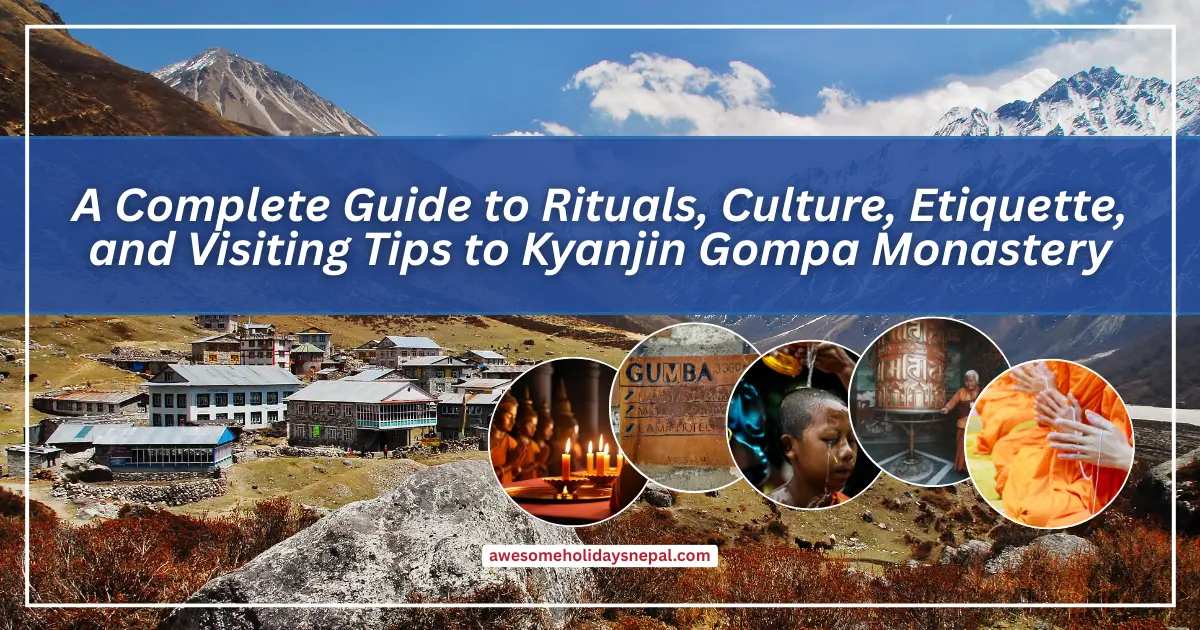
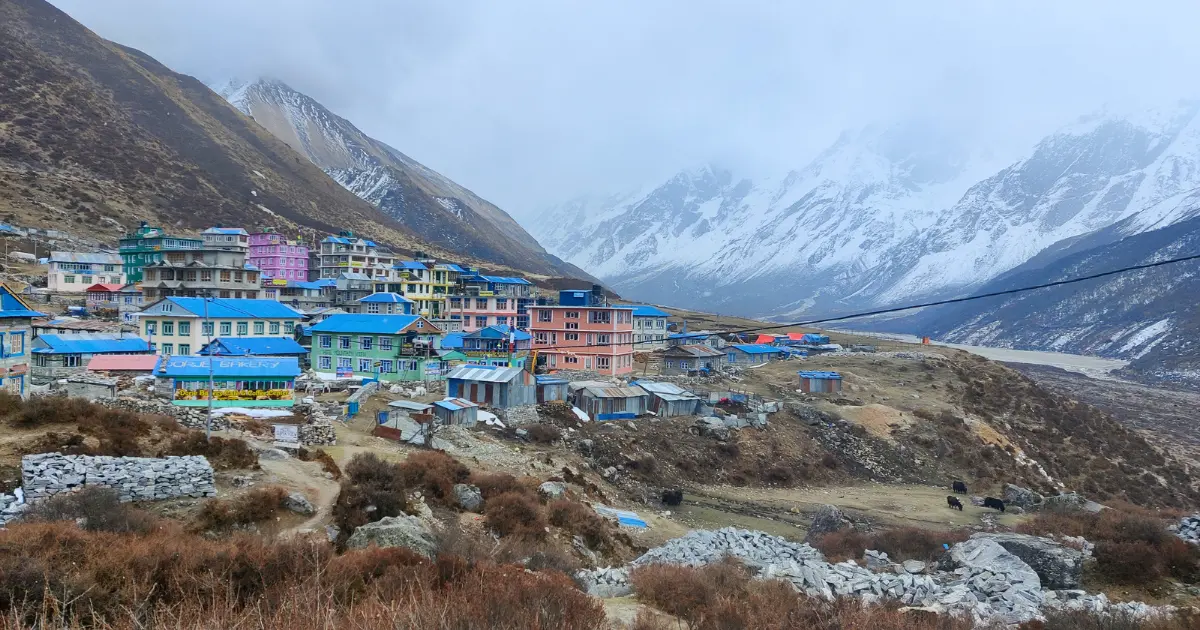
Are you planning a trek to Kyanjin Gompa Monastery, a quiet spiritual center in the Langtang Valley in 2026? The Kyanjin Gompa monastery is located in the Kyanjin village.
It is located at an altitude of around 3,870 meters above sea level, and the monastery offers a unique scenery, perfect views of snow-capped mountain peaks like Langtang Lirung (7,227m), Gang Chhenpo (6,388m), Naya Kanga (5,846m), and Yala Peak (5,500m). The fluttering sound of prayer flags along with the chirping sound of birds, with a distant view of yak herding, attracts heart of thousands of visitors every year.
Continue reading this blog for more details on Kyanjin Gompa monastery and how you can be respectful, what rituals you are going to experience with some practical tips for visiting this sacred site in the lap of the Himalayas.
What is Kyanjin Gompa Monastery?
Kyanjin Gompa Monastery is a centuries-old Buddhist monastery located in the heart of Kyanjin village, in Langtang Valley. The monastery is rooted in Tibetan culture and the daily lives of the local Tamang community of the Rasuwa district.
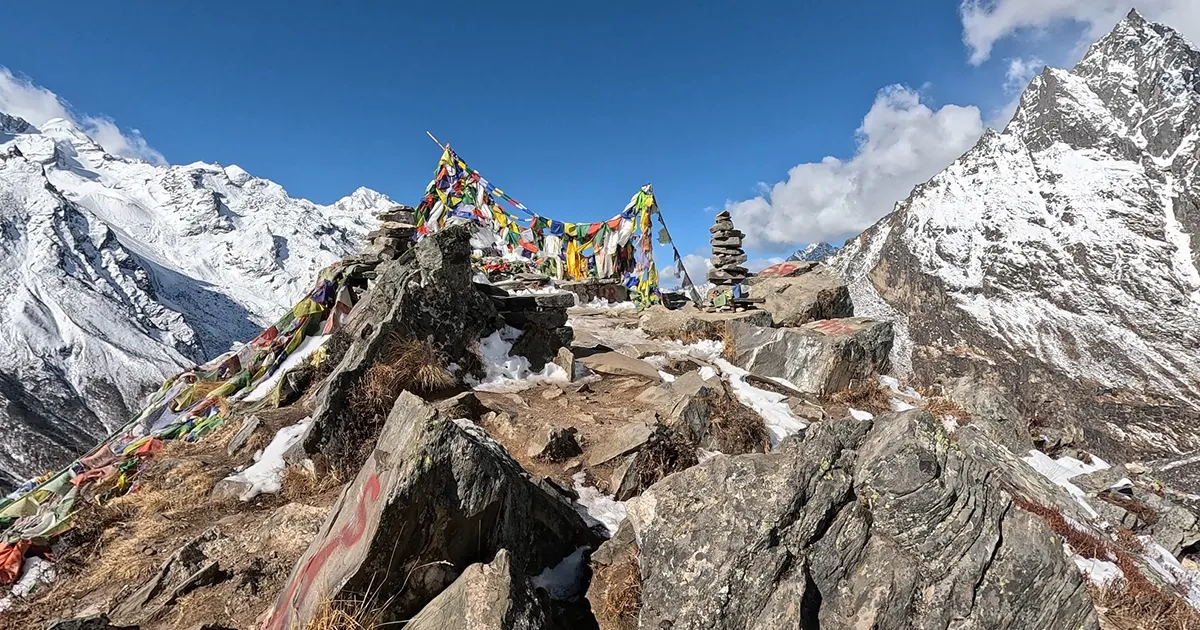
The centuries-old monastery lies in the Langtang National Park and features traditional Tibetan architecture where you can get a complete experience with vibrant murals, ancient thangka paintings, prayer wheels, and fluttering prayer flags against a backdrop of Himalayan peaks.
Kyanjin Gompa Monastery is not just another stop on a trekking trail but it’s the soul of the trek, where trekkers can calm their minds, meet their imagination and mountains feel alive around them.
What to Expect at Kyanjin Gompa Monastery
Kyanjin Gompa monastery has a lot to offer to visitors as it has been a spiritual anchor for the Langtang communities.
Spiritual Retreat and Morning Prayers
In Kyanjin Gompa monastery, you will see monks perform their morning puja (prayer rituals) in early mornings. Similarly, the scent of juniper incense, soft chanting, and the glow of butter lamps make you feel relaxed after the multiple-day of Langtang Valley trek.
Meditation and Reflection
The calm and serene atmosphere of the Kyanjin Gompa Monastery is perfect for meditation, and you can take some time for personal reflection as well. If you are more into Buddhist practices and are seeking some time for me time, it will be perfect for you.
When sitting near the monastery or in the courtyard, you can watch how the prayer wheel turns and the way the prayer flag flutters in peace.
Art and Culture
The historic walls of Kyanjin Gompa Monastery hold centuries old stories. You can see some intricate carvings, Tibetan art that tells how people are living their life in the hidden valley of Langtang.
Similarly, when taking picture, you can take yours and gompas exterior portion but you cannot capture the inside structure, deities, and monuments. Also, you should be mindful when taking picture of monks or when they are performing any rituals.
Etiquette to Follow at Kyanjin Gompa Monastery
When visiting Kyanjin Gompa monastery, you should always be mindful of being respectful. You should always follow these etiquettes when visiting every sacred sites of Nepal, not only to Kyanjin Gompa:
Clothing Etiquettes
You should always wear clothing that will cover your shoulders and knees. Wearing short western dress and shorts is highly discouraged as it represents disrespect for the sacred nature of the place and aligns with local cultural values.
If you have a scarf, make sure cover your head with it, which shows a sign of respect towards their culture and norms.
Maintain Silence and Respect Performed Rituals
You should always be quiet, no matter where you are, whether you are inside or around Kyanjin Gompa Monastery. Also, you should not talk and laugh in a loud voice, as it will disrupt the calming and peaceful environment of the gompa. If you are attaining morning prayers or any rituals you should always stay calm and observe the rituals carefully as it is the once in a lifetime opportunity.
Always Walk Clockwise Around Mani Walls
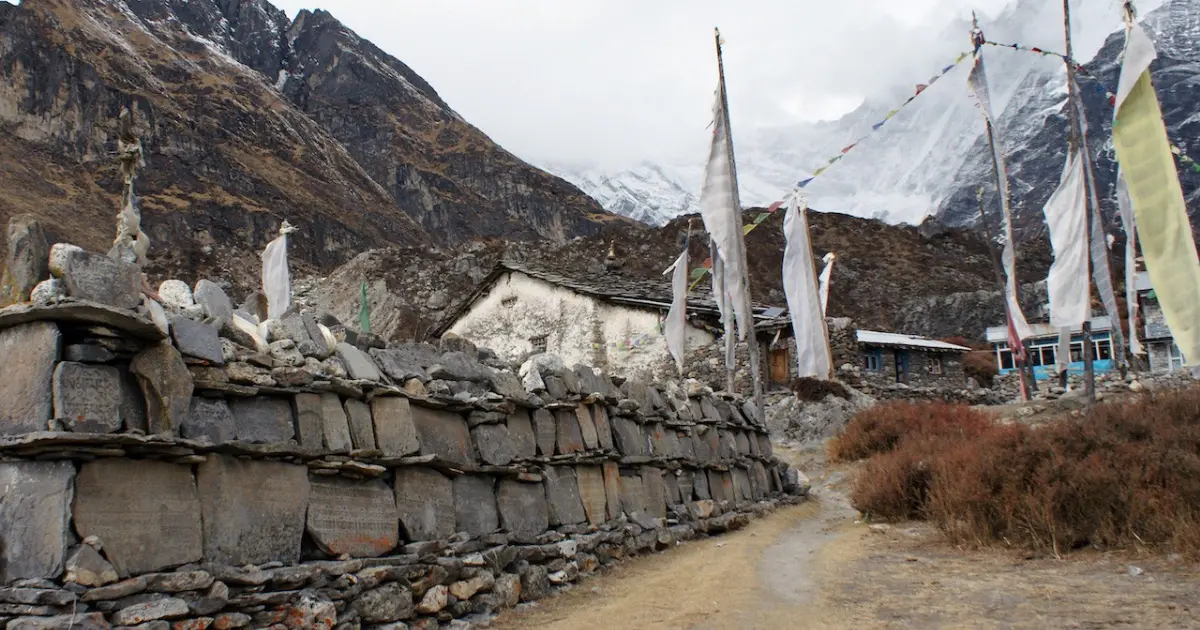
You can observe prayer walls (mani walls) and many prayer flags around the Gompa periphery. If you want to walk around them, always walk in a clockwise direction. Walking clockwise and rotating prayer wheels is considered auspicious in Buddhist tradition.
Ask Before Taking Photos
Always ask permission before taking pictures with monks or of sacred objects inside Kyanjin Gompa Monastery. Some sacred areas may prohibit photography entirely and you should not touch monks without their consent.
Small Donations are Appreciated
Trekkers should make small donations according to their capacity. Small donations to the monastery are appreciated as they are used to support the upkeep of the space. If you want to give something, offer with a respectful gesture, you should not just drop cash without any acknowledgment.
Ritual and Spiritual Practice
When visiting Kyanjin Gompa, you will experience the following spiritual rituals like:
Daily Puja (Prayer Ceremonies)
You can be part of the early morning and evening prayer ceremonies. Here, you will see monks chanting mantras, ringing bells, and offering butter lamps which will surely make you feel peaceful.
Prayer Wheels and Flags
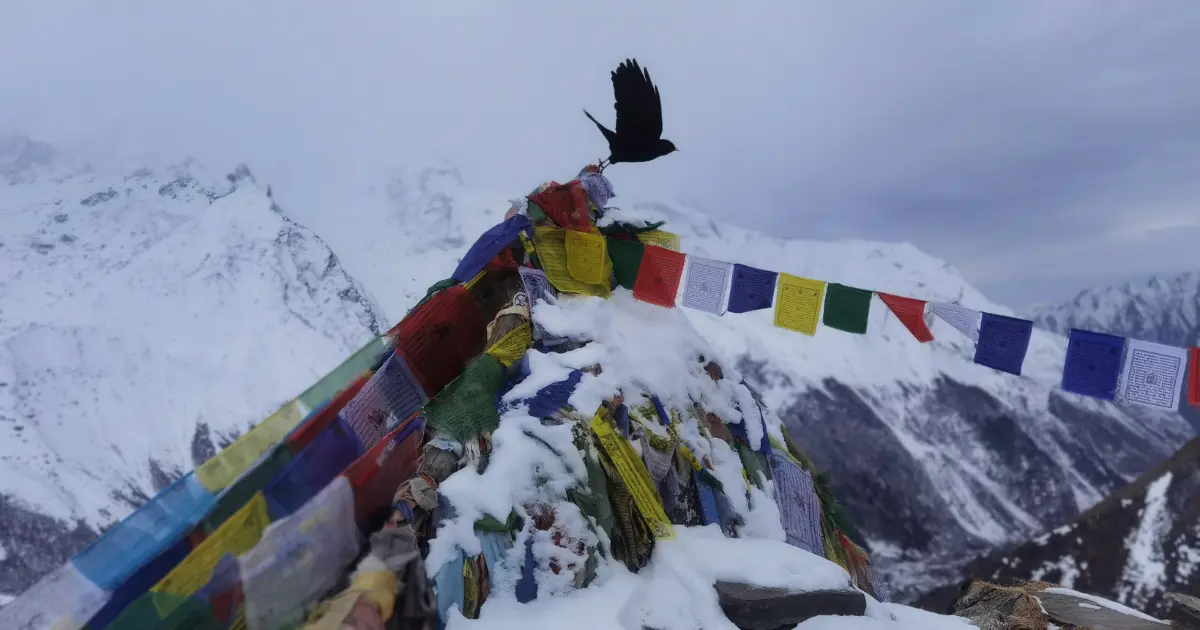
You can walk around prayer wheels or spin them in a clockwise direction. You should always be gentle when rotating them, as it is a symbolic act of sending prayers into the universe. The fluttering of Prayer flags nearby gompa is believed to carry blessings on the wind.
Festivals and Special Events
If your visit coincides with events like Lhosar (Tibetan New Year), you’ll see the monastery and village come alive with traditional music, dance, rituals, and community celebrations.
Visitors’ Tips for Respectful Travel
- Always dress modestly at Kyanjin Gompa Monastery. You should avoid wearing too revealing clothes.
- Visitors should take off their shoes begore entering the monastery.
- Talking in low voice is highly encouraged and you should prioritize not taking phone calls when you are inside the monastery.
- Trekkers should ask for monks and local permission before capturing them in lens.
- You should always walk in clockwise direction in monastery or when rotating prayer wheels.
- Visitors should avoid themself touching any sacred objects and scriptures.
- You should not litter haphazardly and avoid use of plastic in higher and sacred places like in Kyanjin Gompa.
- Always respect the local customs and tradition while following the locals lead.
- You should donate respectfully to the monastery.
Final Thoughts on Kyanjin Gompa Monastery
Kyanjin Gompa Monastery is a symbol of faith, endurance, and community life in the mountains. When visiting the sacred gompa, you should be mindful and always approach with respect to the monks, local people and to the head monks.
Similarly, wearing a clothing which covers your shoulder and knees, speaking in a soft voice, observing rituals and morning prayer silently, spinning prayers wheels in clockwise direction, are some of the most important cultural etiquette you should practices when visiting the Kyanjin Gompa Monastery. The calm peaceful environment of Kyanjin Gompa monastery is perfect for spiritual reflection, you can also spend time in a meaningful ways by doing yoga or meditation.
Your journey to Kyanjin Gompa Monastery will become a lifetime memory of humility, culture, and serenity that lingers long if you get connected with Awesome Holidays Nepal for the trek as we also offer experienced guide and trekking leader who will give you a right guidance throughout the trek in 2026.
FAQs
Expand AllWhere is Kyanjin Gompa located in the Langtang region?
Kyanjin Gompa is located at an altitude of 3,870m in the upper Langtang Valley of Nepal’s Rasuwa District.
Is Kyanjin Gompa a functioning monastery today?
Yes. Kyanjin Gompa is still functioning monastery today.
What is Kyanjin Gompa known for?
Kyanjin Gompa is known for its ancient Tibetan Buddhist monastery and the perfect view of mountain like Langtang Lirung. It is also popular for acclimatization during Langtang Valley trek.
Can tourists visit Kyanjin Gompa monastery?
Yes, tourists can visit the Kyanjin Gompa monastery.
Are there specific visiting hours for Kyanjin Gompa?
Yes. There is specific visiting hours for Kyanjin Gompa and it is open from 7:00 AM to 8:30 AM for visitors.
What should you wear when visiting Kyanjin Gompa?
You should wear clothing which covers your shoulders area and knee, covering your head with a scarf is highly appreciated, when visiting Kyanjin Gompa.
Do you need to remove your shoes inside the monastery?
Yes, you need to remove your shoes inside the monastery.
Can you take photos inside Kyanjin Gompa?
You can only take photos outside the Kyanjin Gompa.
Should you ask permission before photographing monks or rituals?
Yes, you should always ask for permission before photographing monks or rituals.
What should you do if a ceremony is happening when you arrive?
You should quietly watch the performed ritual from distance without interfering if ceremony is happening when you arrive.
What kinds of rituals might visitors observe at Kyanjin Gompa?
Visitors can observe rituals like monks chanting mantras, lighting butter lamps, and performing pujas (prayers), walking clockwise around chortens, turning prayer wheels, and the, offering of katas (white scarves).
What is chanting and why is it important in Buddhist practice?
The rhythmic recitation of sacred texts, mantras, or sutras to calm the mind, foster devotion, and internalize teachings is called chanting in Tibetan Buddhism. It is important because it is a form of meditation where it will first avoid mental distractions, prepares practitioners for silent meditation, and reinforces commitment to the Buddha’s path.
What are butter lamps and what do they represent?
Lamp which is filled with yak butter along with a wick inserted for lighting is called butter lamp. The butter lamp represent wisdom illumination, honoring deities, and focus for meditation.
What are prayer flags and why are they placed around monasteries?
Prayer flags are multiple color rectangular cloth printed with sacred mantra and auspicious symbols. They are placed around monasteries because it represent symbol of harmony and carry prayers with wind.
What language is commonly spoken around Kyanjin Gompa?
Tibetan Tamang language is commonly spoken around Kyanjin Gompa.
Is it respectful to offer donations at Kyanjin Gompa, and how?
Yes. It is respectful to offer donations at Kyanjin Gompa. You can donate by simply placing in donation box and giving in the hand of caretaker.
What should you avoid saying or doing around monks?
You should avoid physical contact with monks, should not walk directly Infront of them, avoid pointing feet towards them when seating, and always talk in soft voice Infront of them.
How high is Kyanjin Gompa (altitude)?
Kyanjin Gompa altitude is located at an elevation of 3,870 meters (12,697 feet) above sea level.
What is the best season to visit Kyanjin Gompa during the Langtang trek?
Autumn and Spring is the best season to visit Kyanjin Gompa during the Langtang trek.
Can you combine a monastery visit with Kyanjin Ri or Tserko Ri hikes?
Yes. You can combine a monastery visit with Kyanjin Ri or Tserko Ri hikes.
Related blog posts
Discover a choice of tourist destinations loved by most of our visitors. Whether you're on a jungle safari to spot rare animals or walking through a world heritage site, these well-planned itineraries cover the major highlights of Nepal.

 call an expert at: