
Mustang Sky Caves Archaeology and History: How to Visit the Cave Dwellings
 Sujata Pokhrel
Have you heard of caves hanging high in the sky? Yes, the high Himalayas of upper mustang region do have them.
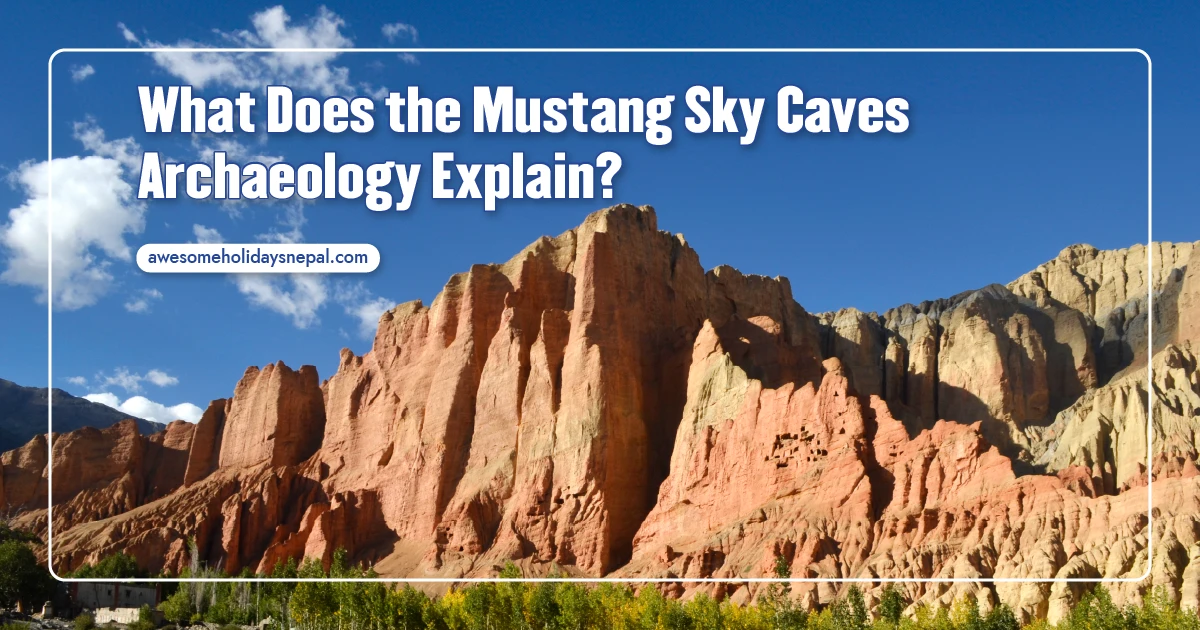
Mustang Sky Caves archaeology reveals one of the most fascinating chapters of Himalayan history. Carved high into the cliffs of Upper Mustang in northern Nepal, these thousands of man-made caves appear like dark windows suspended in stone.
Archaeological research has uncovered burial chambers dating back over two millennia, remnants of cliffside settlements, and Buddhist murals hidden within meditation caves. From tombs to homes to spiritual retreats, each layer of discovery suggests that the caves were used for different purposes across centuries.
Let’s get through the blog to better understand the archaeology of Mustang sky caves and how it represents the Himalayas.
Overview of Mustang Sky Caves
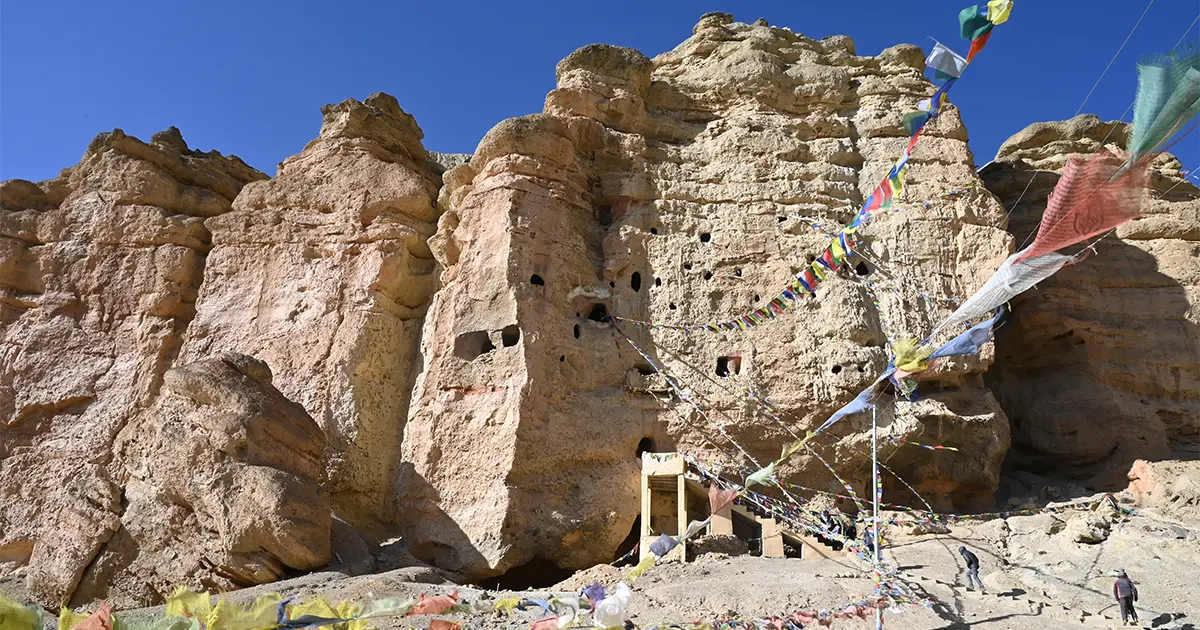
High above the wind-carved cliffs of northern Nepal, thousands of dark openings punctuate vertical canyon walls like a honeycomb etched into stone. From a distance, they appear almost unreal, too symmetrical to be natural, too precarious to be human.
These are the Mustang Sky Caves, one of the Himalayan region’s most mysterious archaeological landscapes. For centuries, they remained silent witnesses to trade caravans, shifting kingdoms, spiritual seekers, and forgotten communities.
Today, they offer rare insight into how people adapted to extreme environments long before modern infrastructure reached the Himalayas. The story of these caves is not only about architecture carved into cliffs it is about survival, ritual, and resilience in one of Nepal’s most dramatic regions.
What are Mustang Sky Caves?
The Mustang Sky Caves are thousands of man-made caves carved into sheer rock faces in Upper Mustang. Archaeologists estimate that more than 10,000 caves are scattered across the cliffs, some positioned hundreds of feet above the valley floor.
They are not uniform in purpose. Over different periods, these caves served as burial chambers, cliffside residences, meditation cells, storage rooms and defensive shelters.
Some are small and narrow, barely large enough for a single person to sit. Others are multi-room complexes connected by internal passageways. Reaching them often requires climbing near-vertical surfaces, a reminder that ancient communities engineered solutions we are only beginning to understand.
Where are the Mustang Sky Caves?
The caves are located in the remote district of Mustang in northern Nepal, specifically within the culturally distinct region of Upper Mustang. This high-altitude desert lies in the rain shadow of the Himalayas, creating a stark, arid landscape that contrasts sharply with the greener mid-hills of Nepal.
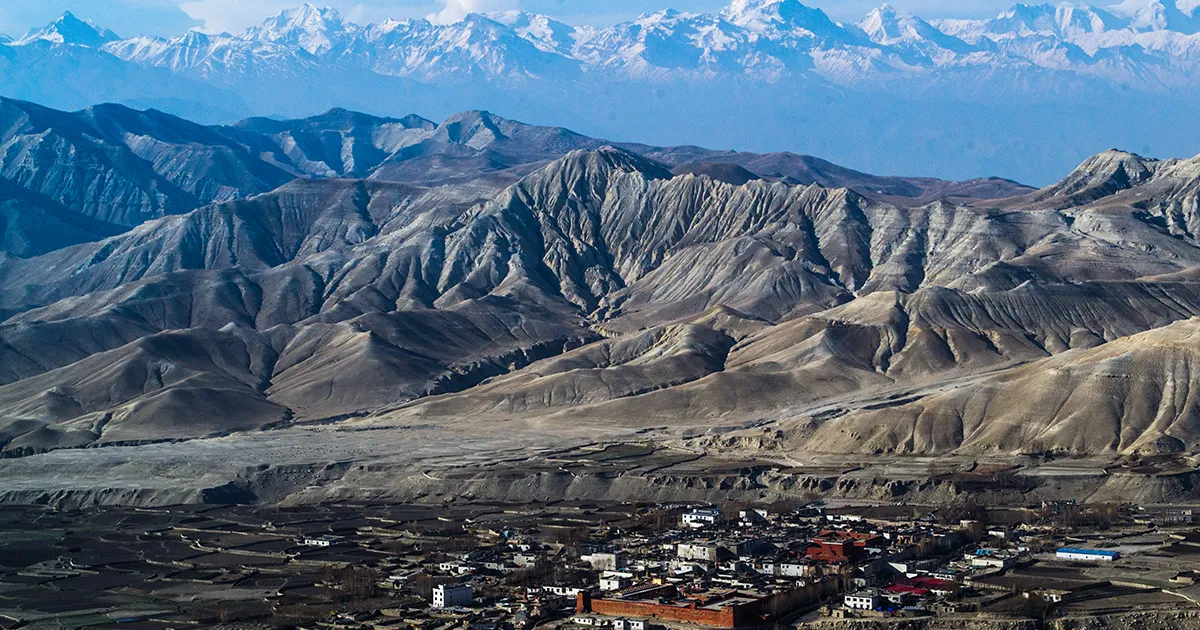
Many of the caves are found near the ancient walled city of Lo Manthang, once the capital of the former Kingdom of Lo. The region historically functioned as a crucial corridor along the trans-Himalayan trade route between Tibet and the Indian subcontinent.
The terrain is dramatic: deep canyons carved by the Kali Gandaki River, towering sedimentary cliffs, eroded formations, and vast open skies. It is within these cliffs that the caves were carved high enough to offer protection, isolation, and strategic advantage.
Mustang Sky Caves Archaeology
The archaeological significance of the Mustang Sky Caves only began to gain serious attention in the late 20th century. For generations, local communities knew of their existence, but systematic exploration required technical climbing skills and scientific collaboration.
Archaeology in Mustang is particularly fascinating because the region’s dry climate has preserved organic materials that would have decayed elsewhere. Textiles, wooden objects, and even human remains have survived for centuries, offering researchers rare and valuable evidence of ancient Himalayan life.
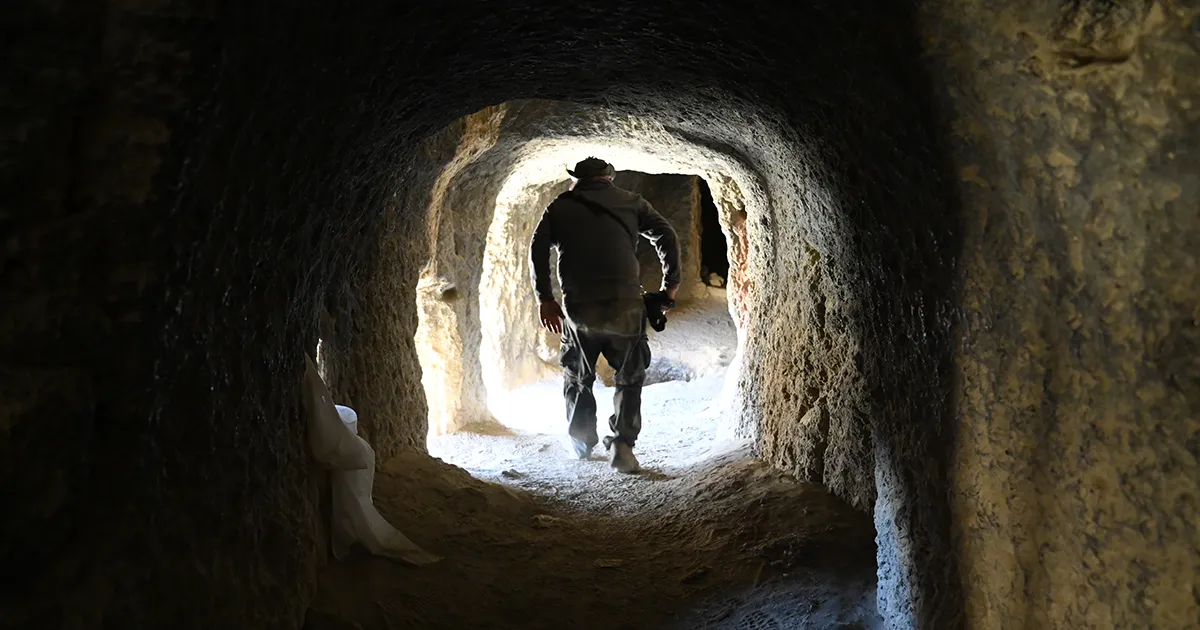
The caves reveal layered occupation not a single civilization, but successive communities adapting to political, environmental, and religious shifts.
Archaeological Discoveries and Research
Major scientific research began in the early 2000s, including expeditions led by archaeologist Mark Aldenderfer and international teams. One of the most remarkable findings was a series of intact burial chambers from around 400 BCE to 100 CE. The bodies were carefully placed with ritual objects, suggesting complex funerary traditions.
Later layers of occupation revealed evidence of people living inside the caves, possibly during periods of conflict when security was paramount. The elevated position of the caves provided natural defense against invaders.
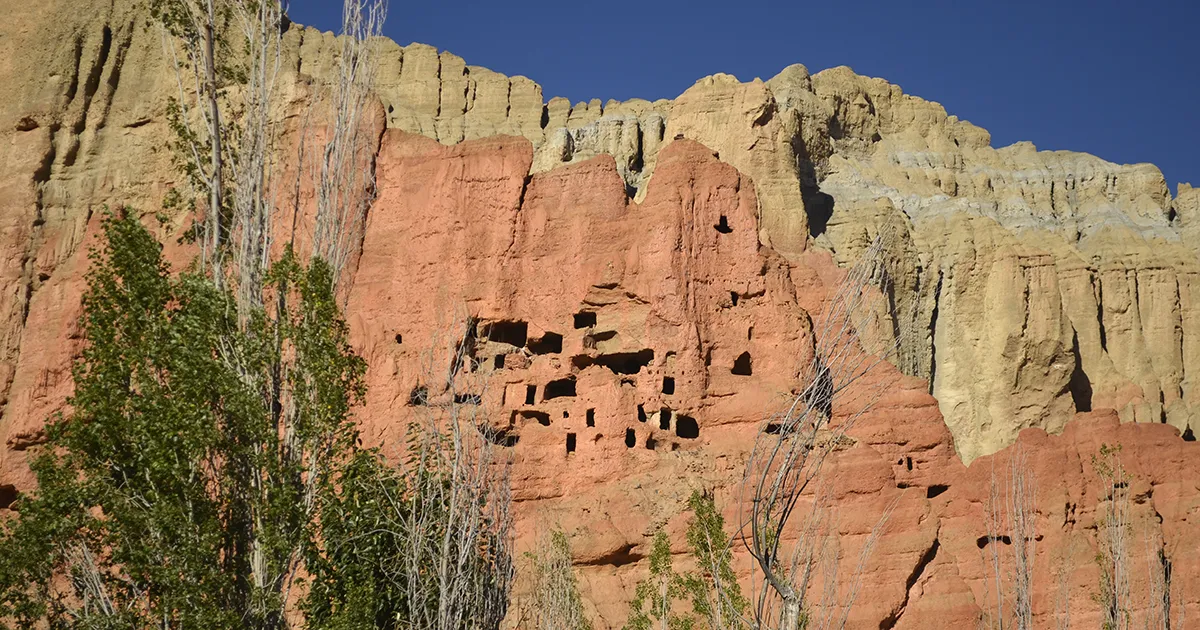
To list out, some of the most significant discoveries include:
- Human skeletal remains dating back over 2,000 years
- Elaborate burial goods, including beads and metal objects
- Ancient manuscripts and scrolls
- Buddhist murals painted inside meditation caves
- Structural layouts indicating residential use
Historical Timeline of the Caves
Here’s what the historical timeline of the upper mustang’s red sky caves look like:
Early Burial Period (Approx. 1000 BCE – 100 CE)
The earliest known use of the caves appears to have been for funerary purposes. Individuals were placed in high cliff tombs along with ceremonial objects, indicating organized social structures and spiritual beliefs.
Settlement and Defensive Period (1000–1400 CE)
Centuries later, communities adapted the caves as living quarters. Some cave complexes include multiple rooms connected by carved tunnels. Their height suggests defensive strategy, a response to regional instability or shifting political power.
Religious and Monastic Period (1400 CE onward)
With the strong influence of Tibetan Buddhism in Upper Mustang, several caves were transformed into meditation chambers and monastic retreats. Murals and inscriptions from this era show religious devotion and artistic sophistication linked to Himalayan Buddhist traditions.
Cultural and Religious Significance of Sky Caves
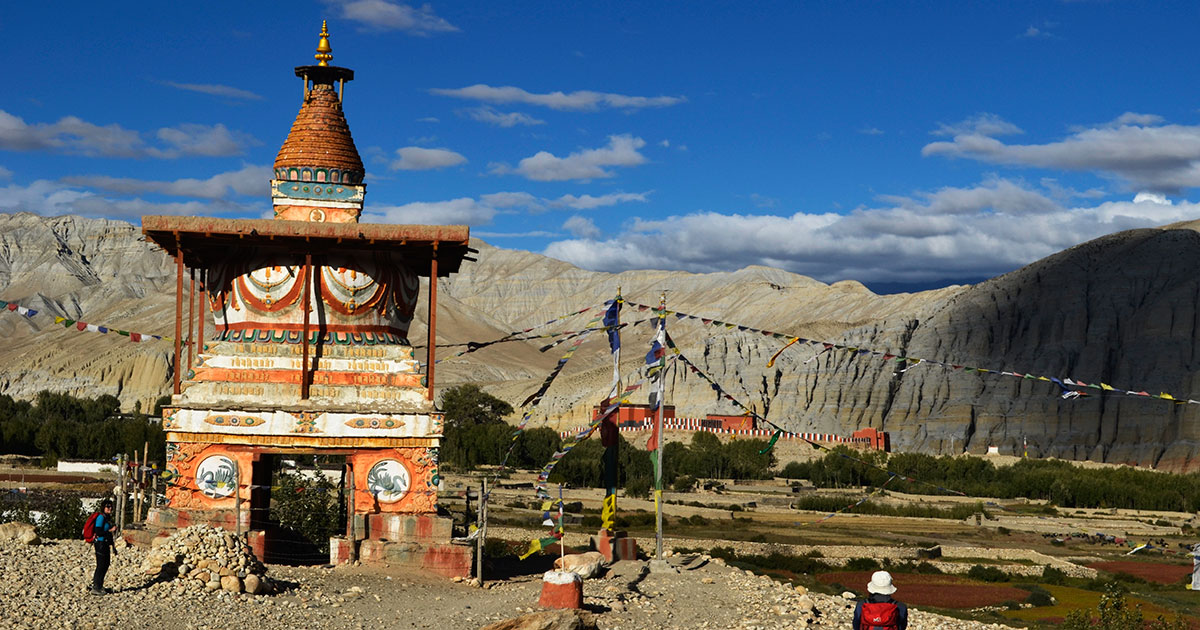
Upper Mustang has long shared deep cultural ties with Tibet, and its spiritual traditions remain closely connected to Tibetan Buddhism. The caves, particularly those used for meditation, reflect this influence.
Some caves contain murals depicting Buddhist deities and symbolic imagery. These spaces likely functioned as solitary retreat centers for monks seeking isolation for deep practice.
Beyond religious meaning, the caves also form part of Mustang’s living heritage. Local oral histories pass down stories about ancestors who once inhabited or used these cliff dwellings. For residents of Lo Manthang and surrounding villages, the caves are not simply archaeological sites they are ancestral landscapes.
Why Mustang Sky Caves Matter Today?
The Mustang Sky Caves matter because they reshape our understanding of Himalayan history. They challenge the assumption that remote high-altitude regions were culturally isolated or technologically simple.
These caves demonstrate:
- Sophisticated engineering in extreme terrain
- Complex burial and spiritual traditions
- Participation in ancient trade networks
- Adaptive strategies for climate and security
At the same time, they raise urgent conservation concerns. Natural erosion, climate shifts, and increasing tourism threaten the fragile cliff structures and interior artwork. Protecting these caves requires collaboration between archaeologists, local communities, and responsible travelers.
How to Visit Mustang Sky Caves?
Visiting the Mustang Sky Caves is possible but it requires planning. Because Upper Mustang remains a restricted region, independent travel is not permitted without proper authorization.
Many travelers combine a visit to the caves with an Upper Mustang trek or jeep tour, often based out of Lo Manthang.
Permit Requirements
To enter Upper Mustang, visitors must obtain a Restricted Area Permit (RAP) and Annapurna Conservation Area Permit (ACAP).
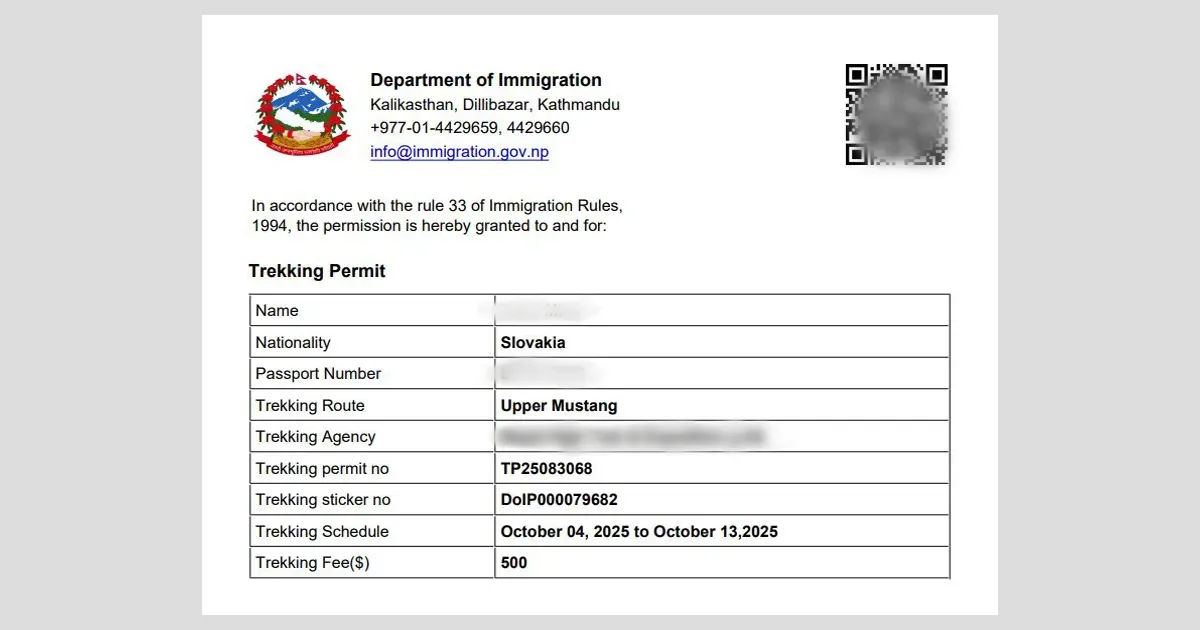
Permits must be arranged through a registered trekking agency in Nepal, and travelers are required to be accompanied by a licensed guide.
Best Time to Visit Mustang Sky Caves
The ideal seasons to visit the Mustang Sky Caves are spring (March to May) and autumn (September to November). Spring offers clear skies, mild temperatures, and comfortable walking conditions across the high desert landscape. Autumn brings crisp air and exceptional visibility, with stable weather and striking views of the canyon walls and surrounding peaks.
Because Upper Mustang lies in the rain shadow of the Himalayas, it receives far less rainfall during the summer monsoon than other parts of Nepal. This makes it one of the few trekking regions that remains relatively accessible even when much of the country experiences heavy rain.
Ways to Get to Mustang Sky Caves
Most journeys to the Mustang Sky Caves begin in Pokhara, the gateway to many Himalayan adventures. From here, travelers can take a short but scenic flight to Jomsom, soaring above deep river gorges and snow-lined ridges before landing in the stark, windswept landscape of Lower Mustang.
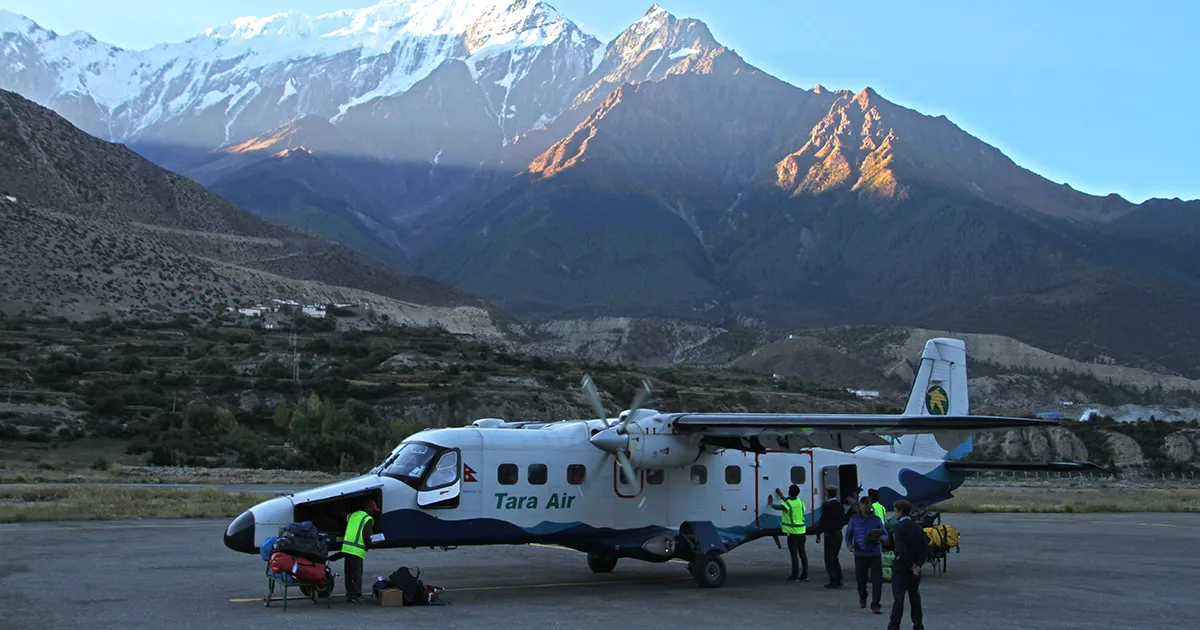
From Jomsom, the journey continues north to Lo Manthang by road or trekking trail. Visiting specific sky cave sites may require short hikes and, in some cases, guided climbs to reach caves carved high into the cliffs.
Difficulty Level of the Trek
Trekking in Upper Mustang is generally considered moderate, but the environment adds its own challenges. While it does not demand technical climbing or extreme ascents like major Himalayan expeditions, the trail unfolds at elevations of around 3,500–4,000 meters, where thinner air can slow your pace.
The region’s dry, windy climate, combined with uneven terrain and exposed paths, requires steady footing and endurance. With basic physical fitness and proper acclimatization, most trekkers can comfortably manage the journey while fully appreciating the stark beauty of Mustang’s high-altitude desert.
Peek into the Preserved Landscapes
Standing beneath the cliffs of Upper Mustang, it is impossible not to feel a sense of scale, both geological and human. The wind continues to sculpt the canyon walls, just as it did thousands of years ago. Above, the dark cave openings remain suspended between earth and sky, silent yet enduring.
The Mustang Sky Caves are more than archaeological relics. They are records carved into stone evidence of communities who adapted, believed, traded, and survived in an unforgiving landscape. Visiting them is not merely sightseeing; it is stepping into a layered past preserved by altitude and time.
In the stillness of Mustang’s high desert, history does not feel distant. It feels suspended in the cliffs, waiting to be read.
FAQs
Expand AllWhat are the Sky Caves of Nepal, and why are they associated with Upper Mustang?
The Sky Caves of Nepal are thousands of man-made chambers carved into vertical cliffs in the remote region of Upper Mustang. They are associated with Upper Mustang because this high-altitude desert landscape contains the largest and most dramatic concentration of these cliff caves.
Where exactly are the Mustang sky caves located?
The caves are scattered across the Kali Gandaki corridor in Mustang district. Notable clusters are found near Lo Manthang and the village of Chhoser, where visible cave complexes line towering canyon walls.
How do “sky caves,” “cliff caves,” and “cave dwellings” differ in local and archaeological use?
“Sky caves” is a popular travel term describing their dramatic height. “Cliff caves” is a more neutral geographical term. “Cave dwellings” refers specifically to caves used for habitation.
How old are the Mustang sky caves, and what evidence supports each dating claim?
Some caves date back to roughly 400 BCE–100 CE, based on radiocarbon dating of human remains and burial goods. Later occupation layers, especially residential and monastic use, date between 1000–1400 CE.
Which time periods show the strongest archaeological signals in Mustang’s caves?
The strongest evidence comes from the early burial period (around 400 BCE–100 CE) and the medieval settlement period (1000–1400 CE), when caves were adapted for habitation and later for Buddhist practice.
Who built the sky caves of Mustang, and what are the leading hypotheses?
The exact builders remain uncertain. The leading hypothesis suggests early Himalayan communities inhabiting the Kali Gandaki corridor carved them. Later populations likely modified and reused the caves over centuries.
Why are many Mustang caves carved so high up the cliff faces?
The height likely served defensive, ritual, and practical purposes. Elevated caves protected burial sites from animals and floods and provided security during unstable periods. In some cases, spiritual isolation may also have been a factor.
Were the caves primarily for burials, defence, habitation, meditation, or multiple uses over time?
They served multiple purposes across different periods, first as burial chambers, later as defensive dwellings, and eventually as meditation and religious spaces.
What types of human remains have been documented in Mustang cave contexts?
Researchers have documented intact skeletal remains, secondary burials, and carefully arranged bodies accompanied by ritual objects. Some remains were found in seated or flexed burial positions.
What kinds of artefacts have been found inside the Mustang caves?
Artefacts include beads, metal ornaments, pottery, wooden objects, textiles, manuscripts, and wall paintings. These discoveries reveal trade links and complex social structures.
What do manuscripts and murals found in caves indicate about Buddhist use in Upper Mustang?
Manuscripts and murals show strong Tibetan Buddhist influence. They indicate that certain caves were used as meditation retreats or monastic spaces, particularly during the later medieval period.
How do researchers distinguish burial caves from meditation or residential caves?
Burial caves typically contain human remains and grave goods. Residential caves show evidence of hearths, storage spaces, and domestic layouts. Meditation caves often contain murals, inscriptions, or shrine-like features.
How many caves are estimated or documented across Mustang, and how reliable are those counts?
Estimates suggest over 10,000 caves across Mustang. However, not all have been fully documented, and exact counts vary due to erosion and limited access
What is known about cave construction techniques and tools used to carve cliff chambers?
The caves were carved into relatively soft sedimentary rock using hand tools, likely metal implements. Internal rooms were shaped with surprising structural awareness, sometimes connected by carved passageways.
What are the most cited cave clusters travelers ask about?
Travellers most often ask about cave complexes near Chhoser and around Lo Manthang, as these are among the most visible and accessible clusters.
Can you visit the Mustang caves as a traveller, and which areas are typically accessible?
Yes, some cave clusters can be visited with a licensed guide. Accessible sites are usually near established routes around Lo Manthang and Chhoser. Many caves remain inaccessible for safety or conservation reasons.
Are there caves that are off-limits due to conservation, safety, or legal restrictions?
Yes, certain caves are restricted to protect fragile interiors, archaeological materials, and visitor safety.
What are the main safety risks when visiting cliff caves in Upper Mustang?
Risks include loose rock, unstable cliffs, steep climbs, and strong winds. Some entrances require ladders or guided climbing.
What should visitors avoid doing to prevent damage to fragile cave interiors and murals?
Visitors should avoid touching murals, removing objects, writing on walls, or entering unstable chambers. Respectful behavior is essential for preservation.
What conservation challenges threaten the Mustang sky caves today?
Natural erosion, increasing tourism, unregulated access, and occasional vandalism pose risks to the caves and their interior artwork.
Do you need a permit to visit Upper Mustang cave areas?
Yes, upper Mustang is a restricted area requiring special permits.
Which permits are commonly required for Upper Mustang travel, and who can arrange them?
Travellers need a Restricted Area Permit (RAP) and an Annapurna Conservation Area Permit (ACAP). These are arranged through registered trekking agencies in Nepal.
How does the restricted area status of Upper Mustang affect cave visits and itineraries?
It requires travellers to go through an agency, travel with a licensed guide, and follow regulated routes, which helps control visitor impact.
What is the best time of year to visit Mustang for cave sightseeing and why?
Spring (March–May) and autumn (September–November) offer stable weather and clear visibility. Mustang’s rain-shadow location also makes it relatively accessible during the monsoon.
How do weather and road conditions affect access to cave sites in different seasons?
Strong winds are common year-round. Winter brings cold temperatures, while monsoon can affect road access in lower Mustang, even though Upper Mustang remains relatively dry.
Is a jeep-supported trip enough to see key cave sites, or is trekking required?
A jeep-supported trip allows access to major villages and viewpoints, but short hikes are often necessary to approach cave entrances.
What physical fitness level is typically needed to reach commonly visited cave viewpoints or entrances?
Moderate fitness is generally sufficient, though some cave visits require climbing or steep walking.
What altitude-related risks should travellers consider in Upper Mustang?
Upper Mustang sits around 3,500–4,000 meters. Travellers should be aware of altitude sickness and acclimatize gradually.
Are there local rules or etiquette around photography near caves, monasteries, or sacred objects?
Yes but always ask before photographing people or religious spaces, and follow guide instructions regarding sacred murals or restricted interiors.
What role does Lo Manthang play as a base for exploring cave sites and surrounding heritage?
Lo Manthang serves as the cultural and logistical hub for exploring cave clusters and nearby monasteries.
What is the historical link between the Kingdom of Lo and the region’s cave heritage?
The former Kingdom of Lo preserved Upper Mustang’s Tibetan-influenced culture. During its rule, caves were integrated into regional settlement and spiritual life.
How do Mustang’s caves connect to trans-Himalayan trade routes and cultural exchange?
Located along historic trade corridors, Mustang facilitated exchange between Tibet and South Asia. Artefacts found in caves suggest cultural and commercial interaction.
What are the most common misconceptions about Mustang sky caves that a blog should correct?
Many assume all caves were homes or that they are natural formations. In reality, they served multiple purposes and were intentionally carved
What questions do travellers most frequently ask before deciding to include the sky caves in their trip?
Common questions include accessibility, safety, permit costs, physical difficulty, and whether the caves are worth the additional time.
What “must-know” planning details should be included without turning the post into a generic Upper Mustang itinerary?
Highlight permit requirements, the need for a licensed guide, seasonal considerations, altitude awareness, and respect for conservation rules without detailing a full day-by-day trek plan.
Related blog posts
Discover a choice of tourist destinations loved by most of our visitors. Whether you're on a jungle safari to spot rare animals or walking through a world heritage site, these well-planned itineraries cover the major highlights of Nepal.

 call an expert at: