Is Mount Everest Still Growing? This is the most asked question by every climber who stands at the peak of the world’s highest mountain, with curiosity.
Mount Everest is located in the Mahalangur Range of the Himalayas, at an elevation of 8848.86 meters above sea level. The tallest mountain is alive and growing taller by the day. The reason for a living, shifting Earth is tectonic forces, earthquakes, and even the power of erosion.
Let’s explore in depth how Everest was created and the reason behind why Mount Everest keeps getting taller:
Height: 8848.86 meters (29031.7 feet) from sea level
Latitude: 27.9881°N
Longitude: 86.9250 °E
Mountain Ranges: Mahalangur Himal, Himalayas
Base Camp Location: at 5150 meters (16,900 feet) in Tibet (North) and at 5364 meters (17, 598 feet) in Nepal(South).
How was Everest Created?
To understand Is Mount Everest Still Growing, we first need to look at how it was formed. The exact date is not known but it is believed that it was created millions of years ago when the landmass that is now the Indian subcontinent drifted northward and collided with Asia slowly.
This slow but powerful collision created the range of the Himalayas and the Mount Everest that stands within the Himalayas is also formed by the ongoing collision between the Indian Plate and the Eurasian Plate.
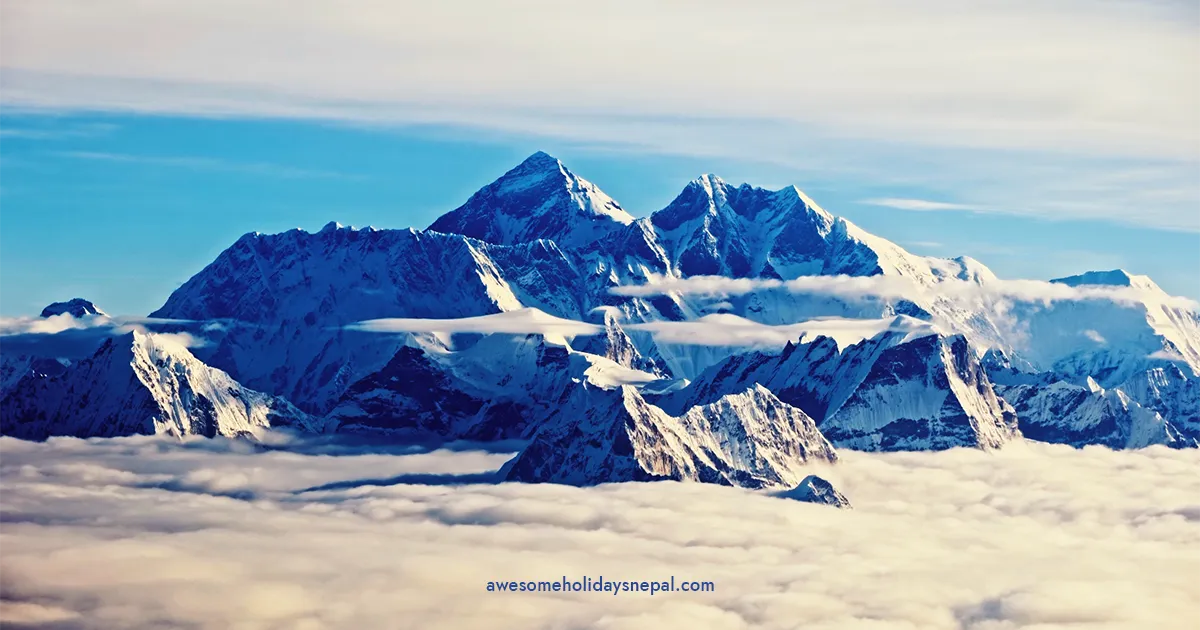
High Altitude Everest Region
Similarly, the Indian Plate and the Eurasian Plate are still pushing against each other today continuously which resulted in the growth of Mount Everest. This natural pressure is the main reason which answer, yes of the question, Is Mount Everest Still Growing?
Every year, the Indian Plate is moving continuously to north at a rate of about 4 to 5 centimeters. When two massive plates collide, the crust become crumples and starts to folds in the upper direction which makes the Himalayas rising continuously.
Why is Mount Everest Still Growing?
To answer the question, Is Mount Everest Still Growing, we first need to know about the forces below the Earth Surface. Mount Everest is part of the Himalayan range which was created by the collision between the Indian Plate and the Eurasian Plate. This collision is still continuing which push the land upward but very slowly.
According to experts, Mount Everest is continuously rising by a few millimeters each year as the Indian tectonic plate pushes northward into the Eurasian plate. This continuous pressure means that, by geological standards, Everest is still on the move. So when people ask Is Mount Everest Still Growing, the scientific answer is rooted in plate tectonics and millions of years of Earth’s history.
But we should also know that tectonic uplift is not the only reason which contributes to this change. Earthquakes also affected in the increasing height of Everest temporarily. The devastating 2015 Nepal earthquake has also caused shifts in the Earth’s crust which resulted in the alteration of the height of the mountain.
However, the tectonic push continues. So despite occasional drops or shifts, the long-term answer to Is Mount Everest Still Growing remains positive.
Erosion vs. Uplift: A Natural Battle
The another factor that gets involved when asking Is Mount Everest Still Growing is erosion. The mountain become shorter due to wind, snow, glaciers, and gravity constantly as Ice breaks rocks apart, Avalanches remove layers the layered snow, and rivers carry sediment away.
In fact, erosion works every single day to deduct the height of Mount Everest. But this erosion is much more powerless than tectonic uplift which results in the push of the Earth’s crust upward in high rate than natural forces which it oppress.
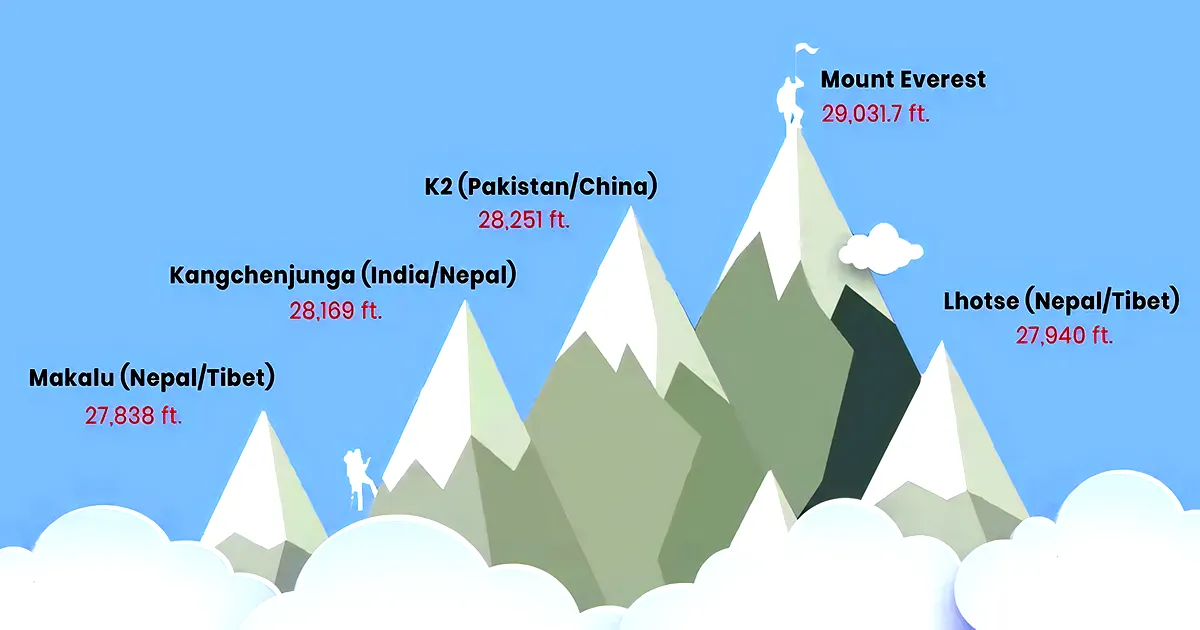
Mount Everest with other Mountain Ranges
The balance between erosion and uplift is answering yes to the question Is Mount Everest Still Growing even after millions of years.
Pirate River Case
Everest’s height is also affected by The Arun River. This river flows nearby Mount Everest with a surprisingly sharp curve that cuts right through one of the deepest gorges.
According to a 2024 study, around 90,000 years ago the river likely captured the flow of another river, and the process is known as river piracy. When that happened, the sudden increase in water volume gave the Arun far more power to carve into the landscape. Over time, it stripped away huge amounts of rock and sediment.
As that weight was removed, the Earth’s crust beneath the area became lighter and slowly pushed upward in response, a natural process called isostatic rebound. Think of it like releasing pressure on a floating object which rises slightly.
In the same way, Everest may have lifted faster than nearby peaks. Over tens of thousands of years, this subtle boost could have added dozens of meters to its height, helping explain why Everest stands about 250 meters taller than the other Himalayan ranges.
The Height Measurement of 2020
One of the main reasons behind the changing height of Everest also belongs to the advancement in measurement technology. Scientists have been using increasingly precise GPS instruments to track Everest’s summit as of now.
This explains why recent studies continue to refine the understanding of Is Mount Everest Still Growing. According to sources, the mountain is not just growing but it’s also increasing so slowly that the climber can’t notice the growth on the human timescales without using measurable trend for geologists for tracking the movement of the Earth.
In 2020, Nepal–China survey confirm that Everest’s updated height reflects both tectonic growth and improved survey accuracy and it has increased the growth of 0.86 meters which changes the height of mount Everest from 8849 m to 8848.86 meters (29031.7 feet).
What the Experts Say
According to the multiple scientific and news sources support the idea that Mount Everest is still in motion. A report from NBC News explains that Everest’s height increases as India continues to push northward.
The continuous Collison of Indian Plate and the Eurasian Plate from past millions of years, shows that there is no signs of stopping, which makes the question Is Mount Everest Still Growing more fascinating for researchers and geologist. In addition, trekking organizations and local Nepal tourism sources emphasize that this geological activity is part of what makes Everest unique among other Himalayas.
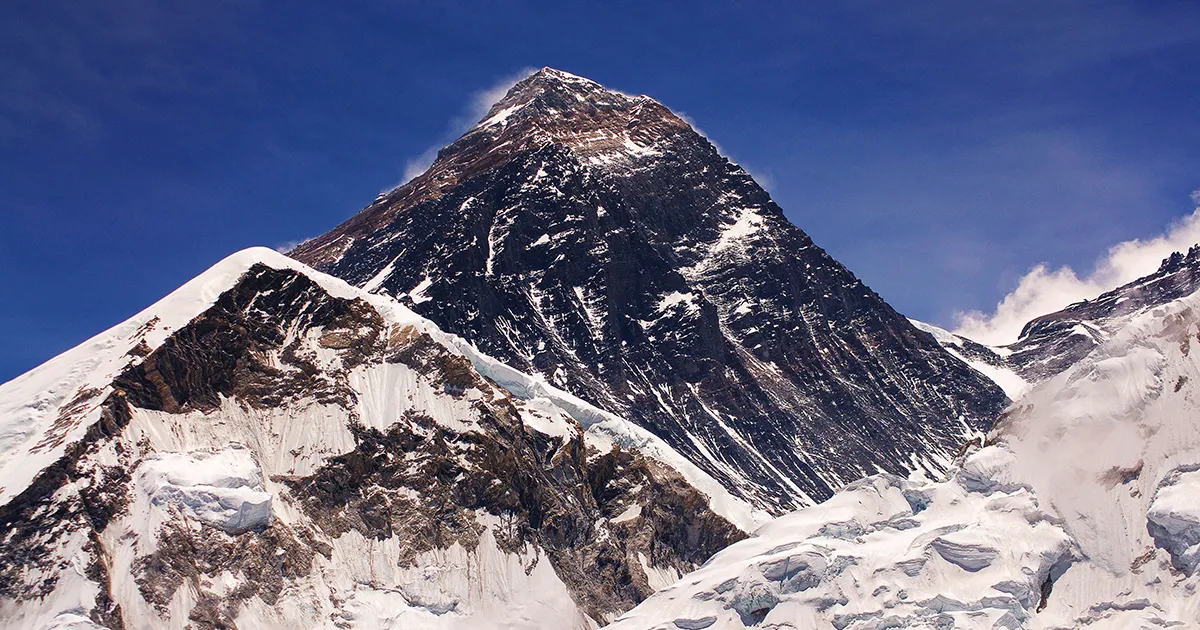
Everest Without Snow
Mount Everest isn’t just a static monument but it’s a living, shifting part of Earth’s landscape. Whether you’re a climber on the trail or a scientist reviewing GPS data, these changes are real and important.
Will Everest Grow Forever?
Yes, Everest is a living and shifting part of the Earth’s landscape and will grow forever. The growth rate may become small but side by side occasional earthquakes may adjust the peak’s height. In long term, it will stay growing with the collision of the tectonics plates.
However, this growth isn’t dramatic. We’re talking millimeters per year — not feet or meters. From a human perspective, Everest will look the same next year as it does today. But in the larger scale of geologic time, it will continues to evolve.
Final Thoughts on the World’s Tallest Peak, Everest Growth
The answer is Yes, for Is Mount Everest Still Growing, slowly and endlessly. The phenomena like tectonic movement, earthquakes, advancement in measurement techniques proofs that Everest is living and is growing slowly over the period of time.
You will not see the growth of the Everest suddenly as the growth is very minimal, and will take million of year time for visible changes. Everest won’t stop growing anytime soon as long as, there is continuous pushing of the Earth’s tectonic plates against each other.
Until that distant geological future arrives, Everest will keep growing in an few inches shaped by the same powerful forces that created it millions of years ago. If you are ready to explore Nepal, where tallest mountain, Everest is located? then, make sure to contact Awesome Holidays Nepal for your next adventures.
Mount Everest is keep getting taller because of continuous collision between the Indian and Eurasian tectonic plates, which makes the Himalayan range shift upward.
How much does Everest grow per year in millimeters?
Everest grows about 2 millimeters a year.
What tectonic plates are responsible for Everest’s uplift?
Indian and Eurasian tectonic plates are responsible for Everest’s uplift.
What is isostatic rebound?
The slow vertical rise of Earth’s crust when being depressed by the immense weight of glaciers or ice sheets is called as isostatic rebound.
How can erosion make mountains rise?
Erosion make mountains rise by isostatic rebound, a phenomenon where there is a slow vertical rise of Earth’s crust when being depressed by the immense weight of glaciers or ice sheets.
Do earthquakes change Mount Everest’s height?
Yes, earthquakes can change Mount Everest’s height.
Did the 2015 Nepal earthquake change Everest’s height?
The 2015 Nepal earthquake made Everest to shift position slightly shrinking by 2.5 centimetres.
What is the official height of Mount Everest?
The official height of Mount Everest is 8848.89 meters.
Is Everest’s “growth” just snow and ice building up?
No. The Everest’s “growth” is not just snow and ice building up but is the result of tectonic plate collision, isostatic rebound, and other temporary setbacks.
Is Everest rising faster than other mountains?
No. Everest is not rising faster than other mountains, as it only grow 2mm a year while Nanga Parbat grows up to 7mm annually.
Is K2 getting taller too?
Yes, K2 is also getting taller.
Will Mount Everest keep getting taller forever?
Mount Everest might getting taller forever only if the tectonic plates continue pushing. If erosion becomes stronger than uplift, the mountain could slowly shrink.
What could eventually stop Everest from getting taller?
When tectonic uplift ceases or the forces of erosion and gravity outpace the upward push, it will stop Everest from getting taller.
How old is Mount Everest?
Mount Everest is about 40 million to 50 million years old.
Does climate change affect Everest’s height (directly or indirectly)?
Sristi, a content writer at Awesome Holidays likes to travel and explore the beauty of Nepal. She enjoys trekking and is passionate about how she can contribute on the growth and development of tourism sector in Nepal. Sristi is passionate about the exploration of the diverse landscapes and hidden beauty of nature. She enjoys watching travel content in YouTube. "If you get tired, learn to rest, not to quit.
Related blog posts
Discover a choice of tourist destinations loved by most of our visitors. Whether you're on a
jungle safari to spot rare animals or walking through a world heritage site, these
well-planned itineraries cover the major highlights of Nepal.



 call an expert at: