
Khumbu Glacier: How It Shapes the Everest Base Camp Trail
 Sujata Pokhrel
The Khumbu glacier often comes across as a dangerous section of the Everest summit, but that’s not its only identity.
When people imagine the Everest Base Camp trek, their minds usually jump to Mount Everest, the summit, the flags, and the photographs. But long before you reach base camp, another presence quietly defines your journey. It stretches like a frozen river through the upper valley, carving the landscape, shaping the terrain, and influencing every step you take. That presence is the Khumbu Glacier.
The Khumbu is not just scenery. It is the geological force that gives the Everest region its stark drama. Without it, the Everest Base Camp trail would be an entirely different experience, softer, greener, less raw. Instead, the glacier transforms the final stretch of the trek into something almost otherworldly.
Khumbu Glacier Overview
The Khumbu Glacier flows down from the Western Cwm between Everest and Lhotse, descending from over 7,600 meters to around 4,900 meters near base camp. It is one of the highest glaciers in the world and among the most famous, largely because of its connection to Everest expeditions.
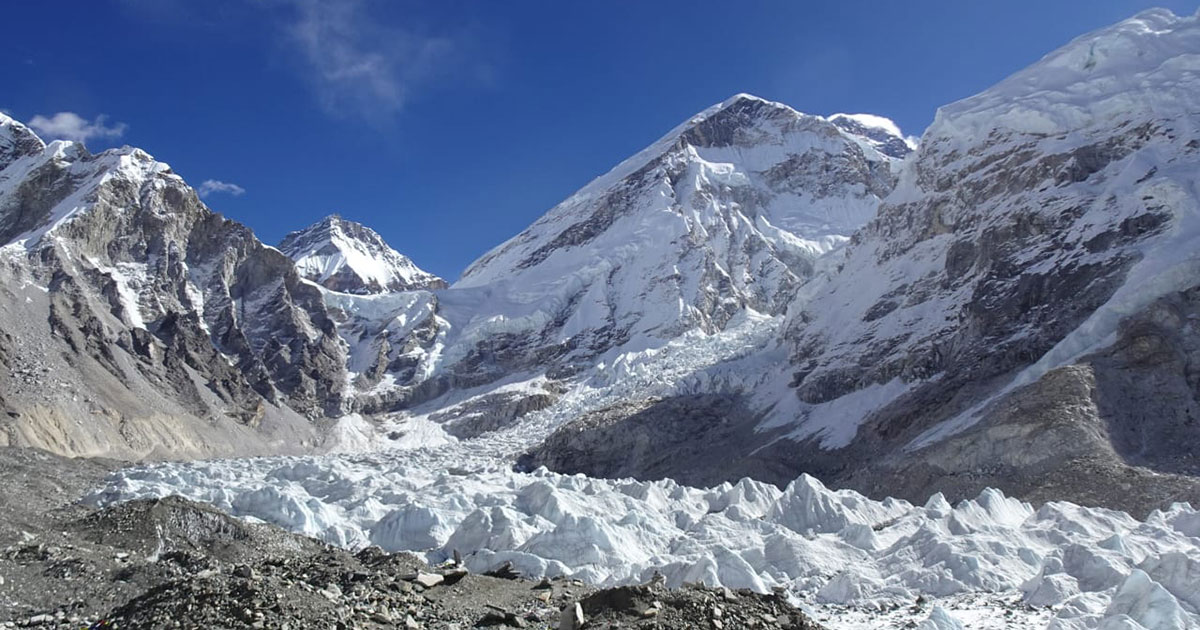
Despite appearing frozen in time, the glacier is constantly moving, inching forward under its own immense weight. Over centuries, it has ground against rock, carving valleys and leaving behind vast ridges of debris called moraines. Those rocky ridges now form much of the uneven ground trekkers walk on near Everest Base Camp.
Unlike the postcard image of smooth white ice, the lower section of the Khumbu Glacier is covered in rocks and dust. From a distance, it looks more like a grey desert than a river of ice. But beneath that rubble lies thick, ancient ice, slowly shifting and cracking.
What is the Khumbu Icefall?
At the upper section of the glacier lies one of the most dramatic features of the Everest region, the Khumbu Icefall. This is where the glacier breaks into a chaotic cascade of towering ice blocks, deep crevasses, and unstable seracs as it spills down from the Western side.
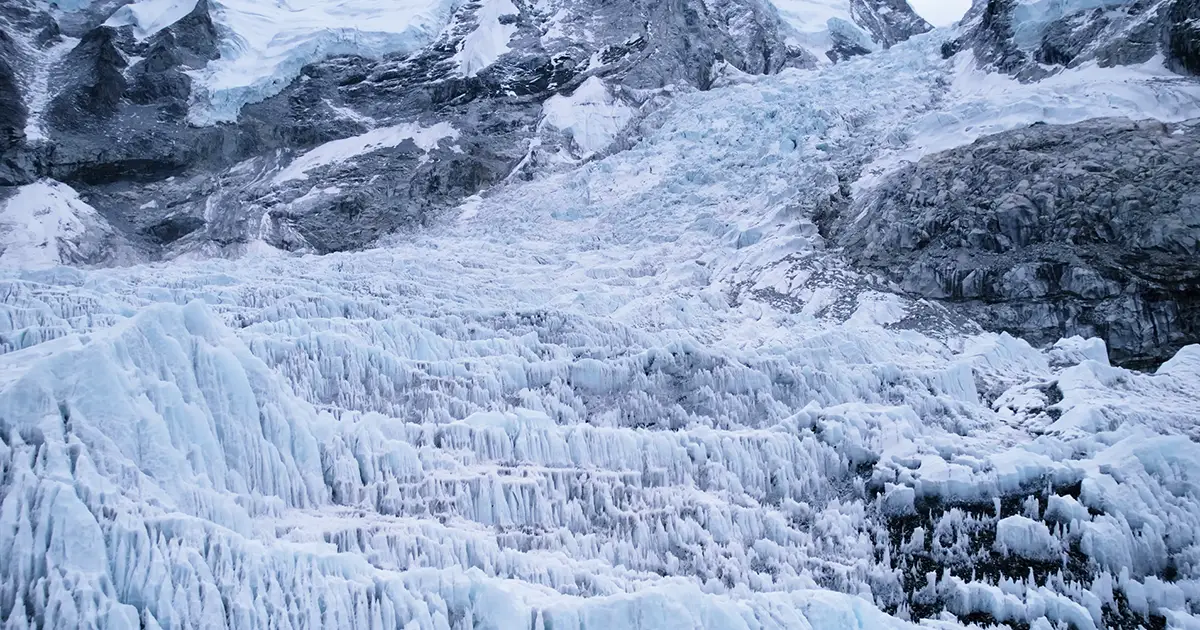
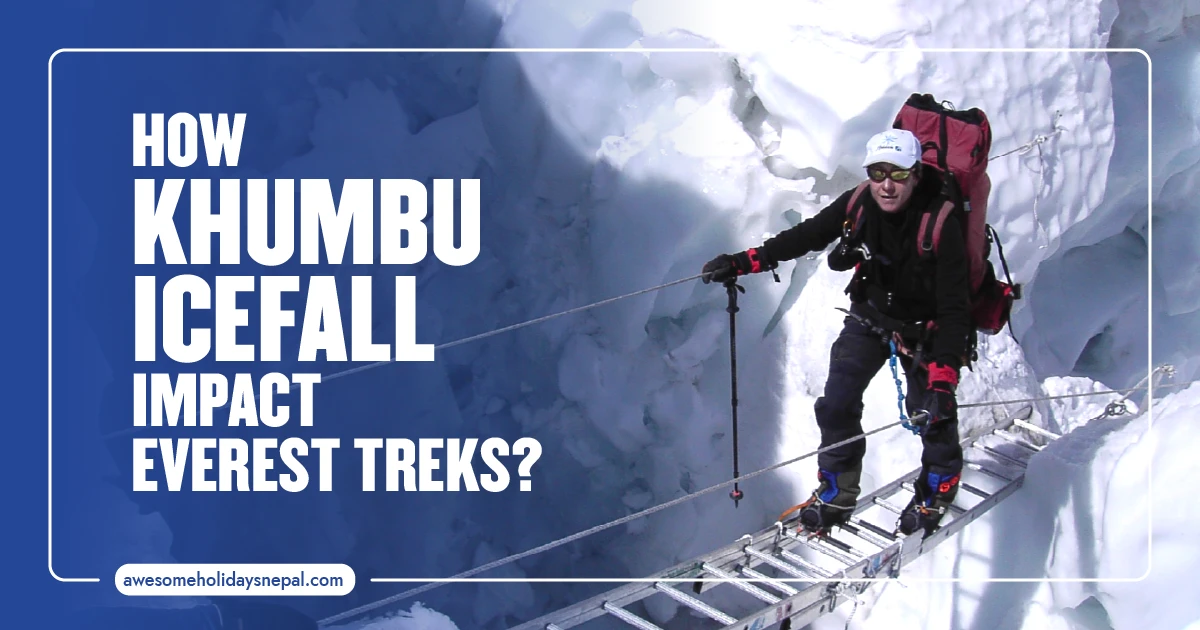
For climbers attempting Everest, the Icefall is the first major obstacle. It is often described as a frozen waterfall, constantly changing and unpredictable. Massive chunks of ice can shift or collapse without warning, which is why it is considered one of the most dangerous sections of the Everest climbing route.
Trekkers do not cross the Icefall, but they can see its jagged blue-white formations from base camp. Standing there, looking at its fractured towers of ice, you begin to understand the scale of the challenge climbers face.
Khumbu Icefall Facts
The Khumbu Icefall is one of the most dynamic and unpredictable sections of the Everest region. Its steep gradient causes the ice to move far faster than the lower glacier, creating a constantly shifting maze of crevasses and towering seracs.
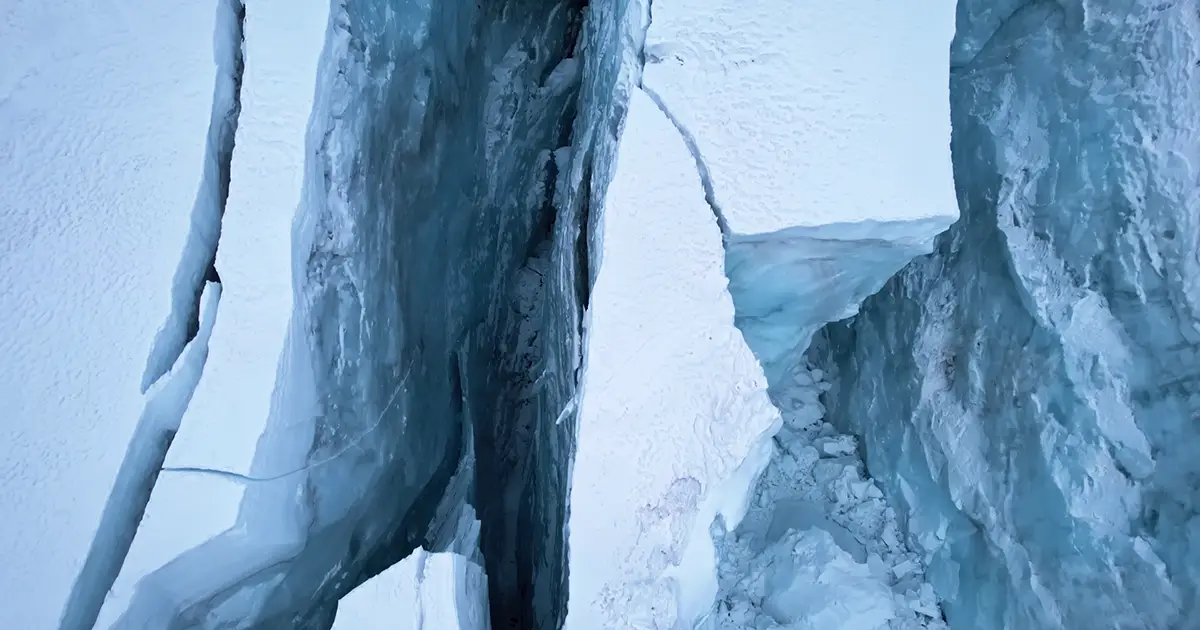
- The Icefall can move up to one meter per day in certain sections.
- Expedition teams must regularly reset ladders and fixed ropes during climbing season due to this constant movement.
- Daytime heat can destabilize ice formations, increasing the risk of collapse.
- Climbers usually cross it before sunrise, when colder temperatures make the ice more stable.
- Though trekkers only view it from near Everest Base Camp, its massive presence defines the atmosphere of the entire area.
Even from a distance, the Icefall feels alive, a frozen cascade that reminds everyone standing below that Everest is never still.
Role of Khumbu Glacier in EBC Trail
As you trek beyond Lobuche and approach Gorak Shep, the landscape changes noticeably. Trees disappear. Vegetation thins and the trail becomes rockier and more irregular. This is the glacier’s influence.
The Everest Base Camp trail crosses glacial moraine, rocky debris deposited by centuries of ice movement. Instead of smooth dirt paths, you navigate uneven stone, gradual ascents over ridges, and subtle dips carved by melting ice beneath.
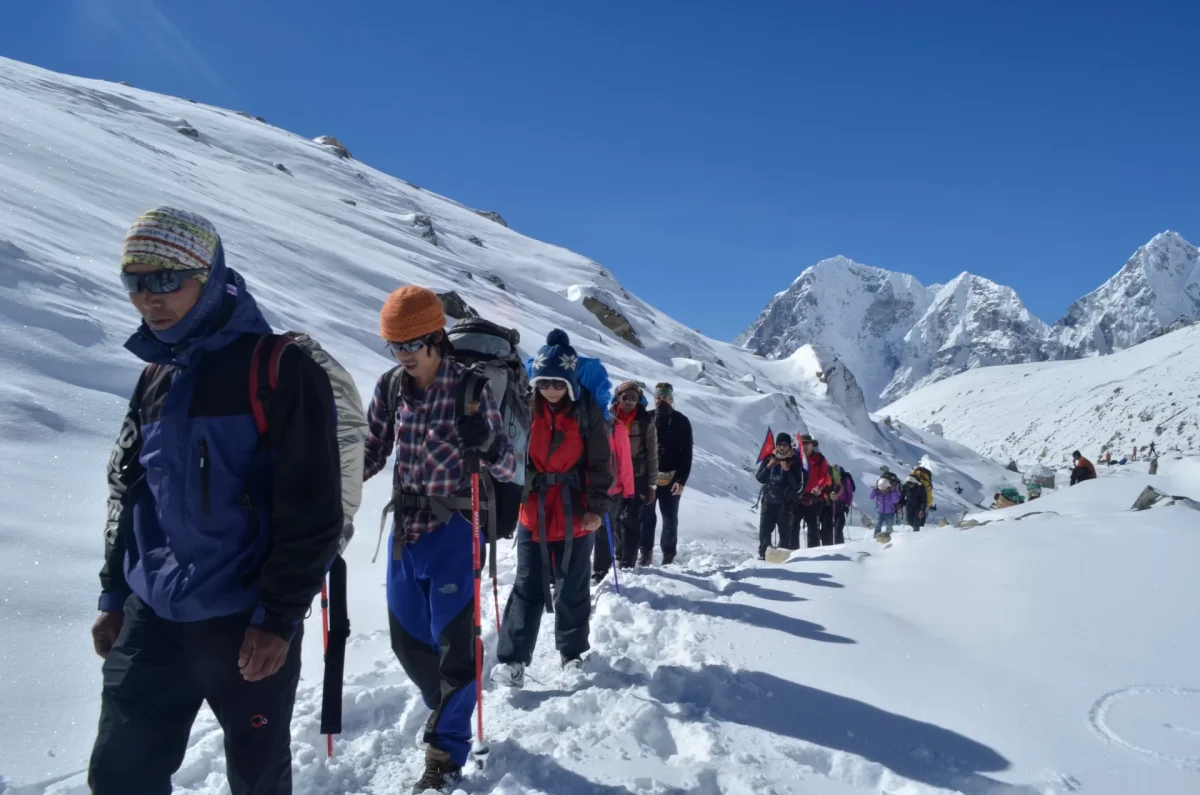
The glacier also shapes the valley’s dramatic U-formation. The wide, open expanses you walk through are the direct result of glacial carving over thousands of years. Without the Khumbu Glacier, there would be no iconic amphitheater of peaks surrounding base camp.
How Khumbu Glacier Affects Trekking Conditions on Everest?
Walking beside a glacier changes more than just the scenery, it changes the trekking experience itself.
Temperatures drop noticeably as you gain altitude and approach the glacier. Cold air flows down from the ice mass, especially in the late afternoon and early morning. Winds can feel sharper and more penetrating compared to lower sections of the trail.
The terrain becomes more demanding as well. The rocky moraine requires steady footing and careful pacing. Trekking poles become especially helpful here, not because the trail is steep, but because it is uneven.
Altitude compounds everything. By the time you are walking alongside the glacier near 5,000 meters, oxygen levels are significantly reduced. The stark landscape, thinner air, and physical effort combine to make this stretch both challenging and unforgettable.
Risks and Emotions of Trekking Beside Ancient Icefall
There is a quiet intensity in the final approach to base camp. The greenery of villages like Namche and Tengboche feels far away. In its place stands a vast, grey wilderness of rock and ice.
While the trekking route itself is generally safe when followed properly, the environment reminds you of nature’s scale. You may hear distant cracking sounds from the glacier shifting beneath its rocky surface. It’s subtle but powerful, a reminder that the ground beneath you is alive.
Emotionally, this section of the trek often feels different. The higher altitude brings introspection. The silence feels heavier. Reaching base camp isn’t just about ticking off a goal; it feels like stepping into a raw, elemental world shaped by ice and time.
Climate Change and Future of the Khumbu Glacier
Like many Himalayan glaciers, the Khumbu Glacier is retreating. Scientists have observed thinning ice and the formation of glacial lakes in surrounding areas. Warmer temperatures are accelerating melt rates, subtly reshaping the landscape year by year.
For trekkers, these changes may not be immediately obvious. But over decades, they alter the glacier’s thickness, the stability of surrounding terrain, and even the exact location of base camp during climbing seasons.
The future of the Khumbu Glacier is tied to global climate patterns. Sustainable trekking practices, minimizing waste, respecting local ecosystems, and supporting responsible operators, play a small but meaningful role in protecting this fragile high-altitude environment.
Glacier That Defines Your Adventure
The Everest Base Camp trek is often described as a journey to the foot of Mount Everest. But in many ways, it is equally a journey alongside the Khumbu Glacier.
The glacier shapes the valley, the terrain, the temperature, and the emotional tone of the final ascent. It transforms the trek from a scenic hike into a confrontation with geological time and Himalayan scale.
When you stand at base camp and look across the rocky expanse toward the Icefall, you realize something important: Everest may be the destination, but the glacier defines the experience.
FAQs
Expand AllWhat is the Khumbu Glacier?
The Khumbu Glacier is a massive river of ice flowing down from the slopes of Everest and Lhotse. It is one of the highest glaciers in the world and forms the dramatic landscape surrounding Everest Base Camp.
Where is the Khumbu Glacier located in Nepal?
The glacier lies in the Khumbu region of northeastern Nepal, within the Everest (Sagarmatha) area, stretching from the Western Cwm down to around Everest Base Camp.
Is the Khumbu Glacier inside Sagarmatha National Park?
Yes. The glacier sits within Sagarmatha National Park, a protected UNESCO World Heritage Site that includes Everest and its surrounding peaks and valleys
How is the Khumbu Icefall related to the Khumbu Glacier?
The Khumbu Icefall is a steep, broken section of the upper Khumbu Glacier where the ice fractures into towering blocks and deep crevasses as it descends.
Do Everest Base Camp trekkers cross the Khumbu Icefall?
The Icefall is simply the most dramatic and unstable upper section of the Khumbu Glacier, formed where the glacier flows over a steep drop.
Why does the trail near EBC feel rocky and uneven compared to lower villages?
No. Trekkers typically view the Icefall from near Everest Base Camp. Crossing it is part of the technical mountaineering route used by Everest climbers.
What is glacier moraine (and why does it matter on the EBC trail)?
Glacier moraine is the accumulation of rocks and sediment left behind as a glacier advances or retreats. On the EBC trail, it creates uneven, rocky terrain that requires steady footing.
What does “debris-covered glacier” mean in the Everest region?
It refers to a glacier whose surface is blanketed in rocks and dust. Much of the lower Khumbu Glacier appears grey and stony, even though thick ice lies beneath.
Where are common viewpoints to see the Khumbu Glacier during the trek?
Trekkers commonly see it clearly from Lobuche, Gorak Shep, Everest Base Camp, and especially from Kala Patthar.
Can you see the Khumbu Glacier from Kala Patthar?
Yes, Kala Patthar offers one of the best panoramic views of the glacier winding below Everest and the surrounding peaks.
Is Everest visible from Everest Base Camp?
Everest base camp trek is only partially. The full summit view of Mount Everest is largely blocked from base camp itself. Clear, iconic summit views are better from Kala Patthar.
Why is the Khumbu Icefall considered dangerous for climbers?
It constantly shifts due to gravity and temperature changes, creating unstable crevasses and collapsing ice towers that make it one of the most hazardous parts of the Everest ascent.
Who are the Icefall Doctors on Everest?
The Icefall Doctors are specialized Sherpa teams responsible for fixing ladders and ropes across the Icefall each climbing season, maintaining a safer passage for expeditions.
How does glacier “down wasting” change the surface of debris-covered glaciers?
Down wasting refers to the thinning of glacier ice. As ice melts beneath surface debris, the glacier surface can become uneven, forming dips, melt ponds, and unstable patches.
How can glacier terrain influence trekking pace?
Uneven moraine slows walking speed, demands more balance, and increases fatigue, even though no technical climbing is involved.
What should trekkers avoid doing near glacier moraines and unstable ground?
Avoid wandering off the marked trail, climbing unstable rock piles, or stepping onto unverified ice sections. Stick to established paths.
Are Himalayan glaciers important for river systems in Sagarmatha?
Yes, they are. Glaciers like the Khumbu feed rivers that eventually contribute to major Himalayan river systems, supporting ecosystems and communities downstream.
What does UNESCO say is notable about Sagarmatha National Park’s landscape?
UNESCO recognizes Sagarmatha National Park for its dramatic mountains, deep valleys, glaciers, and exceptional natural beauty.
How does climate warming affect glaciers in Nepal in general terms?
Rising temperatures accelerate glacier melt, thin ice masses, and increase the formation of glacial lakes.
What is a glacial lake outburst flood (GLOF) risk (high-level definition)?
A GLOF occurs when a glacial lake suddenly bursts due to dam failure, releasing large volumes of water downstream.
What causes crevasses and ice towers (seracs) in an icefall?
They form when glacier ice flows over steep terrain and fractures under stress, creating deep cracks and towering ice blocks.
What is the difference between “glacier” and “icefall”?
A glacier is a slow-moving river of ice. An icefall is a steep, broken section of a glacier where the ice fractures dramatically.
Is “Mount Everest glacier” the same thing as the Khumbu Glacier?
Not exactly. The Khumbu Glacier is a major glacier on Everest’s Nepal side and is the one most associated with the Everest Base Camp trek and south-side climbing route.
What other glaciers are significant in Sagarmatha National Park (besides Khumbu)?
Other notable glaciers include the Ngozumpa Glacier near Gokyo and the Kangshung Glacier on Everest’s eastern side.
What permits are required for trekking in the Everest region?
Trekkers generally need a Sagarmatha National Park entry permit and a Khumbu Pasang Lhamu Rural Municipality permit.
What is the best way to include the Khumbu Glacier in your trek photos (viewpoint-led)?
Photograph it from elevated viewpoints like Kala Patthar, or frame it with prayer flags or climbers’ tents near base camp for scale.
What’s the simplest way to explain the Khumbu Glacier to first-time trekkers?
It’s a massive, slow-moving river of ancient ice that shapes the entire Everest Base Camp landscape.
How does the glacier contribute to the “glacial” feel near base camp?
The rocky moraine, cold winds, grey terrain, and visible ice formations create a stark, high-altitude atmosphere unlike the lower green valleys.
What should trekkers know about staying on the main trail near Gorak Shep/EBC?
Always follow the established trail markers. The surrounding terrain may look solid but can hide unstable moraine or thin ice.
How can readers learn more about Khumbu climate and hydrology impacts?
Authoritative sources include research publications from ICIMOD and UNESCO reports on Himalayan glacier change within Sagarmatha National Park.
Related blog posts
Discover a choice of tourist destinations loved by most of our visitors. Whether you're on a jungle safari to spot rare animals or walking through a world heritage site, these well-planned itineraries cover the major highlights of Nepal.
 call an expert at: