
High-Altitude Trekking Group Size vs Safety Ratio in Nepal
 Sristi Adhikari
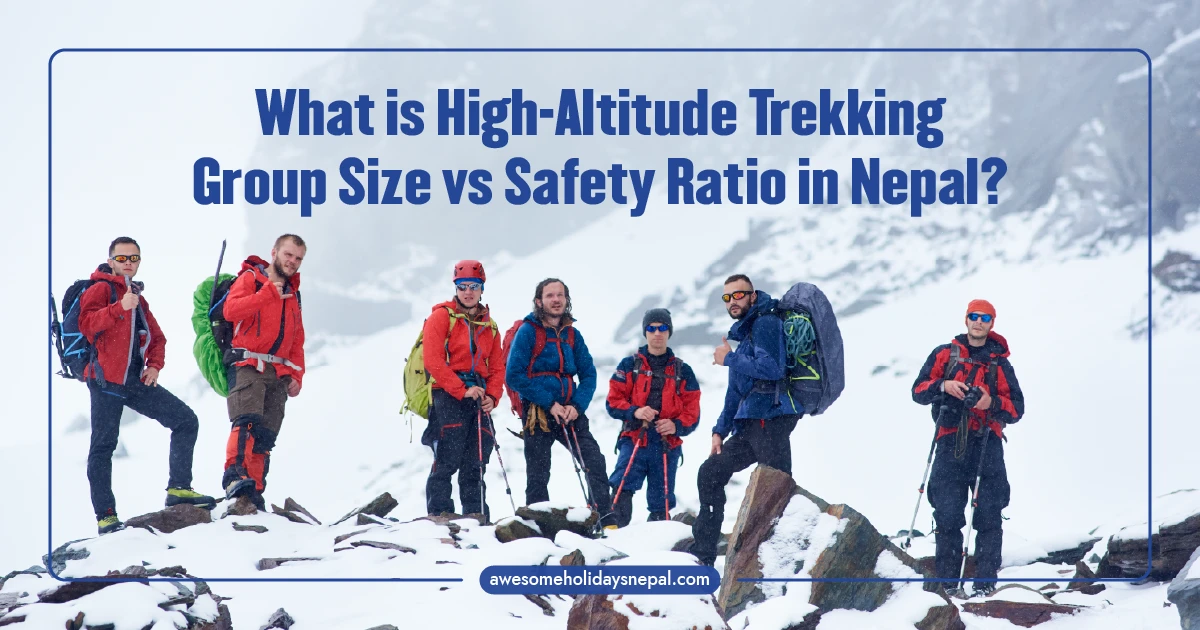
Planning for high altitude trekking in the Himalayas of Nepal with your group in 2026? Then, you must be thinking about what the safe High Altitude Trekking Group Size is?
Trekkers always focus on routes, permits, gear, and physical and mental preparation for high-altitude trekking to ensure the success of the journey, but the number of people in a group directly impacts safety, acclimatization, rescue response, and the overall experience in the remote region of Nepal.
In Nepal, trekking trails reach elevations of 4,000 to 5,000 meters, and weather can change in minutes; you must understand that the relationship between group size and safety ratio is critical. Let’s explore in detail what truly makes a trek safer and how High Altitude Trekking Group Size plays a decisive role in the success.
Importance of High-Altitude Safety in Nepal
The world’s most iconic trekking routes such as Everest region, Annapurna Circuit, and Manaslu trek attracts thousands of adventure enthusiast every year for high altitude trekking in Nepal. But, they also comes with difficulties such as:
- Acute Mountain Sickness (AMS)
- Unpredictable weather fluctuation
- Remote terrain
- Hypothermia
- Dehydration
- Limited medical facilities
- Physical exhaustion
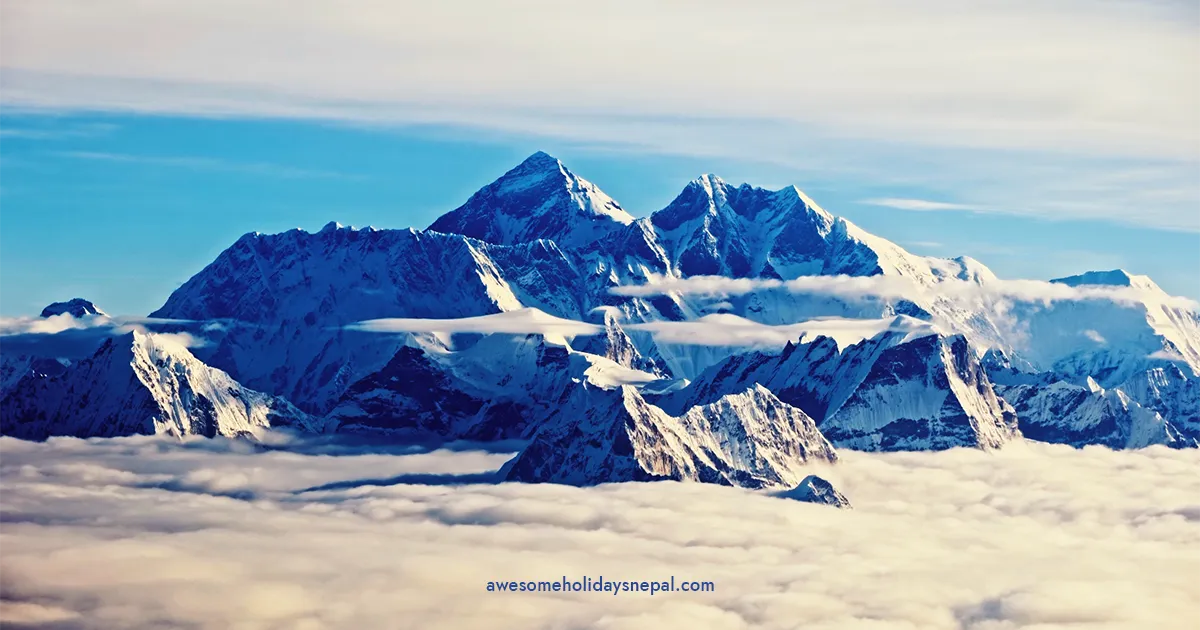
In such conditions, High Altitude Trekking Group Size becomes a critical safety factor. The safety ratio is defined as the number of guides and support staff per trekkers which directly affects emergency response and risk management in the remote region of Nepal.
Understanding the Safety Ratio in High-Altitude Trekking
The safety ratio in high altitude trekking refers to 1 licensed guide for 4 to 6 trekkers and 1 porter for 2 trekkers. The high altitude trek safety ration also includes having an additional assistant guide for larger groups.
The larger the High Altitude Trekking Group Size, the more structured support is needed. A balanced safety ratio ensures better monitor of altitude sickness symptoms along with faster emergency coordination. This also means there will be a clear communication within the group
If the High Altitude Trekking Group Size increases without increasing professional support, the overall safety level decreases significantly.
High Altitude Trekking Group Size Small vs Large
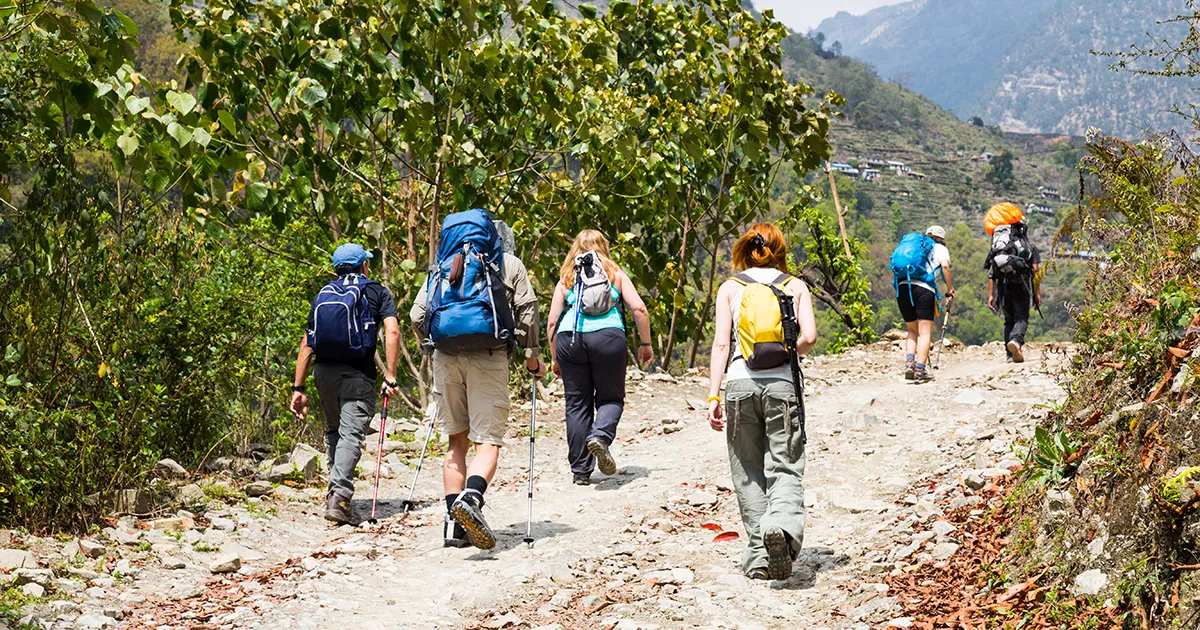
Small Group(1 to 3)
A small High Altitude Trekking Group Size safety offers flexibility throughout the journey. You move faster, adjust itineraries easily, and enjoy a more personal experience. For solo trekkers or pairs, decision-making is quick.
Advantages
- Flexibility in itinerary
- Pace management will be easier
- Emergency response will be faster
- Easier communication with guides
Risks
- Higher cost per person
- Limited shared decision-making
- Emergency condition will become vulnerable
If one member of a small High Altitude Trekking Group Size suffer from any symptoms of altitude sickness, the remaining members may struggle to assist. When trekking to High-altitude routes like the Everest Base Camp, a smaller High Altitude Trekking Group Size is often considered ideal for maintaining safety and acclimatization strategy for groups.
Medium Group
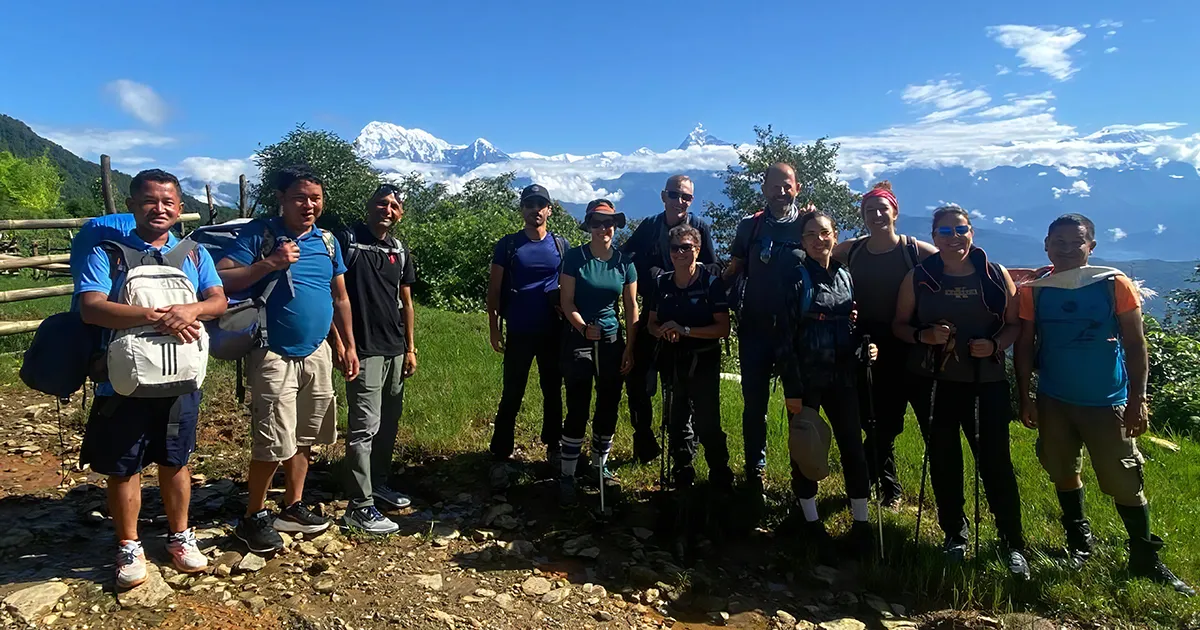
Many experienced and certified guides consider 4 to 8 clients, the ideal High Altitude Trekking Group Size. With a medium High Altitude Trekking Group Size, trekkers can monitor each other for early signs of AMS, fatigue, or dehydration along with a group awareness becomes a built-in safety system. The optimal trekking groups size also have both advantages and disadvantages:
Advantages
- Enough members to help during emergency situation
- Strong morale and teamwork
- Balanced cost with structured guide and porter support.
Disadvantages
- Walking pace become slow
- Challenges in acclimatization
Large Group
A larger High Altitude Trekking Group Size refers to more than 10 trekkers. This may seem safer because there are more people to help in emergencies. However, bigger groups impacts on altitude sickness risk and you have to be careful during coordination and it demands multiple guides.
Advantages
- Budget saving
- Higher team motivation
Drawbacks
- Delays in acclimatization schedules and emergency responses
- Less communication
How High Altitude Trekking Group Size Affects Acclimatization
When trekking above 3,000 meters, Acclimatization is very important as it allows your body to gradually adapt to lower oxygen levels while reducing the risk of altitude-related problem.
When planning acclimatization, if you managed it poorly, High Altitude Trekking Group Size can create pressure to move faster or skip rest days. If you trek in a smaller groups, it will allow guides to monitor oxygen levels, hydration, and physical symptoms more closely.
In contrast, if acclimatization strategy for groups is not planned properly, a larger High Altitude Trekking Group Size may struggle to match individual pace needs, increasing the risk of AMS followed by the return in the middle of trek.
Emergency Situations and Group Size
In high-altitude Nepal, like Everest Base Camp trek , helicopter evacuation is common but weather-dependent. A controlled High Altitude Trekking Group Size ensures that there is an immediate reporting of symptoms with efficient planning of evacuation.
It requires better crowd control in risky terrain and if your High Altitude Trekking Group Size is too large without adequate supervision, emergencies can escalate quickly.
Recommended High Altitude Trekking Group Size in Nepal
The recommended High Altitude Trekking Group Size for remote trails of Nepal is medium as it maintains a strong safety ratio while keeping logistics manageable for high altitude emergency. It includes:
- 4–8 trekkers
- 1 licensed guide
- 1 assistant guide (if above 6 trekkers)
- 2–4 porters
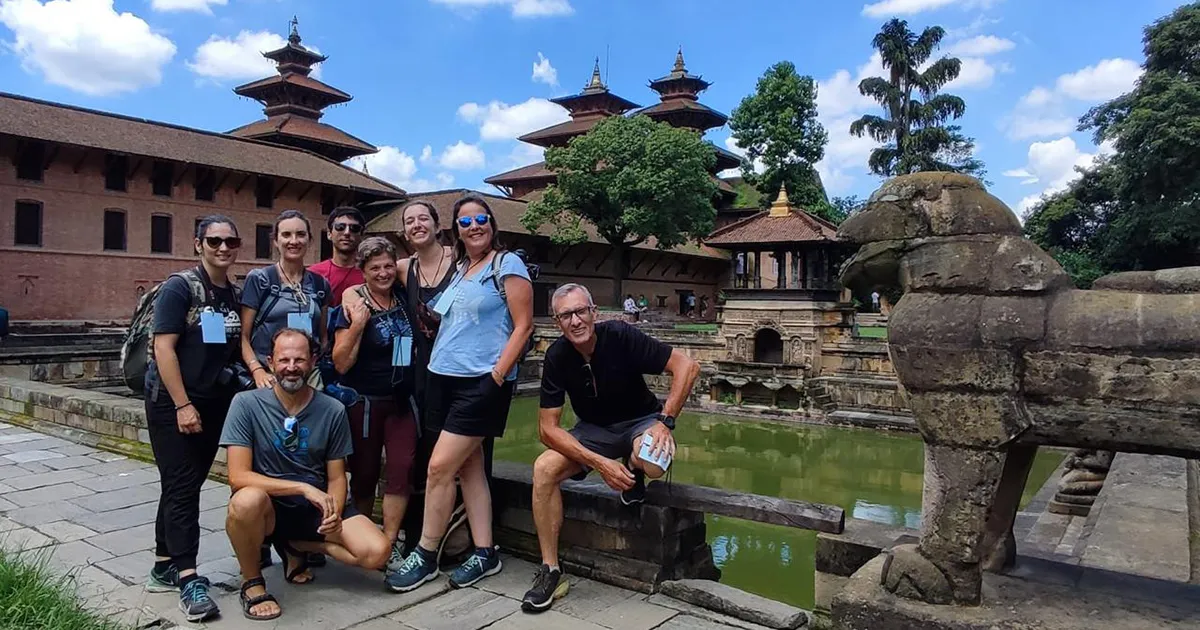
Certified and experienced trekking companies like ours, Awesome Holidays Nepal often design the package with the balance safety measures, cost, and experience, make sure to contact us for memorable adventures in the lap of Himalayas.
Factors to Consider When Choosing High Altitude Trekking Group Size
When you are choosing the high altitude trekking group size in Nepal you must consider following things like:
- Maximum elevation you are reaching and how difficult the trek is.
- Season peak season(spring or autumn) or off-season.
- Access of emergency condition, infrastructure, and medical.
- Supports mental resilience or not.
- Experience level of trekkers.
- Pace management and acclimatization.
- Cost considerations.
How Guides and Group Dynamics Influence Safety in High Altitude Trekking
The experience level and training of your licensed trekking guide determines your safety in high altitude trekking areas. In Nepal, there is stricter training for licensed trekking guides so that they can handle the early symptoms of altitude sickness and manage other possible risk by themself especially above 3,000 meters.
However, even the best guides work best in manageable High Altitude Trekking Group Size settings. Too many trekkers per guide can dilute the personalized care that is essential in challenging conditions of EBC trek, Island peak climbing, and so on.
Final Thoughts: What’s Safer High Altitude Trekking Group Size in Nepal?
The safety comes first, when you are planning to choose the right high altitude trekking group size in Nepal. The demanding terrain and wide variety of landscapes have different range of climates and biodiversity which requires the balanced safety ratio of High Altitude Trekking Group Size for the success of the trek.
Better acclimatization, faster emergency response, and proper guide supervision, ensures the completion of the adventure with memorable experience which will last throughout your life, so you have to choose a balanced High Altitude Trekking Group Size in Nepal.
You should always prioritize your safety over number no matter you are either trekking in Everest region, Annapurna, or Manaslu, and make sure to choose a a licensed trekking operator like Awesome Holidays Nepal to ensure the guide-to-client safety ratio before departure as proper High Altitude Trekking Group Size which will make a huge difference between a life-changing experience and a dangerous situation in the remote trekking trails.
FAQs
Expand AllWhat does “safety ratio” mean on a high-altitude trek?
The meaning of safety ratio on high-altitude trek means ratio of support staff like guides, assistant guides, and high-altitude porters to the number of trekkers in a group.
Is there an official global standard for guide-to-trekker safety ratios?
No, there is no official global standard for guide-to-trekker safety ratios.
Why can a bigger group be harder to keep safe at altitude?
The bigger group is harder to keep safe at altitude because it will be difficult to monitor the health condition of all trekkers, there will be reduced pace, and it will create challenges in navigating narrow and treacherous trails of the himalayas.
What’s the single biggest factor that matters more than group size?
Proper physical and mental preparation is the biggest factor that matters more than group size.
What symptoms should a group watch for in Acute Mountain Sickness (AMS)?
A group should watch symptoms like headache, dizziness, nausea, vomiting, insomnia for Acute Mountain Sickness (AMS).
What should the group do if symptoms worsen at altitude?
The group should immediately stop ascending with guide, and ask for evacuation if the symptoms become worse.
What is a buddy system and why does it improve safety at altitude?
The buddy system is defined as a safety practices where two people are paired and they look out for each other safety when trekking in group to the high altitude. It improves safety at high altitude because it helps in monitoring hazards and providing immediate assistance in emergencies.
Should the group use pulse oximeters, and what are their limits? (Support tool, not diagnosis.)
Yes, the group should use pulse oximeters. Their limits includes the inability to detect hyperoxemia and the inability to measure ventilation or arterial oxygen tension in high altitude region.
How do you set a group rule for “no one walks alone”?
You can set a group rule for “no one walks alone” by making a buddy system in the trek.
How does crowding and congestion affect risk management on popular trails?
The crowding and congestion affect risk management on the trekking trails by increase risk of fall, delays of evacuation services, and lack of communication with the guides.
When should a group consider adding an assistant guide?
If group size exceeds a medium 4 to 8 number, then adding an assistant guide is important.
How does fatigue in guides/staff affect overall safety?
Fatigue in guides/staff affect overall safety because their ability to make critical decisions, recognize, and respond to dangers becomes reduced, which can lead to accidents, injuries, and, in severe cases, fatal incidents in the trekking trails.
What acclimatisation practices are widely recommended by medical authorities?
Acclimatisation practices like sleeping well, eating nutritious food, following climb high sleep low principle are widely recommended by medical authorities in trekking trails.
Do “climb high, sleep low” strategies help, and how should groups apply them safely?
Yes, “climb high, sleep low” strategies help in trekking. The groups should apply this strategies above 30oom and should not walk more than 300 to 400 m a day and take rest in lower elevation.
What is the safest response when a trekker is not improving after rest?
Immediately descending to lower altitude is the safest response when a trekker is not improving after rest.
Why is “turnaround time” important for group safety?
The turn around time is important for group safety because it helps in the prevention of fatal, high-risk scenarios caused by fatigue, darkness, and shifting weather conditions in the trekking trails.
What mistakes do large groups commonly make (spacing, silence, pressure to continue)?
Struggle with cohesion which results in dangerous, broken-up spacing, poor communication and excessive, unsafe pressure to keep up with a fast, unsuitable pace are the most common mistake in larger groups.
How can a group reduce decision pressure and “summit fever” behaviour?
The combination of pre-planned safety protocols, structured decision-making, and a culture that prioritizes safety over, or equal to, accomplishment helps in the reduction of decision pressure and “summit fever” behaviour in trek.
What should be included in a daily group safety routine (symptom check, hydration, pace plan)?
The group safety routine checkup must include buddy system check, pulse oximeter reading, and symptom questionnaire.
When is it safer to stop early rather than push to the next village?
It is safer to stop early rather than push to the next village, if it got dark, sudden weather fluctuation, and you started feeling early symptoms of altitude sickness or if found any trouble in gear.
Related blog posts
Discover a choice of tourist destinations loved by most of our visitors. Whether you're on a jungle safari to spot rare animals or walking through a world heritage site, these well-planned itineraries cover the major highlights of Nepal.

 call an expert at: