
Difference Between Group and Individual Permits in Nepal: What Changes and What Does Not
 Sristi Adhikari
Planning for trekking in the remote region of Nepal often starts with one big question: which permit do I actually need? Understanding the difference between group and individual permits in Nepal is important, as it can save you time, money, and last-minute stress.
Both types of permits hold the same core purpose, but the experience of the journey will definitely feel different when you take your first step in the journey. This also doesn’t mean everything will change; some rules, fees, conservation requirements, and responsibilities remain the same, whether you are trekking alone, with friends, or as part of an organized group.
With your travel style, flexibility needs, and budget, it will be easier to plan if you understand the difference between group and individual permits in Nepal. Continue reading for the details before you hit the trails:
Different Types of Required Trekking Permits in Nepal
In Nepal, you cannot trek in the wild hiking trails without the necessary trekking permits. Trekking permits are documents issued by the Government of Nepal for anyone who wants to explore the remote trails of the Himalayas.
Most of the trekking routes require the following permits in Nepal:
- TIMS Card
- National Park and Conservation Area Permit
- Restricted Area Permits
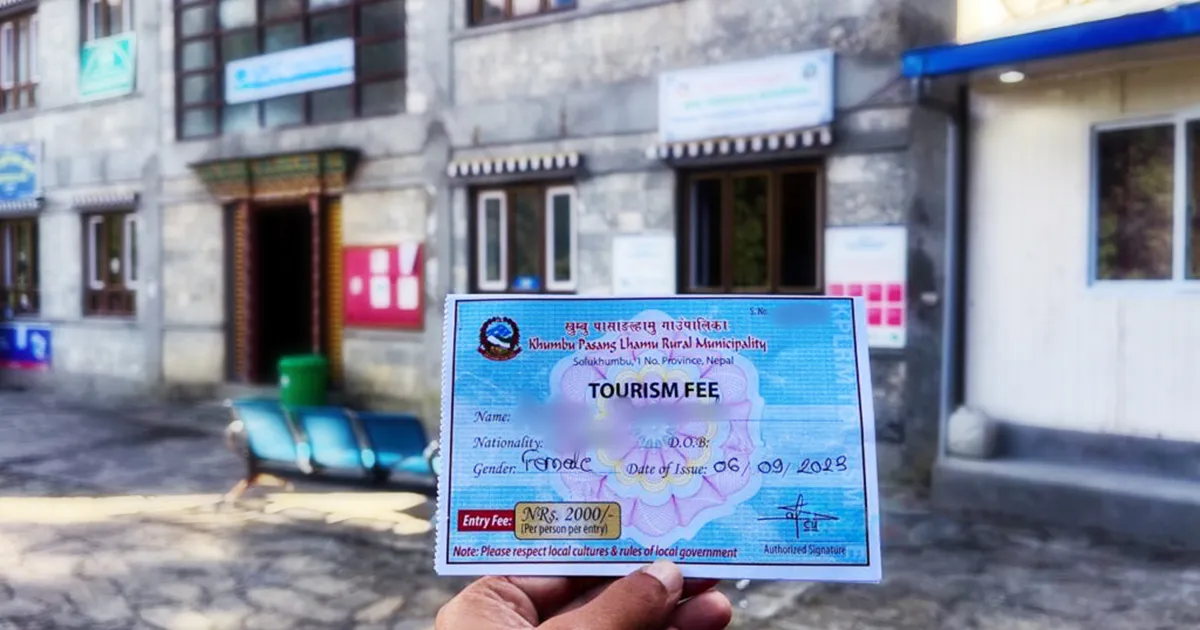
These trekking permits are essential for different purposes, such as:
- Ensures the trekkers’ safety through registration and rescue tracking.
- Collected funds help in the trail maintenance and local conservation.
- Supports rural economies through regulated tourism.
- Helping authorities know who’s on the trekking trail and their numbers.
The Difference Between Group and Individual Permits in Nepal: TIMS Card Costs
There is a 50 per cent discount for group trekkers in comparison to individual trekkers in the price of the TIMS card Permit. If you are in a group, your trek will be under the budget as they are processed for multiple trekkers together, whereas individual permits cost more per person since they’re issued separately.
| Trekking Permit Nepal Type | Group Trekker | Individual Trekker |
|---|---|---|
| TIMS Card for foreigners | NPR 1,000 per person | NPR 2,000 per person |
| TIMS Card for SAARC nationals | NPR 300 per person | NPR 600 per person |
No More Solo Permits for Foreigners (New Rules: What’s Changed)
There is a major change in permit approval for trekkers in Nepal. If you are alone and want to go solo trekking in Nepal, solo trekking is now officially banned for most foreign trekkers.
The aspects of difference between the group and the individual permit in Nepal are that without a company of licensed guides, you cannot trek solo in the remote region of Nepal. Also, without a guide, you couldn’t get a TIMS card.
- You must be with a certified guide of a registered trekking agency to apply for a TIMS card.
- Eliminate the classic trekking outside select exceptions, like some Everest region routes.

According to the updated official news, the difference between group and individual permits in Nepal is less about solo versus group free travel and more about how your permit is administered, group arrangements still benefit from cheaper fees, while independent trekkers must work with agencies and pay slightly higher rates where applicable.
National Park Permits and Conservation Area Permits (Fees)
In addition to TIMS, trekkers also require national park and conservation area permits. For entering the conservation areas and the National Park, you have to pay the same amount whether you are travelling solo or in a group.
There is no difference between group and individual permits in Nepal for entering the National Parks and Conservation Area.
Different types of National Parks and conservation areas, with their Nepal permit fees, are:
| Protected Area | Nepali (Adult) | SAARC Nationals (Adult) | Foreigners (Adult) |
|---|---|---|---|
| Chitwan National Park | NPR 150 | NPR 1,000 | NPR 2,000 |
| Sagarmatha National Park | NPR 100 | NPR 1,500 | NPR 3,000 |
| Banke National Park | NPR 100 | NPR 750 | NPR 1,500 |
| Bardiya National Park | NPR 100 | NPR 750 | NPR 1,500 |
| Khaptad National Park | NPR 100 | NPR 500/1,500 | NPR 1,500/3,000 |
| Langtang National Park | NPR 100 | NPR 1,500 | NPR 3,000 |
| Makalu‑Barun National Park | NPR 100 | NPR 1,500 | NPR 3,000 |
| Parsa National Park | NPR 100 | NPR 750 | NPR 1,500 |
| Rara National Park | NPR 100 | NPR 1,500 | NPR 3,000 |
| Shey‑Phoksundo National Park | NPR 100 | NPR 1,500 | NPR 3,000 |
| Shivapuri‑Nagarjun National Park | NPR 100 | NPR 600 | NPR 1,000 |
| Shuklaphanta National Park | NPR 100 | NPR 750 | NPR 1,500 |
| Koshi Tappu Wildlife Reserve | NPR 100 | NPR 750 | NPR 1,500 |
| Api Nampa Conservation Area | NPR 100 | NPR 500 | NPR 2,000 |
| Annapurna Conservation Area | NPR 100 | NPR 1,000 | NPR 3,000 |
| Blackbuck Conservation Area | NPR 100 | NPR 500 | NPR 2,000 |
| Gaurishankar Conservation Area | NPR 100 | NPR 1,000 | NPR 3,000 |
| Kanchenjunga Conservation Area | NPR 100 | NPR 500 | NPR 2,000 |
| Manaslu Conservation Area | NPR 100 | NPR 1,000 | NPR 3,000 |
| Dhorpatan Hunting Reserve | NPR 100 | NPR 1,500 | NPR 3,000 |
Restricted Areas Permits Fee
The Restricted Areas permit cannot be obtained if you are alone; you must be in a group. According to the Nepal trekking rules, you should apply for the Restricted Areas permit through a registered trekking agency only, such as Awesome Holidays Nepal.
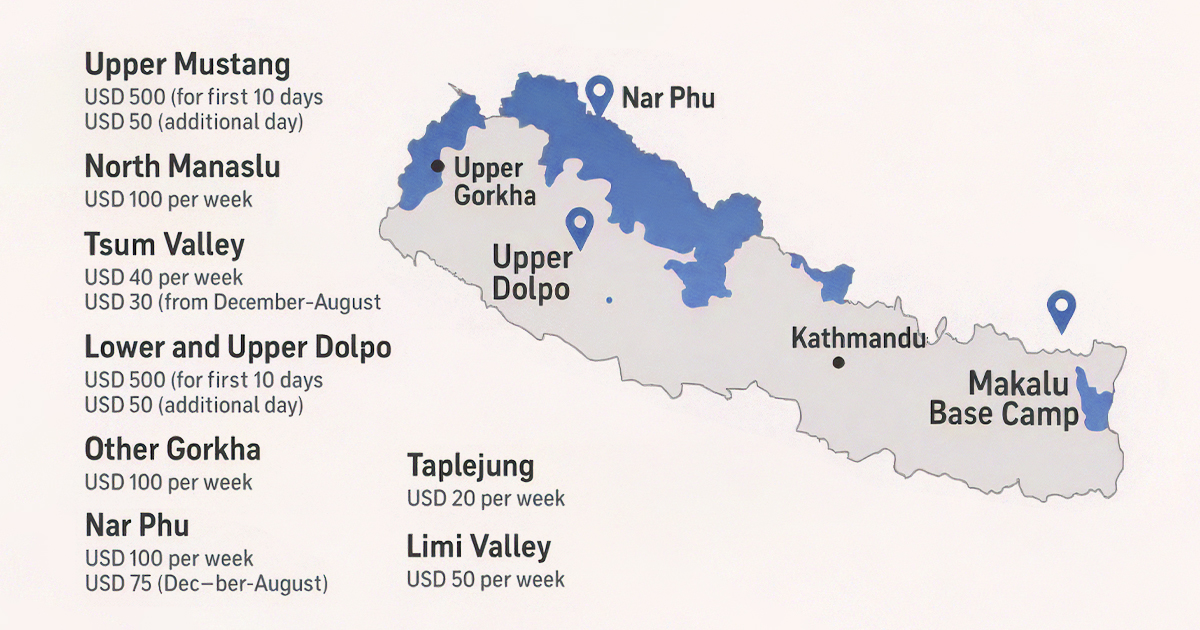
These permits are mandatory for foreign trekkers and all nationalities when entering these restricted zones. This means that the difference between group and individual permits in Nepal largely disappears for national park entry fees, but is very significant for the TIMS card and restricted zones.
| Restricted Area | Permit Fee |
|---|---|
| Upper Mustang | USD 500 (first 10 days), then USD 50 per person per day beyond 10 days |
| Upper Dolpa | USD 500 (first 10 days), then USD 50 per person per day beyond 10 days |
| Gorkha – Manaslu Area |
|
| Humla | USD 50 per person per week; USD 10 per day beyond 1 week |
| Taplejung Region | USD 20 per person per week (first 4 weeks); USD 25 per person per week beyond 4 weeks |
| Lower Dolpa Area | USD 20 per person per week; USD 5 per day beyond 1 week |
| Dolakha (Gaurishankar) | USD 20 per person per week |
| Gorkha Tsum Valley Area |
|
| Sankhuwasabha | USD 20 per person per week (first 4 weeks); USD 25 per person per week beyond 4 weeks |
| Solukhumbu(Khumbu/Rasuwa) | USD 20 per person per week (first 4 weeks); USD 25 per person per week beyond 4 weeks |
| Manang (Nar & Nasho) |
|
| Bajhang | USD 90 per person per week (first week); USD 15 per day beyond 1 week |
| Mugu | USD 100 per person per week; USD 15 per day beyond 1 week |
| Darchula | USD 90 per person per week; USD 15 per day beyond 1 week |
Tips for Planning Around the Group vs Individual Trekking Permits Nepal
If you are the one who is confused about choosing the group vs individual trekking plan in Nepal for 2026, then follow these tips for memorable adventures:
- Trekkers should join a small group through a registered trekking company in Nepal instead of going solo.
- Going with a group decreases the cost of TIMS permits by 50%.
- Solo trekking is restricted in Nepal, so you have to have a certified guide to apply for the trekking permits, enter the restricted areas or conservation areas.
- Allocate a budget for a trekking guide if you are alone and don’t want to join a larger group and your trekking choice doesn’t include restricted areas.
Final Thoughts on the Difference Between Group and Individual Permits in Nepal
Understanding the difference between group and individual permits in Nepal is more important than ever in 2026. These permits ensure consistency in safety, compliance, and accountability of trekkers exploring the remote trails of the Himalayas in Nepal.
The difference between group and individual permits in Nepal is that group permits feature the process for multiple trekkers at once and becomes budgetful, whereas individual permits focus on personal responsibility and specific approvals with expensive sides.
From TIMS card price rates to the mandatory requirement of licensed guides associated with legal and certified trekking and touring agencies, trekkers must plan carefully with the knowledge of the group or solo trek requirements and benefits, for the safer exploration of Nepal’s epic trails in 2026.
Ready for Nepal trek in 2026? Then, contact us for more customizable, all-inclusive, or private packages with experienced guides of Awesome Holidays Nepal.
FAQs
Expand AllWhat are the most common mistakes travelers make with trekking permits in Nepal?
The most common mistakes travelers make with trekking permits in Nepal are failing to secure permits before departure, forgetting to carry passport photos, and confusing required documents like TIMS cards, National Park fees, or restricted area permits.
Do trekking permit rules change for group travelers in Nepal?
Yes, trekking permit rules have changed for group travelers in Nepal, such as digital, agency-processed permits, mandatory insurance for high-altitude, and specific group minimums for restricted areas.
Are group trekking permits cheaper than individual permits in Nepal?
Yes, group trekking permits are cheaper than individual permits in Nepal.
Can solo trekkers apply for trekking permits in Nepal?
No. Solo trekkers generally cannot apply for or receive trekking permits for most restricted areas in Nepal.
Which trekking regions in Nepal require group permits only?
Trekking regions like Upper Mustang, Manaslu, Tsum Valley, Upper/Lower Dolpo, Nar Phu, and Kanchenjunga, etc., in Nepal require group permits only.
What is the minimum group size required for restricted area permits in Nepal?
The minimum group size required for restricted area permits in Nepal is two trekkers.
Do individual trekkers need a licensed guide for permits in Nepal?
Yes, individual trekkers need a licensed guide for permits in Nepal.
How do restricted area permits differ for groups and individuals?
Restricted area permits in Nepal are restricted to individual trekkers, while they are exclusively issued to groups of at least two people.
Is the TIMS card different for group and individual trekkers?
Yes, the TIMS card (Trekkers’ Information Management System) is different for group and individual trekkers in Nepal.
Can an individual apply for Manaslu or Upper Mustang permits?
No. An individual cannot apply for Manaslu or Upper Mustang permits.
Who issues trekking permits for groups in Nepal?
The Department of Immigration (for restricted areas) and the Nepal Tourism Board (for TIMS cards and conservation areas) issue trekking permits for groups in Nepal.
Do permit processing times differ for groups and individuals?
Yes, permit processing times frequently differ for groups and individuals.
Are permit fees refundable if a group or individual cancels the trek?
No. The permit fees are not refundable if a group or individual cancels the trek.
What happens if a trekking group splits into solo trekkers?
If a trekking group splits into solo trekkers, you are more likely to increase the risk of getting lost, facing medical emergencies without support, or dealing with insecurity.
Are permit requirements different for SAARC nationals and foreigners?
Yes, the permit requirements are different for SAARC nationals and foreigners.
Are permit rules stricter for restricted areas than non-restricted areas?
Yes, permit rules are stricter for restricted areas than non-restricted areas.
What documents are required for individual trekking permits in Nepal?
The documents required for individual trekking permits in Nepal are:
- A valid passport (with at least 6 months’ validity)
- A copy of your Nepal visa
- 2-4 recent passport-sized photographs
- Detailed itinerary with travel insurance covering high-altitude emergency evacuation.
Can travel agencies apply for permits on behalf of individuals?
Yes, travel agencies can apply for permits on behalf of individuals.
What penalties apply if trekking without the correct permit in Nepal?
If you are found trekking without the correct permit in Nepal, you are most likely to be exposed to fines, forced turnaround, legal action & deportation, ban from future Trekking, and safety risks.
Are trekking permits checked more often for solo travelers?
No. Trekking permits are not checked more often for solo travelers.
Related blog posts
Discover a choice of tourist destinations loved by most of our visitors. Whether you're on a jungle safari to spot rare animals or walking through a world heritage site, these well-planned itineraries cover the major highlights of Nepal.

 call an expert at: