
Best Exercises for Mountaineering: 10-Week Structured Plan for 6,000 m Peak
 Sristi Adhikari
Preparing for a 6,000-meter peak climbing and asking yourself what the best exercises for mountaineering really are? You are not the only one.
When the air gets thin, and every step you take in the Himalayas demands more effort, as you have to walk for hours with sustained movement, carrying a heavy backpack with gear, in cold weather, and with mental resilience pushed to the edge.
In this 10-week structured plan, we will break down the best exercises for mountaineering, helping you build a body better suited to perform at high altitudes around 6,000 meters.
Components of Best Exercises for Mountaineering
Cardiovascular Endurance
The key components of the best mountaineering exercises are endurance and an adventure disguised as a sport. Long summit days demand a heart and lungs that can work efficiently for hours, often at a slow but relentless pace at higher altitudes. Mountain climbing preparation with cardio exercises includes:
- Hiking uphill without a backpack at first, and then with a pack
- Climbing Stair or stair machines

- Running in trails or steady road running
- Cycling or rowing for a low-impact aerobic base
- Incline treadmill walking (10–15%)
Mountaineers should focus on long, steady sessions at a conversational pace, long occasional threshold or hill intervals, and consistency over intensity. If you can hike uphill for 6 to 8 hours without any difficulties, then you are in good shape as it will be the best exercise for Mountaineering.
Strength Training
Strength training helps in the stability of the knees when walking downhill. Also, it helps to make your back more comfortable, even though you are walking with a heavy backpack, when the terrain gets technical.
The high altitude trekking prioritizes:
- Legs (quads, glutes, hamstrings, calves)
- Core (especially rotational and anti-rotation strength)
- Upper body (for poles, scrambling, fixed lines)
You should exercise squats and goblet squats, lunges and step-ups (weighted), deadlifts or Romanian deadlifts, calf raises (slow and heavy), planks, side planks, Russian twists, pull-ups, and push-ups. Expeditors should focus on good form with functional movement for 2 to 3 times per week.
Altitude Adaptation
Simulating high altitude while living at sea level is not fully possible, but prioritizing body to perform efficiently during the low oxygen level environment is very important.
You should do :
- Build a strong aerobic base (this matters most)
- Train slow and steady — not always fast
- Practice nasal breathing during easy cardio
- Learn pacing discipline (don’t race uphill).
Technical Skills
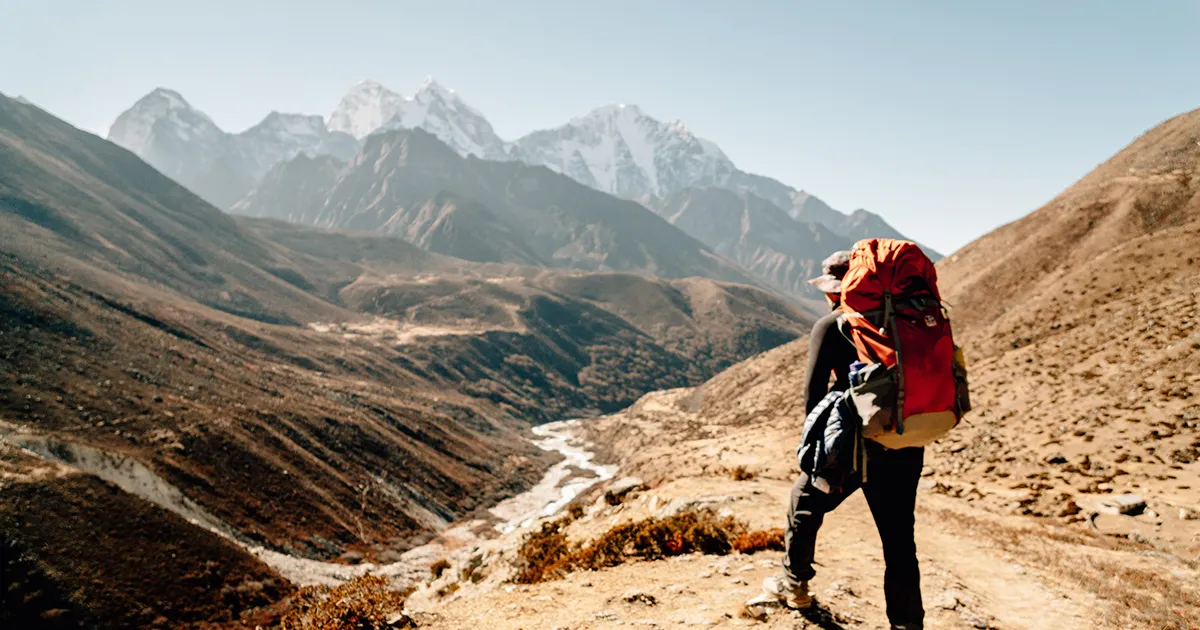
Being properly fit also demands technical efficiency so that you can minimize the energy and risk. Some of the important things you should practice are:
- Efficient uphill and downhill footwork
- Trekking pole technique
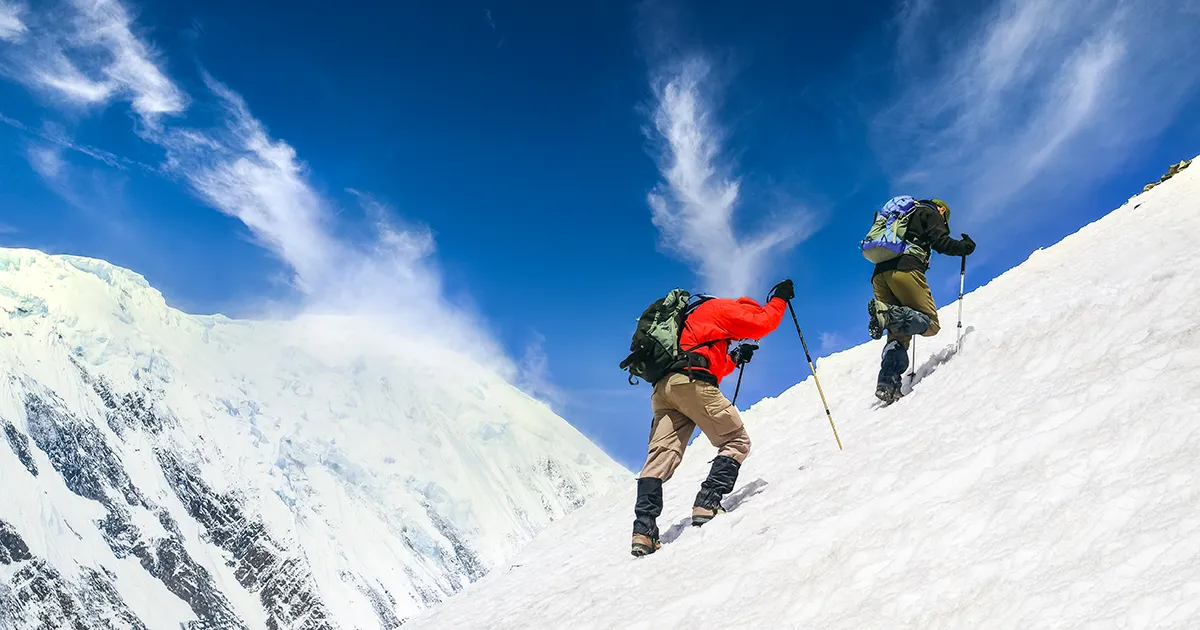
- Crampon walking with flat-foot and front-point
- Ice axe self-arrest
- Rope travel basics
- Moving confidently with a pack on mixed terrain
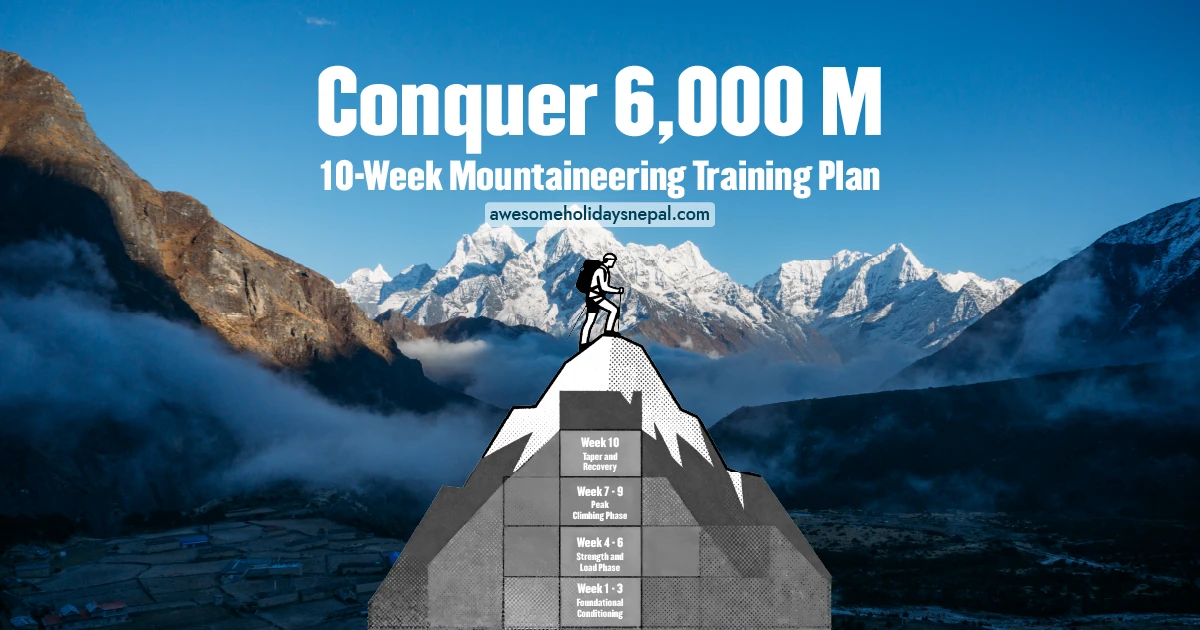
10-Week Structured Training Plan for a 6,000 m Peak
The best exercises for mountaineering also demand a structured training plan so that you have high-volume cardiovascular endurance with muscular strength and endurance to sustain intense, day-long efforts at altitude.
Week 1 to 3: Foundational Conditioning
Mountain climbers should make a goal of building aerobic base and movement consistency in the first to third week of training for mountaineering. The key workout should include easy runs or incline walks, bodyweight and light resistance strength training, and be followed by core stability work, mobility, and flexibility. Trekker should not feel exhausted and focus in manageable foundation.
- 3–4 cardio sessions, which should last 45 to 75 minutes.
- 2 strength sessions for the full body
- 1 long hike per week with a light backpack for 2–4 hours.
Week 4 to 6: Strength and Load Phase
These two weeks, climbers have to focus on practicing with a heavy backpack in steep terrain. You should focus on:
- 2–3 cardio sessions including hills
- 2–3 strength sessions
- 1 long loaded hike per week
Similarly, this week you should do workouts of stair climbing while carrying a backpack of 10 to 20 kg. You should do step-ups with dumbbells or pack, longer hikes for 4–6 hours, with a downhill training for quad durability. These weeks, your legs and lungs should feel stronger for mountaineering.
Week 7 to 9: Peak Climbing Phase
This is the most important phase where you should simulate summit demands and prioritise on maximum endurance. You should walk with a summit weight pack for more than 8 hours, do hiking for multiple days on weekends, and practice steep uphill pacing in the practices with a descending under fatigue. The weekly focus includes:
- 1–2 long endurance days (back-to-back if possible)
- 2 maintenance strength sessions
- Technical skill practice
- Reduced high-intensity cardio
Week 10: Taper and Recovery
Trekkers should make a goal to rest, be positive, and making strong mind. You should not do heavy strength session, or do long and brutal cardio, which makes you more fatigued. The weekly focus includes:
- Reduce volume by 40–60%
- Keep light movement and mobility
- Short hikes with a very light pack
- Sleep, hydrate, and fuel well
Extra Training Tips for 6,000 m Peaks
The best exercises for mountaineering not only demand being fit, but it’s also about training smart, building resilience and making your body and mind more capable of dealing with the altitude and cold for longer days, whether it is Island peak or the tallest mountain in the world.
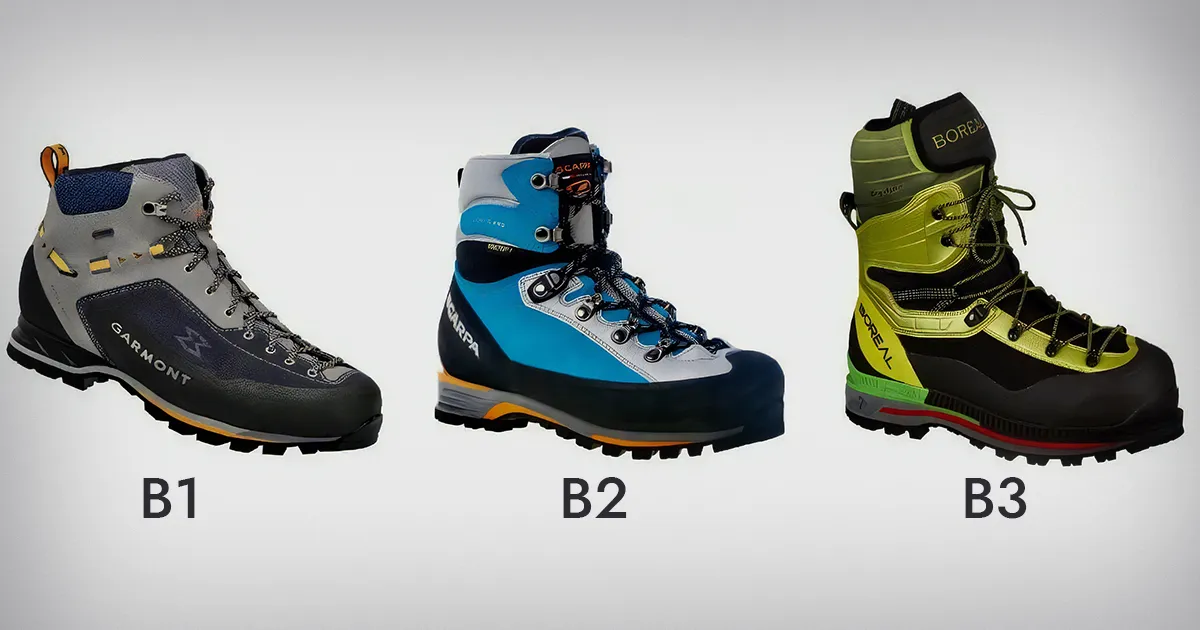
Practice with Boots
You should practice training in the same trekking boots you’ll wear on the mountain, which will change your stride, balance, and muscle engagement, especially on uneven terrain. Wearing mountain boots regularly helps you to prevent blisters, strengthens your ankles, and makes long expedition days feel familiar instead of miserable during the summit expedition.
Slow Training for Fast Result
It sounds backward, but slowing down is one of the most important and fastest ways to improve during high altitude training preparation. You have to walk for longer hours, so you should focus on building an aerobic capacity via long, steady workouts at a comfortable pace.
Proper Eating and Hydration
You should eat enough carbohydrates for energy, protein for recovery, and healthy fats for endurance. Also, hydration is very important as it hits harder at altitude, which will increase the acclimatization rate.
Practice on Downhill Terrain
Everyone prioritizes going uphill and neglect practicing in the downhill. Downhill hiking is very important for the knees, quads, and hips, especially after a long summit push. Practice controlled descents to build strength and confidence among the hikers.
Consistency is a Key
Consistency is key, and you should do exercise regularly, even for a short time. It helps to build endurance, mental toughness, and trust in your body when you are on an actual expedition above 6,000 meters.
Summing It All Up: Train Smart, Climb Strong, Reach 6,000 m
Training for a 6,000 m with the best exercises for mountaineering is a journey that shapes your endurance, confidence, and mindset. Mountaineering workout demands a balanced focus on fitness, strength, technical preparation, and mental toughness. You should make yourself ready to face the demands of high altitude and challenging terrain earlier for the success of your expedition.
You should prioritise training ahead, stay committed to your plan, and embrace each step of the process. When the time comes, proper preparation will not only improve your chances of standing on the summit but also allow you to fully appreciate the beauty and power of Nepal’s Himalayas, such as Mount Everest, Kanchenjunga, Island Peak, Lhotse, Makalu, Cho Oyu, Dhaulagiri, Manaslu, and Annapurna. Make sure to contact Awesome Holidays Nepal for further training tips related to hiking, trekking or climbing summits.
FAQs
Expand AllHow fit do I need to be for a 6,000 m peak?
You need to have excellent cardiovascular fitness, strong leg endurance, and core strength to handle 8–10-hour days, often for consecutive days, to a 6,000m peak.
Is 10 weeks enough time to train for peak climbing?
Yes. 10 weeks is generally considered enough time to train for peak climbing.
What type of cardio is best for 6,000 m peaks?
The type of cardio that is best for 6,000 m peaks is hiking on steep, uneven trails with a weighted pack of 5 kg to 15-20 kg.
How important is strength training for summit day?
Strength training is very important for summit day as it actas a foundation for endurance, injury prevention, and efficiency when moving with a heavy backpack.
Can I train for altitude while living at sea level?
Yes, you can train for altitude while living at sea level.
How heavy should my training backpack be?
Your training backpack should be 5–10% of your body weight for beginners and progress up to a maximum of 20–25% as you become more conditioned.
How many days per week should I train?
You should train 4–6 days per week.
What are common training mistakes before peak climbing?
The common training mistakes before peak climbing include:
- Neglecting Downhill Training
- Insufficient Strength Endurance
- Not Training with a Backpack
- Ignoring Flexibility and Mobility
- Underestimating Altitude
- Poor Nutrition/Hydration Planning.
Should I train through fatigue or prioritize recovery?
You should prioritize recovery over training while being fatigued.
How do I know if I’m ready for summit day?
You will know you are ready for summit day when it involves a combination of assessing your physical fitness, mental fortitude, and acclimatization progress.
Is stair climbing effective for mountaineering training?
Yes. Stair climbing is effective for mountaineering training.
Should beginners follow a different training plan?
Yes, beginners should follow a different training plan.
What injuries are common during training and how can I avoid them?
Muscle strains and joint pain are common injuries that you can avoid with warm-ups, proper technique, and gradual progression.
How should I prepare for trekking and climbing in Nepal’s Himalayas?
You should prepare for trekking and climbing in Nepal’s Himalayas with 3–4 months in advance by building cardio (running, swimming, hiking with a pack), strength (legs, core), and mental stamina.
What does acclimatization mean and why does it matter for peak climbing?
Acclimatization means the process by which the human body adapts to the decreased availability of oxygen and lower atmospheric pressure at high altitudes, and it matters for peak climbing for preventing dangerous, potentially fatal, altitude sickness, such as HAPE (fluid in the lungs) and HACE (fluid in the brain).
What breathing techniques help at high altitude?
The breathing techniques like pursed-lip breathing (slow, resisted exhalation), diaphragmatic/belly breathing (deep, full-lung capacity), and pressure breathing (forceful exhales) will help at high altitude.
How do I build endurance and stamina for long summit days?
You should build endurance and stamina for long summit days by focusing on dedicated, progressive, and specific training that boosts aerobic capacity and muscular endurance.
What’s the best way to train legs and core for steep climbs and descents?
The best way to train legs is by doing box jumps/explosive step-ups, barbell/weighted step-ups, walking lunges, poliquin step-downs, calf raises while plank & side plank, russian twists, bird-dog, and leg raises helps in core training.
How should I balance aerobic vs anaerobic training for peak climbing?
A phased approach that shifts from building a broad endurance base to high-intensity, anaerobic power as your goal trip approaches helps in the balance aerobic vs anaerobic training for peak climbing.
How much recovery do I need during a 10-week mountaineering plan?
For a 10-week cycle, you should plan for one full rest day per week and one recovery (deload) week every 3–4 weeks.
Related blog posts
Discover a choice of tourist destinations loved by most of our visitors. Whether you're on a jungle safari to spot rare animals or walking through a world heritage site, these well-planned itineraries cover the major highlights of Nepal.


 call an expert at: