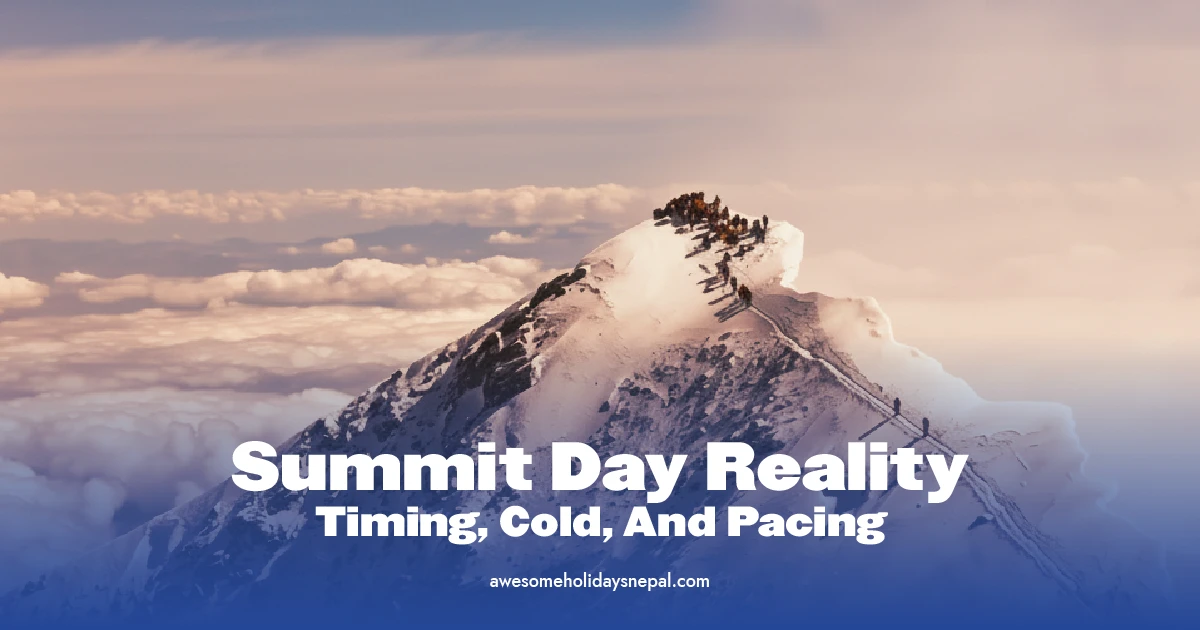
Many of you who aren’t familiar with mountaineering might not be used to this terminology. To put in simple words, it’s the final push before you conquer the top of any peak that you are climbing. It’s the day every summiteer dreads!
Summit days across different peaks around the world start roughly about the same time, usually before midnight. This practice isn’t about a norm; it’s a survival plan. They have a preset time for ascent and a fixed time limit for a safer descent, ensuring the climber’s safety.
Every summit day comes with strict ascent timelines and fixed turnaround rules, designed to keep climbers alive. For instance, an Everest Summit Day has a strict 2 pm rule. Missing that window can result in making descent exponentially more dangerous.
Let’s go through the blog to better understand what a summit day on a Himalayan expedition is like.
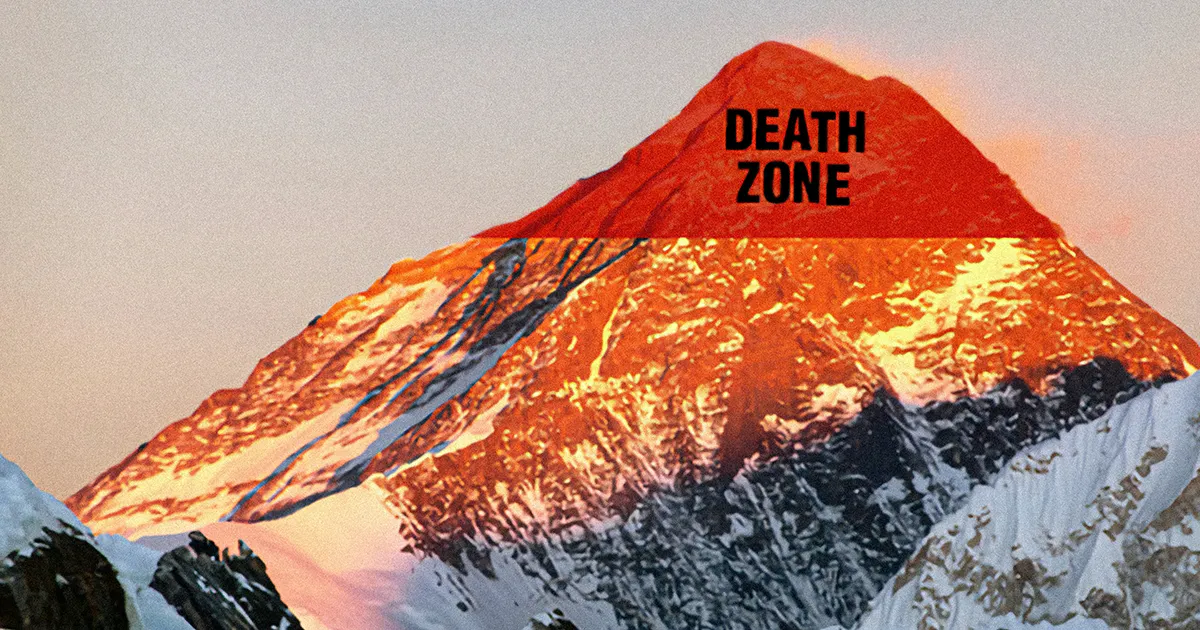
A summit day is the final ascent from the highest camp to the top of the mountain and back. On 8,000-meter peaks, this usually means spending 16–24 hours continuously climbing and descending in the so-called death zone. This is where the human body slowly shuts down due to lack of oxygen.
Everest Death Zone
Unlike regular trekking days, there are no tea breaks, no long rests, and no room for mistakes. Every step feels heavy, breathing is forced, and even simple decisions take effort. Success on summit day depends far more on judgment and discipline than raw strength.
How Does a Summit Day on 8000 meter Peak Look?
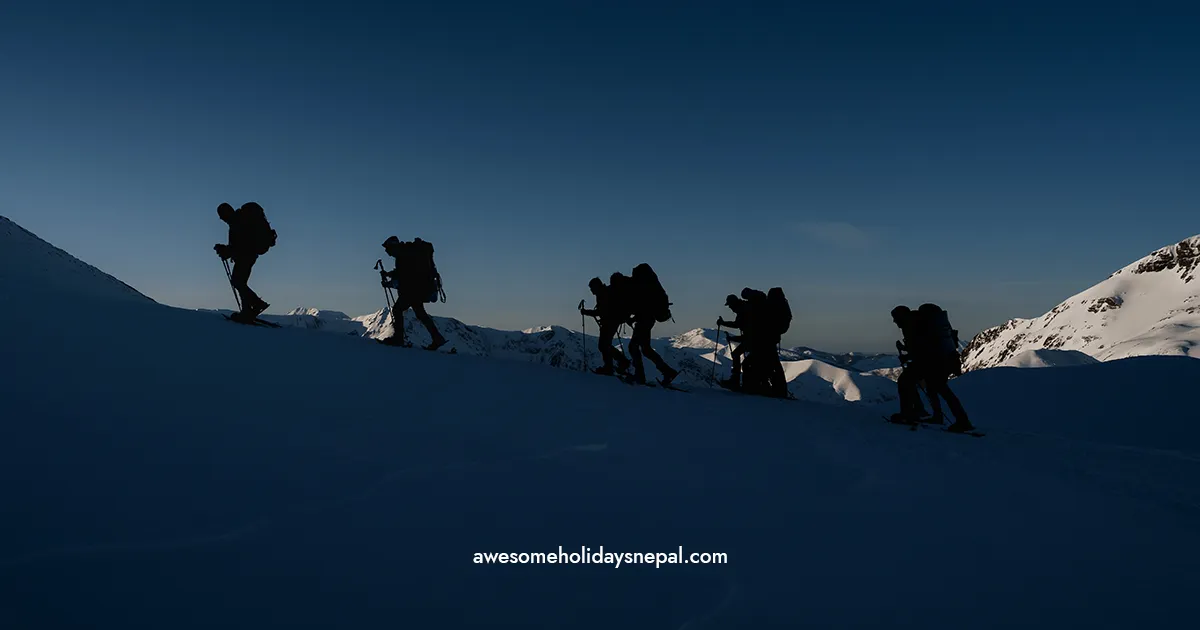
A summit day on an 8,000-meter peak begins late at night, usually around midnight, when climbers leave high camp under headlamps and total darkness. This early start is essential for reaching the summit before winds increase and for allowing enough daylight to descend safely.
The mountain is quiet, the cold is intense, and the line of lights slowly climbs upward into the night. At this altitude, movement is slow and deliberate. Temperatures drop far below freezing, and every step is matched with controlled breathing in thin air. Fixed ropes guide climbers across exposed sections, while strict turnaround times dictate how long anyone can stay on the route.
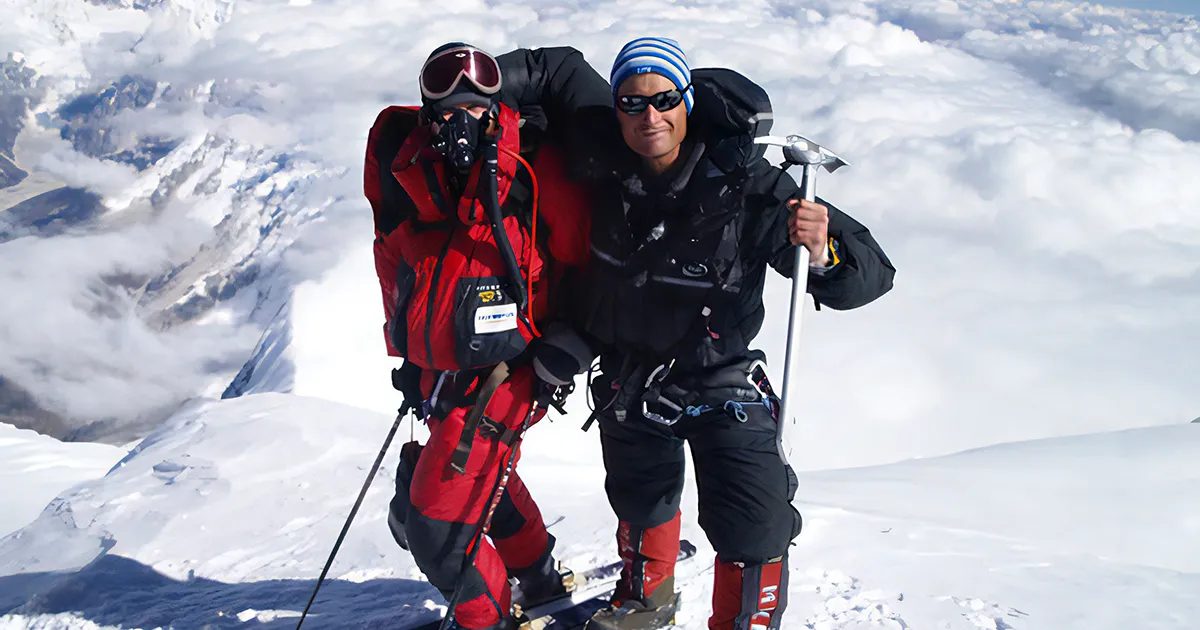
People On Summit Day on Mountains
Although these elements are common on all Himalayan giants, what truly changes from peak to peak is the level of danger, crowding, and how long climbers must endure the extreme conditions before returning safely.
Everest Summit Day
An Everest summit day is long, crowded, and relentlessly exhausting. Most climbers begin from Camp IV at the South Col (7,950 m), stepping out into the darkness between 9 p.m. and midnight.
The climb passes iconic landmarks like the Balcony, South Summit, and Hillary Step. Oxygen management is critical, and delays that’s often caused by traffic can be life-threatening. Reaching the summit doesn’t mean success; getting back down safely does.
Everest Summit Day Outline
Here’s what a typical summit day on Everest looks like:
9:00 PM – 12:00 AM: Departure from Camp IV (South Col) Climbers step out from their tents into bitter cold after final oxygen and gear checks. The South Col is usually windy, and even at the start, breathing feels labored.
1:00 – 4:00 AM: Slow climb toward the Balcony Progress is steady but slow. Fixed ropes guide the route, and oxygen flow must be carefully managed. The cold is at its worst during these hours.
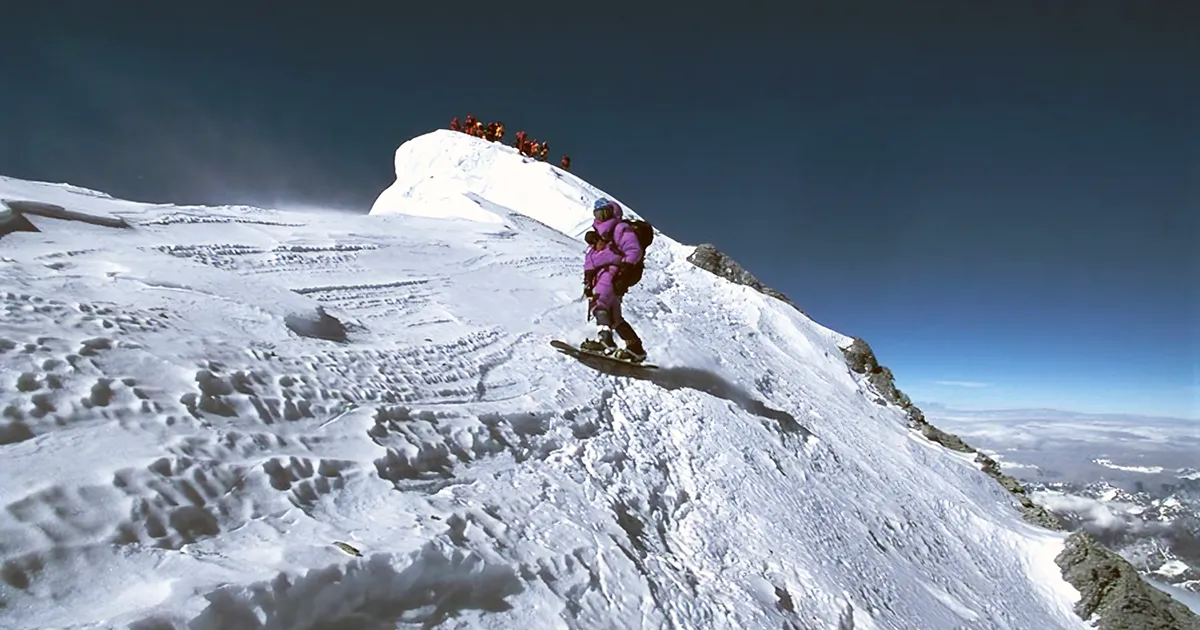
4:00 – 7:00 AM: Balcony to South Summit First light begins to appear. Many climbers pause briefly at the Balcony to change oxygen bottles. Traffic often starts building above this point.
Marco Siffredi Snowboarding on Everest Balcony
7:00 – 10:00 AM: Hillary Step and final ridge This section can involve long waits due to bottlenecks. Time on the summit is short, often just a few minutes.
Turnaround Time: 2:00 PM (strict) Regardless of position, climbers must descend by this time to avoid extreme risk.
Descent The return is physically harder than the ascent, with fatigue, cold, and reduced oxygen increasing the chance of accidents.
Manaslu is often labeled the “easiest” 8,000-meter peak, but that description can be misleading. The summit day is shorter than Everest, yet snow conditions and avalanche risk play a much bigger role.
Climbers usually leave slightly later than on Everest, and crowding is less intense. However, whiteout conditions and soft snow can make navigation challenging, especially on descent.
People on Manaslu Summit
Manaslu Summit Day Outline
Your typical summit on Manaslu follows the structure given below:
12:00 AM – 2:00 AM: Departure from high camp Teams leave slightly later than on Everest, often reassessing snow conditions before committing to the climb.
2:00 – 5:00 AM: Climbing through snow-covered slopes Deep snow slows movement, and climbers stay alert for hidden crevasses, especially in low visibility.
5:00 – 8:00 AM: Upper slopes in first daylight As the sun rises, route-finding becomes easier, but warming snow increases avalanche concern.
8:00 – 11:00 AM: Final push to the summit The summit is quieter compared to Everest, and climbers rarely linger long.
Turnaround Time: Usually 1:00–2:00 PM Decisions are influenced by snow stability rather than crowd pressure.
Descent Descending on softening snow requires caution, especially on steeper sections.
Annapurna Summit Day
Annapurna I is in a league of its own. It’s not the altitude that makes Annapurna infamous, it’s the terrain. Summit day here involves constant exposure to avalanche-prone slopes, unstable snow, and unpredictable conditions.
There is often no fixed turnaround time. Decisions are made based on snow stability, weather, and gut instinct. Many teams turn back early, even when physically capable of summiting.
Annapurna Summit Day Outline
An Annapurna summit day outline looks like:
11:00 PM – 1:00 AM: Departure from high camp Teams move cautiously from the start, aware that Annapurna offers little room for error.
1:00 – 5:00 AM: Traversing avalanche-prone terrain This is the most mentally demanding part of the climb. Progress is often quiet and tense, with constant assessment of conditions.
5:00 – 8:00 AM: First light on steep upper slopes Many climbers turn back here if conditions feel unstable, even when physically strong.
8:00 – 11:00 AM: Final summit push (if conditions allow) There is no room for delays. Summit stays are extremely brief.
Turnaround Time: Risk-based, no fixed rule Decisions are made based on snow, weather, and instinct.
Descent Often more dangerous than the ascent, especially as temperatures rise and avalanche risk increases.
Summit Days on Different Mountains
Mountain
Typical Departure Time
Summit Day Duration (Return)
Coldest Recorded (Summit)
Real Feel with Wind
Avg. Turnaround Rule
2025–2026 Success Rate (Spring)
Everest (South)
21:00 – 00:00
16–22 hours
−36°C
−55°C
14:00 latest
~68%
Manaslu
00:00 – 02:00
14–18 hours
−34°C
−50°C
13:00–14:00
~58%
Annapurna I
23:00 – 01:00
18–24+ hours
−38°C
−60°C+
No strict rule
~38%
Things to Do Before the Final Summit Push
After trekking a whole lot of days, finally comes the day to taste the pleasure of success. And to make sure your effort gets the result, you need to take care of few things before the final summit push. Your preparation for summit begins the night before and lasts until you safely return back to the rest camps.
The Night Before Summit Push
The night before summit push is actually the most mentally exhausting part of the expedition. Climbers get more anxious as even a small oversights can result to serious consequences. Conversations are minimal, movements are slow, and the focus turns inward.
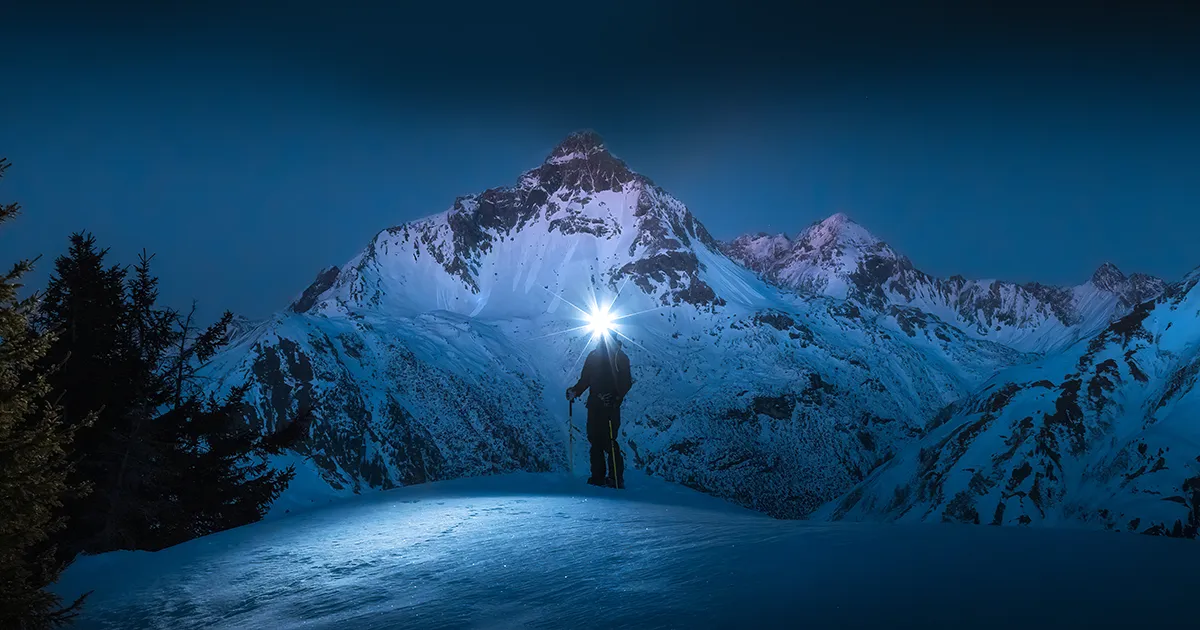
Night Before Summit Push
Here are a list of few things you need to keep in check on this night:
Take Actual Weather Briefings
Weather is the single most important factor on summit day. Wind speed, cloud cover, and temperature trends determine whether a climb is safe or reckless. Successful summits happen when climbers respect forecasts rather than wish them away. If winds rise or visibility drops unexpectedly, the safest decision is often to turn back.
Know Your Safe Window to Trek
Every summit push operates within a narrow, non-negotiable time window. This window dictates when climbers must reach the summit and when they must turn around. Missing it can mean descending in darkness, worsening weather, or extreme fatigue. A safe summit is one that respects this window, even if it means walking away just short of the top.
Check Your Gears and Oxygen Setup
At 8,000 meters, equipment failure is rarely fixable. Oxygen regulators must flow correctly, masks must seal properly, and batteries must function in extreme cold. A frozen valve or loose connection can end a summit attempt in minutes. That’s why experienced climbers inspect their gear repeatedly before leaving camp.
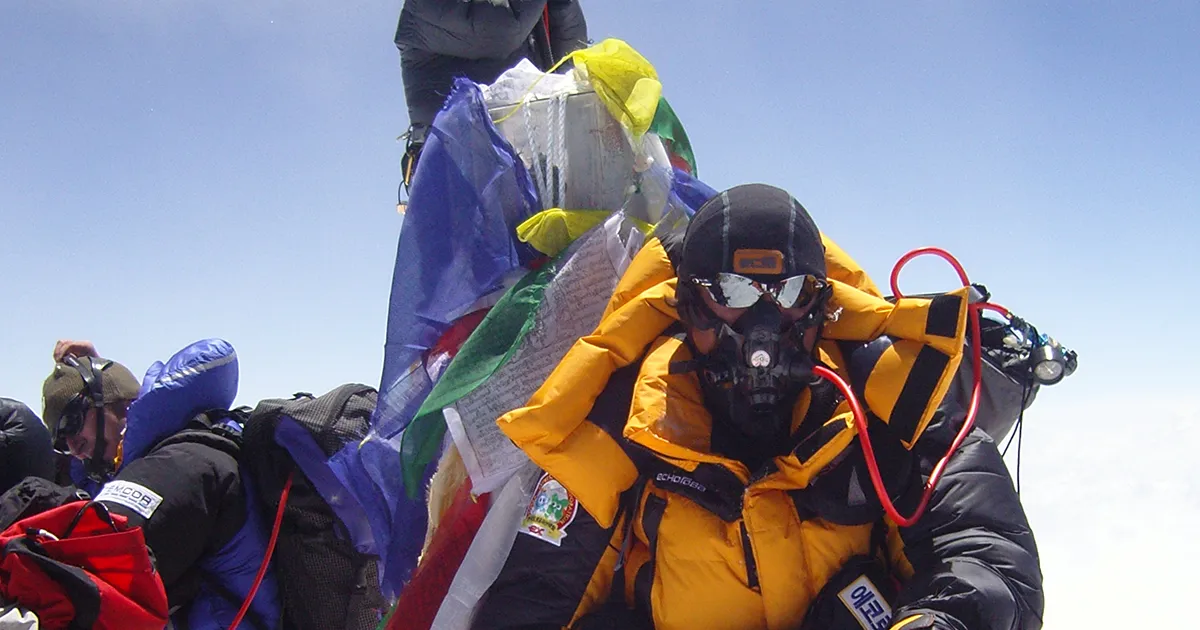
Everest Climbers using supplemental oxygen
Be Fearless and Don’t Stress Out
Confidence on summit day comes from preparation, not bravado. Panic wastes energy and clouds judgment, while calm decision-making conserves strength and focus. The goal isn’t to eliminate fear. Learn to manage fear, stay present, and make rational choices under pressure.
Check for the Symptoms of Altitude Sickness
Summit day is not the time to ignore warning signs. Headaches, nausea, dizziness, or confusion are signals that the body is struggling. Continuing upward with symptoms of altitude sickness significantly increases the risk of collapse or fatal descent. If symptoms appear, the correct decision is always to stop and descend.
Get the Best Possible Sleep
True rest at high camp is rare, but even a few hours lying down helps conserve energy. Most climbers drift in and out of sleep, interrupted by wind, cold, and nerves. Still, resting the body, even without deep sleep makes a measurable difference during the long hours ahead.
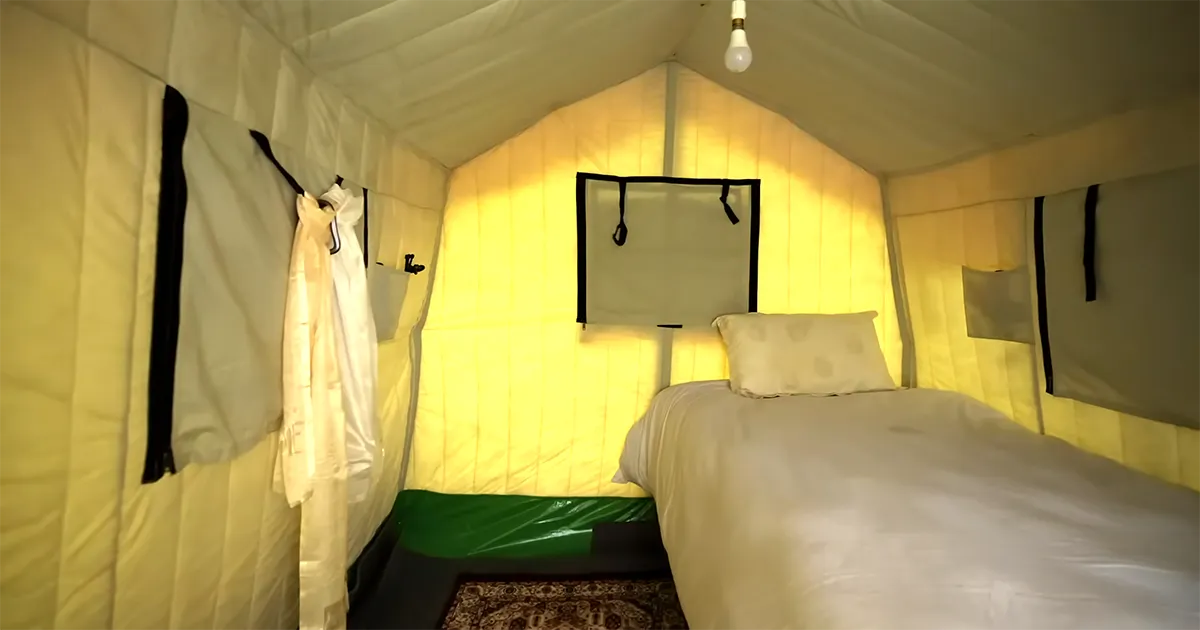
Tent room in Everest Summit trek
Be Prepared and Leave at Midnight
Late departures often lead to late summits, and late summits lead to dangerous descents. Leaving around midnight allows climbers to reach the summit early in the day and descend while conditions are still manageable. Timing, more than strength, often determines success.
Best Ways to Prepare for Summit Day
When situations get worse in the peak, there’s no guarantee of success or survival, but you can always prepare your body to withstand in case some thing goes wrong. Preparing yourself for summit day is always about making the best out of any dangers. Practice the following to prepare for summit day even before the day actually comes:
Take a Few Acclimatization Hikes
Proper acclimatization allows the body to adapt to low oxygen levels gradually. Short climbs to higher camps and controlled descents train the body to perform under extreme conditions. Rushing this process increases risk, no matter how fit a climber feels.
Practice Ascending without Oxygen Tanks
Training climbs without supplemental oxygen improve efficiency and breathing control. Even for climbers who plan to use oxygen on summit day, this practice builds confidence and reduces dependence on equipment.
Andrew Irvine on Everest without Oxygen tank
Adapt to the Cold Temperature
You can build resistance to the colder freezing temperatures over time. Cold tolerance is developed over time, not assumed. Spending nights at high camps, learning how your body reacts, and testing clothing systems prepares climbers for summit day conditions, where exposed skin freezes quickly.
Maintain Your Pace
Don’t Rush the Summit, let your body adapt to the Himalayas. Pacing is everything. Climbers who move too fast often burn through energy and oxygen early. Letting the body set the rhythm leads to steadier progress and a safer descent.
Know When to Back Out
Turning around is not failure, it’s experience. Many of the strongest mountaineers are those who recognize when conditions or their body aren’t right. Walking away ensures the chance to return another day.
Altitude Sickness in Manaslu Trek
The Final Summit Push
The final summit push is the most demanding and mentally intense phase of the entire expedition. After weeks of acclimatization and preparation, climbers enter the death zone knowing there are no second chances. Every step is slower, every breath deliberate, and every decision carries weight. At this stage, strength matters less than judgment, discipline, and the ability to recognize personal limits
Turn Around Rule
Turnaround times exist to save lives. Regardless of weather conditions, how close the summit may appear, or the emotional investment built over months, these rules must be respected.
Missing the turnaround time dramatically increases the risk of exhaustion, oxygen depletion, and exposure during descent. On summit day, ambition must always give way to safety.
Descent Safely
Reaching the summit is only half the journey. The descent is often more dangerous than the climb up, as fatigue sets in, oxygen levels drop, and concentration fades.
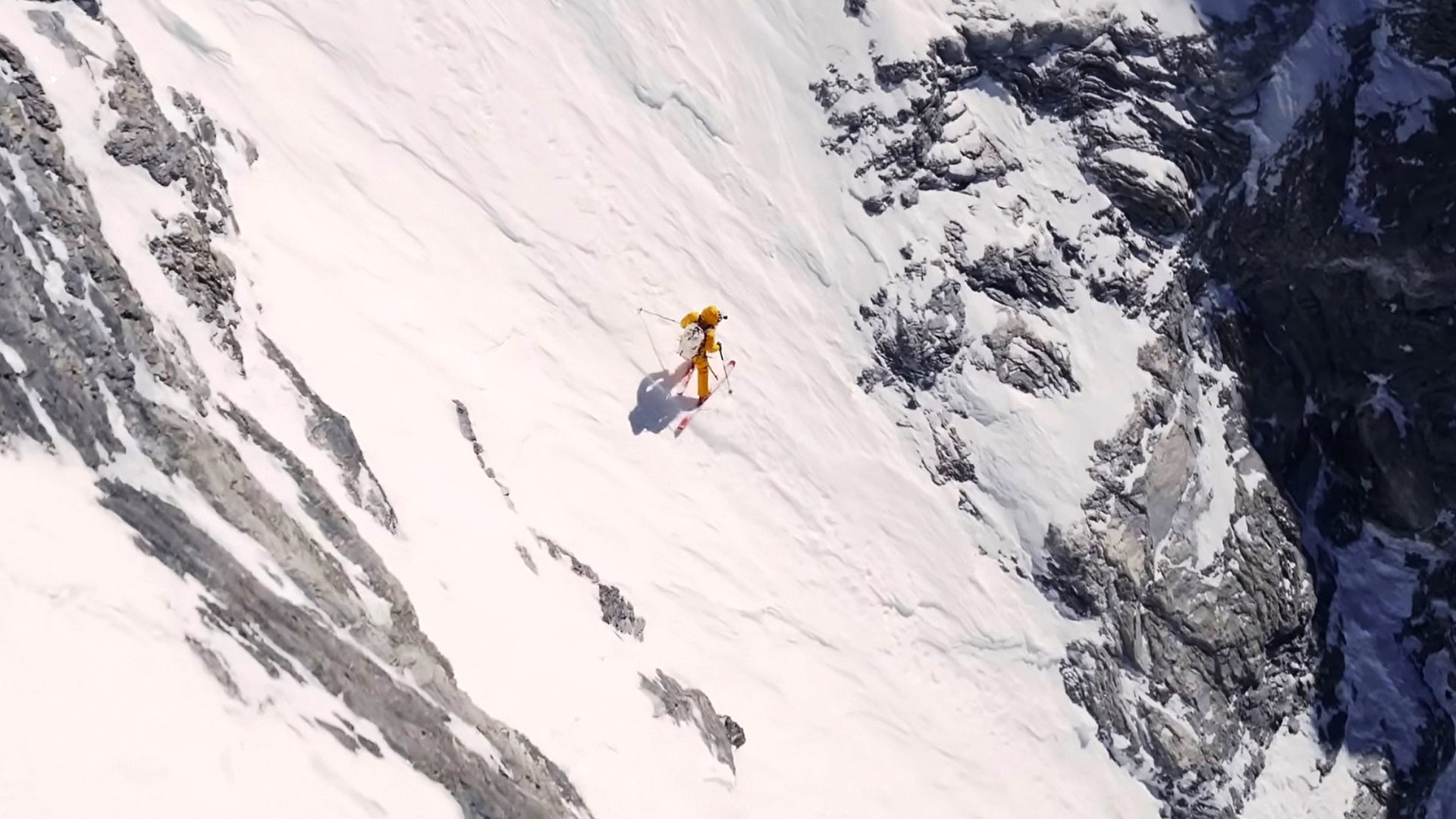
Jim Morrison’s Ski Descent the Everest
Many serious accidents occur after summiting, when climbers underestimate the effort required to return. Experienced mountaineers measure success not by standing on the top, but by descending safely back to camp.
Reality vs. Dream: The Truth of Summit
The dream of standing on top of an 8,000-meter peak is powerful. But the reality of summit day is far less romantic. It’s cold, quiet, exhausting, and often frightening. Success isn’t defined by reaching the summit, it’s defined by returning safely.
Everest tests endurance, Manaslu tests patience, and Annapurna tests judgment. Each summit day leaves climbers changed, not because of the view, but because of the limits they learn to respect.
Summit day starts at night to take advantage of the most stable weather and lowest wind speeds, which typically occur before sunrise. An early start also allows climbers enough daylight to descend safely, which is critical because most accidents happen on the way down.
What time do climbers leave for Everest summit day?
On the South Col route, climbers usually leave between 9:00 PM and midnight from Camp IV. This timing helps them reach the summit early in the morning and descend before afternoon winds intensify.
When do you start summit day on Manaslu?
Manaslu summit pushes typically begin slightly later, between midnight and 2:00 AM, depending on snow conditions and visibility. Snow stability plays a bigger role here than crowd timing.
How cold does it get on summit day in the Himalayas?
Temperatures on summit day commonly range from –30°C to –40°C, and with wind chill, it can feel much colder. At these temperatures, frostbite risk is high within minutes if skin is exposed.
How cold is Everest summit day in May 2026?
During the main spring window in May, summit temperatures on Everest are usually around –35°C, with wind chill pushing the “real feel” close to –50°C or colder, especially at night.
How long does a typical summit day take?
A full summit day on an 8,000-meter peak usually lasts 16 to 24 hours, including ascent and descent. Some climbers are on the move for nearly a full day without proper rest.
How long does Manaslu summit day take?
Manaslu summit day is slightly shorter than Everest, usually 14 to 18 hours, depending on snow depth and pace.
Why is summit day more exhausting than other trekking days?
Summit day happens entirely in the death zone, where oxygen levels are dangerously low. The body cannot recover at this altitude, so fatigue accumulates rapidly, even with slow movement.
What happens if you walk too fast on summit day?
Moving too fast can cause rapid oxygen depletion, dizziness, poor decision-making, and collapse. Overpacing is a common reason climbers fail to complete summit pushes safely.
How should I pace myself during a summit push?
Climbers use a slow, rhythmic pace, often described as “pressure breathing and one step at a time.” The goal is efficiency, not speed.
How many hours is Everest summit push from South Col?
From Camp IV to the summit and back typically takes 16–22 hours, depending on conditions and traffic.
Why is Annapurna summit day so dangerous?
Annapurna’s danger comes from avalanche-prone terrain, unstable snow, and minimal fixed protection, not altitude alone. Risks increase sharply after sunrise.
What is the best pacing strategy for Everest summit day?
Annapurna’s danger comes from avalanche-prone terrain, unstable snow, and minimal fixed protection, not altitude alone. Risks increase sharply after sunrise.
How cold does it get on Manaslu summit night?
Temperatures on Manaslu summit night commonly reach –30°C to –35°C, with wind chill dropping closer to –50°C.
How do guides decide turnaround times on summit day?
Turnaround times are based on weather forecasts, oxygen supply, climber condition, and descent safety, not how close the summit is.
Should you turn around on Everest summit day?
Yes, if you miss the turnaround time, feel unwell, or face worsening weather. Turning back is considered good judgment, not failure.
Can beginners handle summit day at high altitude?
True summit days on 8,000-meter peaks are not suitable for beginners. Extensive high-altitude experience is essential.
What are signs you should stop and turn back on summit day?
Severe fatigue, confusion, loss of coordination, persistent coughing, or extreme cold sensitivity are all warning signs to descend immediately.
How long from Camp 4 to Everest summit and back?
Most climbers take 8–10 hours up and 6–10 hours down, depending on traffic and energy levels.
How does altitude affect breathing on summit day?
At 8,000+ meters, the body receives about one-third of normal oxygen, making every breath deliberate and effortful, even at the time of rest.
How much oxygen for Everest summit day?
Most climbers use 2–4 liters of oxygen per minute, thus they keep changing bottles at the Balcony and sometimes at the South Summit.
Can you summit Everest and return in one day?
Yes, you can summit Everest and return in one day. Summit day is designed as a single continuous push, but it’s one of the longest and hardest days climbers ever experience.
How steep is the Hillary Step on summit day 2026 (post-rockfall)?
After the 2015 rockfall, the Hillary Step is less vertical but still exposed and narrow, especially dangerous when crowded.
What to wear on Everest summit day 2026?
Climbers need to wear protective gears such as 8000-meter down suits, layered gloves, insulated boots, face protection, and goggles, all designed for extreme cold and wind.
What is Manaslu summit day success rate 2026?
In recent spring seasons, Manaslu’s summit success rate has averaged around 55–60%, depending on weather and snow conditions. While it’s difficult to predict the success rate for 2026 right away, it’s predicted to exceed the average.
Is there Annapurna summit day avalanche risk?
Yes, there is an avalanche risk on Annapurna summit day. In fact, avalanche risk is the primary danger on Annapurna, especially as temperatures rises after sunrise.
Is the descent harder than the ascent on summit day?
Descent is almost always difficult than ascent on summit day. Fatigue from climbing up, dehydration, and reduced oxygen makes the descent more dangerous than climbing up.
As a polished and passionate writer, Sujata has created content for different types of businesses. She believes good content is the key to reaching out to potential clients through your website. Working as a Sr. Content Writer for Awesome Holidays Nepal, she intends to guide adventurers through the Himalayan country's lovely atmosphere and diverse landscapes with detailed itineraries and informative blogs. Besides writing, Sujata loves traveling and reading good books.
Related blog posts
Discover a choice of tourist destinations loved by most of our visitors. Whether you're on a
jungle safari to spot rare animals or walking through a world heritage site, these
well-planned itineraries cover the major highlights of Nepal.

 Sujata Pokhrel




 call an expert at: