
Chiu Monastery: The Sparrow Monastery Near Mansarovar Lake
 Amrit K. Aryal
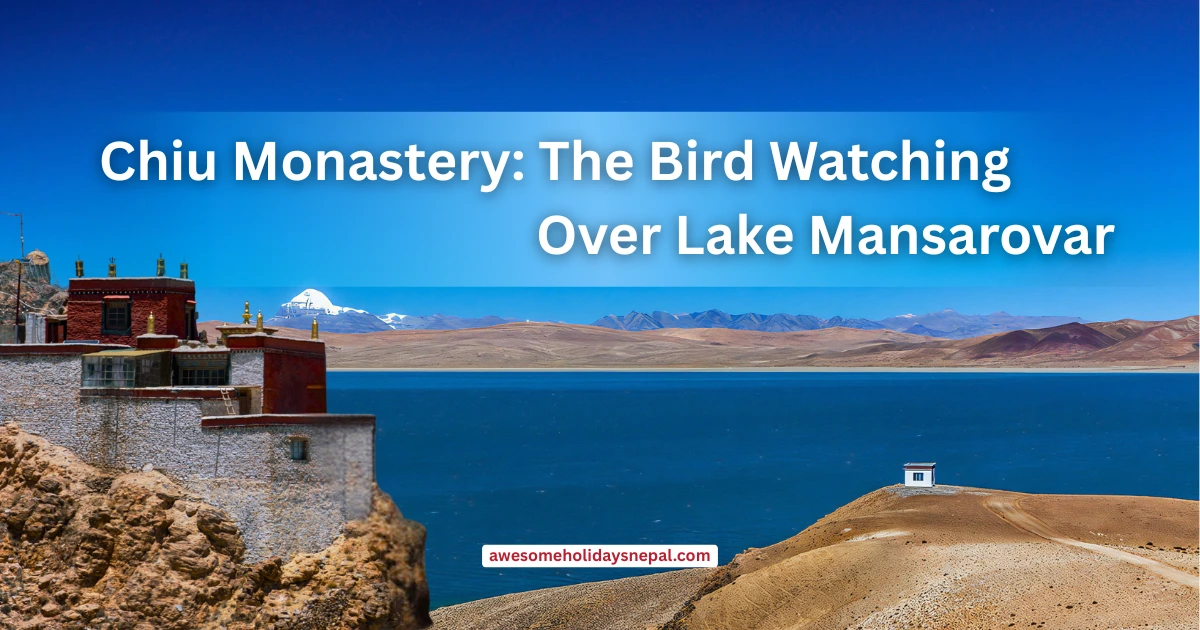
High above the holy Lake Mansarovar, there sits Chiu Monastery, quietly, watching and not trying to impress anyone. Pilgrims usually hear the name bird monastery or sparrow monastery on the way to Kailash Mansarovar Yatra. But not everybody stops there to observe its beauty. The Chiu Monastery is small, not competing with the vastness of the twin lakes of Kailash or the endless Tibetan sky. The monastery remains, rooted on a rocky hill, as if it has always been waiting. The monastery is often referred to as the Sparrow Monastery of Tibet.
The sacred place holds layers of history, spirituality, and cultural profiling. For pilgrims traveling in 2025, it was a stop for photography and spiritual reflection. Maybe in 2026, it would be more than that. It is a place where stories of Guru Rinpoche whisper in silence, carried by the wind and water. This blog will take you through history, spiritual depth, and the present scenario of the monastery.
Location of Chiu Monastery
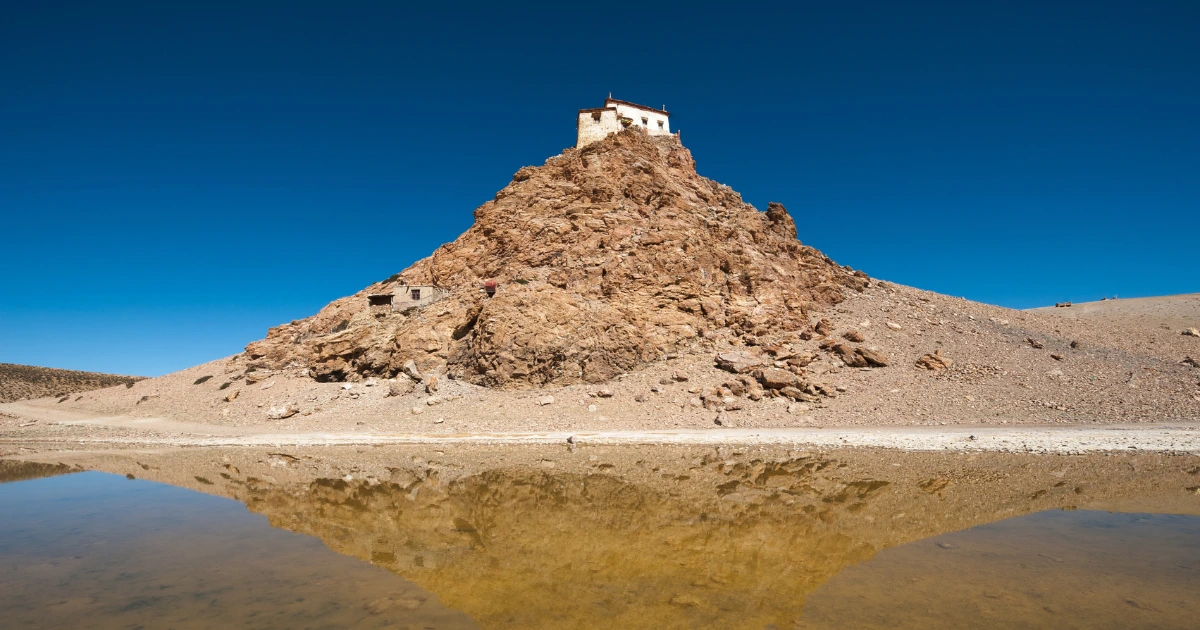
Hilltop Chiu monastery above Lake Mansarovar
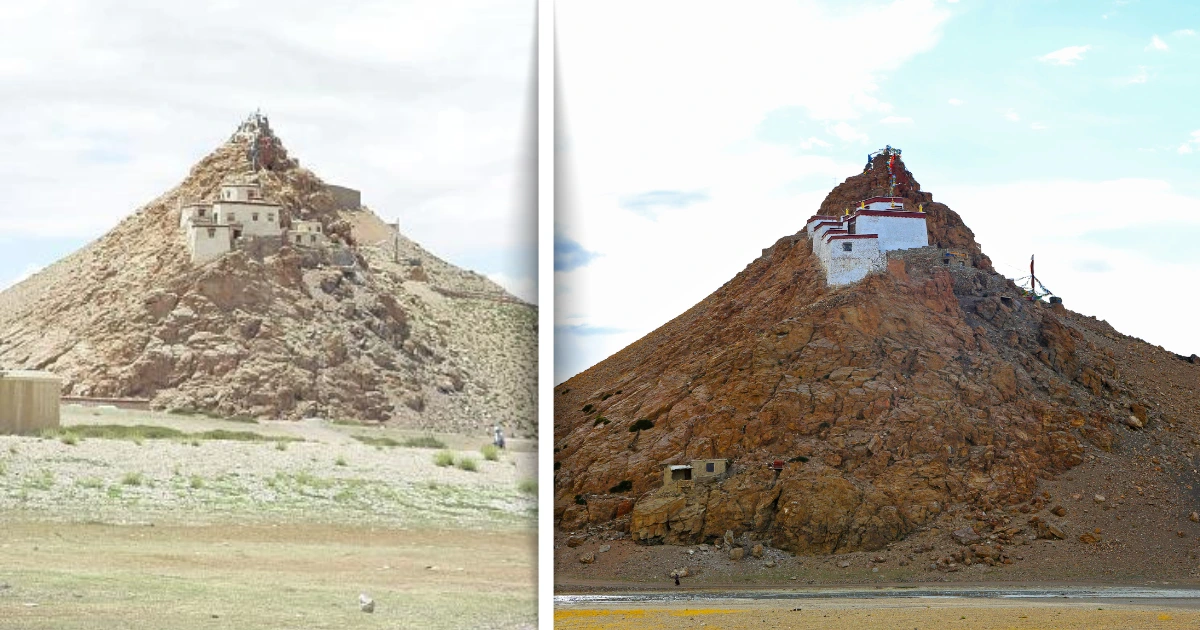
Chiu Monastery stands on a small rocky hill (4, 590 meters), about 33 km away from Darchen, on the North-West shore of Lake Manasarovar. The lake below reflects the sky in ways that feel unreal at first, especially during early morning or sunset. The courtyard opens to the wide-open lake. On the other side, there are mountains and nothing else. That emptiness in them is a part of their teaching, which tells you to be empty till infinity.
Why do pilgrims stop here during the Kailash Mansarovar Yatra
For pilgrims of different faiths, Chiu Gompa is a breakpoint. It is a place to breathe before or after the emotional darshan of Mount Kailash. It is one of the important monasteries in the Tibetan land, near Mount Kailash. Yet the place is less crowded with fewer pilgrims around.
Historical Roots and Legends Connected to Chiu Gompa
Sparrow and Chiu
The word “Chiu” means “sparrow” in the Tibetan language. The local Tibetans say that sparrows once nested here freely, undisturbed by monks or pilgrims.
Padmasambhava cave, Tibet, and its legacy
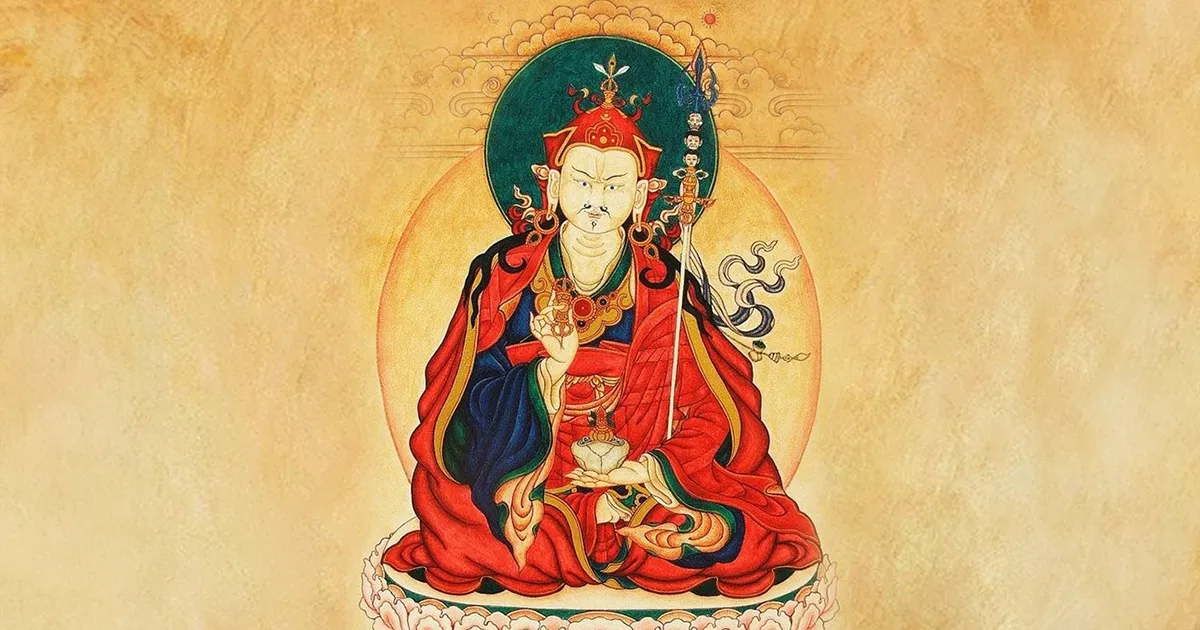
Legends say that the name Chiu is also connected to the great Padmasambhav. As Guru Rimpoche was walking through this area, a sparrow showed him a cave where he meditated. Hence, this monastery was made near the cave.
The monastery feels compact in the spiritual heart of Chiu Monastery, which lies in the cave where Guru Rinpoche (Padmasambhava) meditated. This meditation cave is the central idea for the existence in this exact reason. As per the Tibetan Buddhist tradition, Guru Rinpoche’s meditation subdued the negative forces and anchored spiritual protection to the land.
The Padmasambhava cave in Tibet is narrow, dark, and humble. It lacks modern fancy decoration. It is beautified with pebbles, stones, prayer flags, and, prominently, silence. Pilgrims often feel the time running slowly, breathing becomes deep, and a sense of strange calmness. The main chapel contains the meditation cave and the stone footprint of Guru Rinpoche.
Spiritual Significance Across Traditions
A shared sacred space beyond one religion
This gompa belongs to the Nyingmapa (Red Hat) School of Buddhism. Although deeply rooted in Tibetan Buddhism, Chiu Monastery attracts pilgrims from Hindu, Jain, and even non-religious backgrounds. Hindus believe that Swayambhu was created within the mind of Brahma. A monastery is not about religion. A monastery is a place for spiritual meditation. Sitting right at the top of the lake, the Chiu Monastery becomes an integral part of the Mansarovar Kailash Yatra.
For many pilgrims, visiting sacred monasteries in Tibet like this one is not about conversion or doctrine. This monastery is about your presence in the monastery. Historical scripts describe that the monastery was established in the 8th century CE during the reign of King Trisong Detsen. Among the three kings who helped to spread Buddhism in Tibet, he was one of them.
Why silence matters here
Silence is the key in this monastery. This Gompa does not demand any ritual participation but a peaceful mind from the pilgrims. As the pilgrims go to the monastery and sit quietly for hours, the lake too help in the silence.
Views from Chiu Monastery and Natural Surroundings
Sunset Over Mansarovar Lake
One of the most remarkable views from the Chiu hilltop monastery is the sunset. The Mansarovar Lake sunset view from here is wide and unobstructed. The golden hours are best for the act and photography as the Colors shift slowly. The lake sits there reflecting the shift in colours, like a mirror.
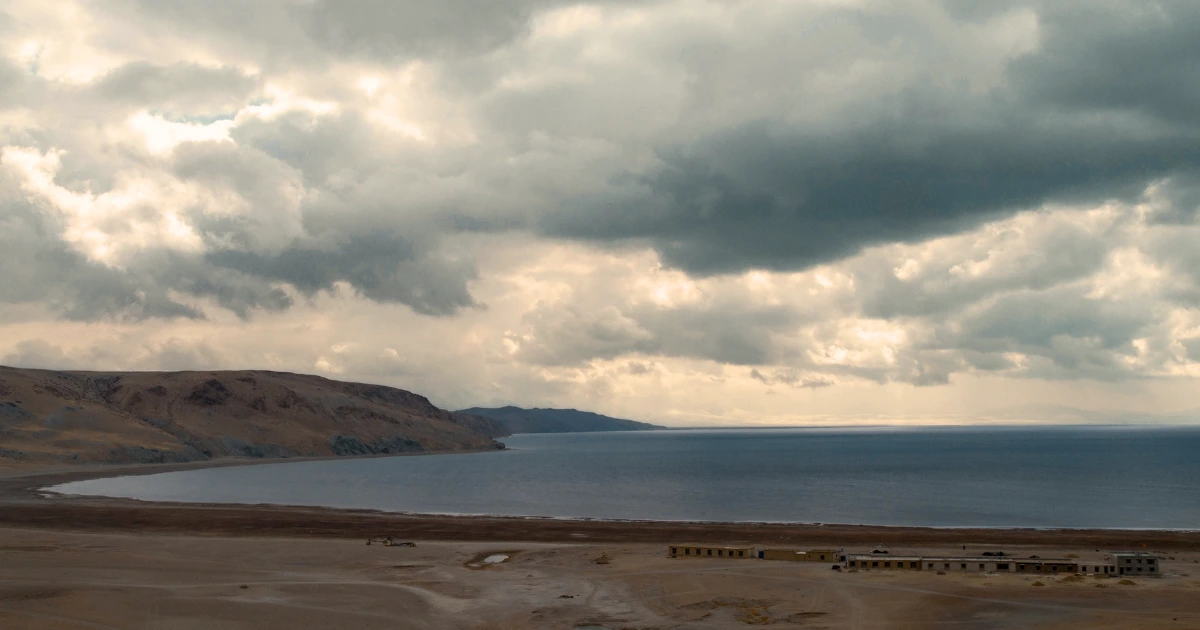
The small stream called the Ganga Chu is also seen connecting Lake Manasarovar with the Rakshastal. The Rakshastal is another milestone of the Kailash Mansarovar Yatra in Tibet. Read here to know more about Rakshastal.
Practical Tips for Pilgrims Visiting Chiu Monastery
Accessibility during the Tibet pilgrimage sites 2025
The monastery is accessible by a short walk after getting out of the vehicle. The path is a little uphill, but walking slowly will help you regain your breath.
Basic Visitor Guidelines
Monastery is a zone of peace. Keep your voices low and do not disturb any monks. Photography may be restricted in the monastery. Always ask for permission to take photos near the meditation cave. Everyone must dress modestly and respectfully. Touching any religious or sacred objects is not recommended.
A Small Checklist
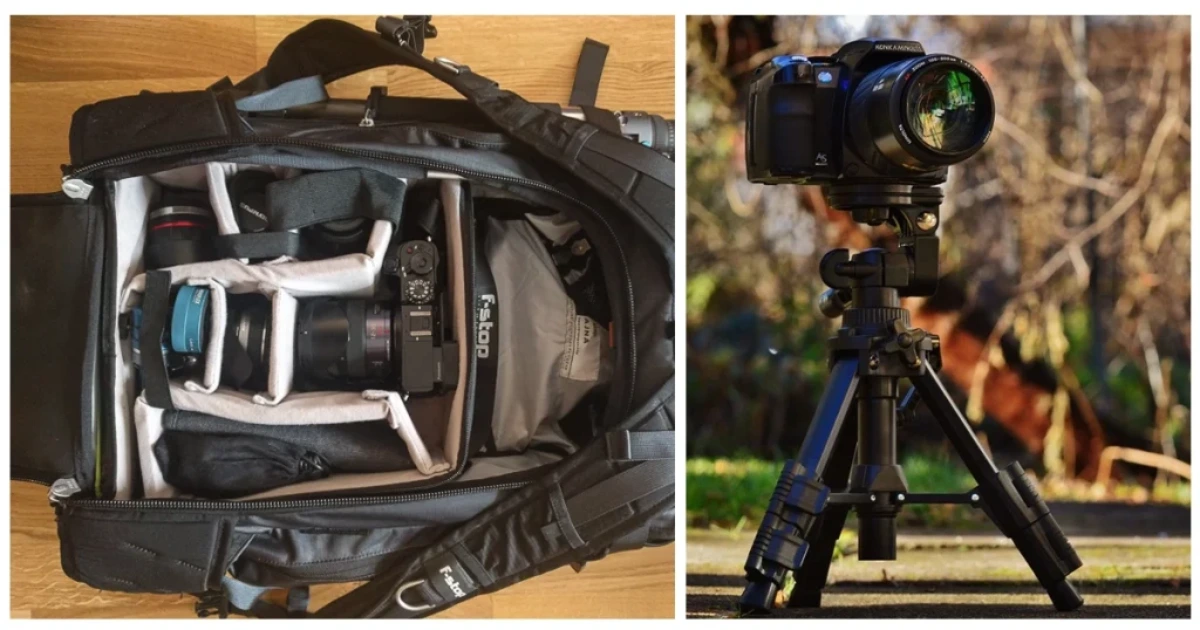
- Warm layer even in summer
- Water bottle
- fleece jacket
- Down puffy jacket for cold nights
- Woolen socks
- Winter hat
- Winter gloves
- Diamox for altitude sickness
- Cell phone,
- camera
- Head torch with extra batteries
This is just a basic list. There are more. Make your packing list on the basis of the season as well. If you wish to know more about what to pack in Kailash, read our blog on the packing list for Kailash.
Role of Chiu Monastery in the Kailash Mansarovar Journey
Emotional grounding before Mount Kailash
Many pilgrims visit Chiu Monastery before embarking on their journey to Mount Kailash. Visiting Chiu Monastery acts as a gentle preparation for Kailash Kora. This is a soft landing into the spiritual intensity you will feel ahead during your Kailash Kora. The silence here stabilises your nerves, calms down your excitement, and normalises your fear of the height.
A Place to Summarise your Kailash Kora
After completing the Kailash kora, some of the pilgrims return and meditate in Chiu Gompa before returning to Kathmandu. They sit, meditate, and summarize their Kailash kora and review the transcendence. The Chiu monastery receives them the same way it did before, without judgment.
Conclusion
Chiu Monastery is a place that blends scenic beauty, spirituality, and the teachings of Buddha. Its connection to Guru Rimpoche, closeness to Mount Kailash, and proximity to Mansarovar Lake make it more special.
When you are travelling to Mount Kailash in 2026, do not miss out on stopping at the Chiu Monastery and observing the rituals. Climb the hill, witness the cave of Padmasambhava, and receive the story of this monastery, to be called sparrow monastery.
FAQs
Expand AllWhere is Chiu Monastery located?
Chiu Monastery is located on the northwestern shore of Lake Mansarovar in the Ngari Prefecture of Tibet. It is located at the top of a small hill near the lake.
Why is Chiu Monastery called Bird Monastery?
The meaning of Chiu is “sparrow” in the Tibetan dialect. The legends say that sparrows once nested freely around the monastery. When Guru Padmasambhav was travelling around this area, he was guided by a sparrow, which led him to a cave where he meditated for years.
Who built Chiu Monastery?
It is believed that this monastery was built by Songtsen Gampo. The site got its popularity linked with Guru Padmasambhava’s meditation. Now, the monastery is protected by the Nyingma clan of Buddhism.
What is the history of Chiu Monastery?
The history of Chiu Monastery is linked with Guru Padmanabha in the 8th century. The monastery is also said to have been built by Songtsen Gampo, the 33rd king of the Yarlung dynasty. Since the monastery faces a lot of harsh weather, it has been repaired several times.
How far is Chiu Monastery from Mansarovar Lake?
The monastery is directly above Lake Mansarovar. From the shore, the shoreline, the shortest distance is around a few hundred meters horizontally. The vertical distance might feel longer due to the height you need to climb.
Can we stay overnight at Chiu Monastery?
You may not stay overnight at the Monastery, but there are guest houses around. The monastery is a spiritual space for praying and meditation.
Is Chiu Monastery open for tourists from 2025 to 2026?
The permit might depend on Tibet travel permissions and Kailash Mansarovar Yatra regulations. Many tour planners include the Chiu Monastery in their itinerary when the visit to the Chiu Monastery is open for pilgrims
How to reach Chiu Monastery from Darchen?
Generally, people visit the Chiu Monastery on the way to Darchen. Some also prefer to visit this place while returning from Kailash Kora.
What is the spiritual significance of Chiu Monastery?
The Chiu Monastery is linked to Guru Padmasambhava, as he meditated here. For Buddhist and Tibetan people, it is a source of cosmic energy meditation here. For others, this place is popular for its spiritual and scenic value.
Which cave in Chiu Monastery did Guru Rinpoche meditate in?
The small meditation cave inside the monastery complex is believed to be the exact place where Padmasambhav (Guru Rimpoche) meditated. So, this palace is also called the Guru Rinpoche meditation cave or the Padmasambhava cave in Tibet.
What is the best time to visit Chiu Monastery and Mansarovar Lake?
The best time to visit Chiu Monastery and Mansarovar Lake is May to September. June and July are also popular, but the area experiences stronger winds.
What is the height of Chiu Monastery above sea level?
The Chiu Monastery is at an altitude of approximately 4,590 meters above sea level.
Which cave in Chiu Monastery did Guru Rinpoche meditate in?
The small meditation cave inside the monastery complex is believed to be the exact place where Padmasambhav (Guru Rimpoche) meditated. So, this palace is also called the Guru Rinpoche meditation cave or the Padmasambhava cave in Tibet.
What is the best time to visit Chiu Monastery and Mansarovar Lake?
The best time to visit Chiu Monastery and Mansarovar Lake is May to September. June and July are also popular, but the area experiences stronger winds.
What is the height of Chiu Monastery above sea level?
The Chiu Monastery is at an altitude of approximately 4,590 meters above sea level.
Is photography allowed inside Chiu Monastery?
Photography is generally allowed outside the main praying hall. The cave and the prayer halls are considered more sacred. So, look for the no photo sign before taking photographs.
Is Chiu Monastery older than the Mansarovar Lake legends?
No. Lake Mansarovar is much older. It is a natural lake formed from the water of Kailash, but this is a man-made architecture.
Related blog posts
Discover a choice of tourist destinations loved by most of our visitors. Whether you're on a jungle safari to spot rare animals or walking through a world heritage site, these well-planned itineraries cover the major highlights of Nepal.


 call an expert at: