
Hidden Villages near Everest: The Ancient Phortse Village

 Sujata Pokhrel
Namche Bazaar or Khumjung aren’t the only scenic towns in the Everest region. There are several hidden villages near Everest that many people aren’t aware of.
Phortse is one such ancient village that has remained hidden for a long time, even after the commercialization of the Everest summit. Given the record-breaking summits of the Sherpas of this village, it is no longer a mystery among the adventurers of Everest.
Let’s explore the blog to learn more about the traditional hidden villages near Everest, such as Phortse.
Traditional Sherpa Village Phortse
The traditional Phortse village is a hidden treasure tucked away from the crowded Everest region. It is located between the Tengboche and Pangboche villages, and hence, a little off the main chaos of the Everest trek. Some of the notable peaks, such as Ama Dablam, Thamserku, and Taboche, surround this village.

Located at an elevation of 3840 meters (12500 feet) above sea level, Phortse village is home to Sherpas who still prefer an ancient lifestyle. Approximately 100 Sherpa families reside in this village, maintaining a traditional way of life.
From farming to yak herding and mountaineering, residents still rely on traditional ways of earning a living. And this is one of the reasons why the Sherpas of this village have achieved record-breaking success on Everest.
Quick Facts About Phortse Village
Location: Khumbu region
Elevation: 3840 meters from sea level
Coordinate: 27.842°N, 86.740°E
Nearest Village: Namche Bazaar (at a distance of 5-6 hours trek)
Important Landmark: Khumbu Climbing Center
Why is Phortse Called Hidden Village?
Since the village doesn’t come across the main trail leading to the Everest Base Camp, it is called the hidden village. For reaching Phortse, you will have to take an alternate trail on the route between Namche Bazaar to Tengboche. You will have to trek off-trails for about 5.7 kilometers to reach the village.

Being located on a ridge, its geography makes it invisible from the valleys beneath like Lukla and Phakding. The location is remote and many people do not actually visit the village and hence you will barely find teahouses to host guests. For many first time visitors, the village feels like a lost Himalayan sanctuary untouched by modern elements.
History of Phortse Village
The history of Phortse village dates back to the time between 15th and 16th century when Sherpas from the Tibetan side migrated to Nepal seeking good opportunities. It is believe that the people from eastern Tibet discovered the village and settled here as their humble sanctuary. They also brought their masonry skills and yak-based agricultural system that was a part of Nyingma tradition.
With time, the village became a center for herding yaks and farming. People started trading the yak wool ,butter, and salt in change for grain and new tools. Later, with commercialization of Everest, people got fascinated towards mountaineering and it remained as their primary profession.
But even with the exposure to outside world, residents of the village still maintain their spiritual disciple, follow monastery system of education and live with communal harmony.
Architecture of the Village
Entire architecture of Phortse village is based on Sherpa architecture that reflects their religious faith and is functional to withstand extremity of Everest. The houses are primarily built with locally sourced stone and layered in a unique way. Such a unique arrangement insulates the houses against freezing cold and cold winds.

The window frames, beams and doors of these houses are made of carved wood. These carvings represent unique symbols like lotus, endless knots, conch shell etc. which are auspicious ones in Buddhism. Besides, you will primarily see flat stone roofs which also functions as drying rack for the grains and potatoes.
These houses also have courtyards that are used to put animals as well as to store the produce and agricultural tools.
Things to Do in Phortse Village
Phortse village is a hub for witnessing the cultural practices in a serene environment set against natural beauty. Here are a few things you can do it Phortse village:
Pay a Visit to Phortse Monastery
The local Phortse Gompa is a centuries-old Buddhist monastery perched above the village. Colorful prayer flags and chanting monks make the ambience feel peaceful. You can attend morning or evening prayers to experience the deep spirituality that guides Sherpa life.
Explore Traditional Sherpa Homes
Residents of Phortse village still live in stone and wood houses that was built years ago. Visitors staying in the local homestays can watch people herd yaks, churn butter, and make traditional Sherpa dishes like Shyakpa (Sherpa stew) and tsampa (roasted barley flour).
Watch Magical Sunrise and Capture Good Pictures
You can catch the stunning view of Mount Ama Dablam from the highest point of this village. In fact it is the most photographed peak from Phortse as the mountains look golden in the early morning and late evening light.

Short Acclimatization Hikes
There are a number of trails along the ridge that lead to high points above the Dudh Koshi Valley. Nearby, Phortse Thenga and Mong La are small villages surrounded by rhododendron forests and offer amazing views in all directions.
Take Mountaineering Lessons
Phortse is known as a “village of climbers” as it is home to one of the best mountaineering institute called the Khumbu Climbing Center. The climbing center was established by Alex Lowe Charitable Foundation for training proper safety techniques and advanced mountaineering trainings to the Sherpas.

Not just how to climb, the training also teaches the best ways to rescue people stuck at mountain. They also teach how to make mountain climbing sustainable. If you aren’t keen to learn the skill sets yet, you can still choose to stay there and witness the training sessions.
Comparing Phortse vs. Namche Bazaar
Namche Bazaar and Phortse village both are Sherpa residence, each with their own value and offerings. While Namche is more vibrant and lively with regular flow of tourists, guides, and traders, Phortse offers peace and authentic rawness of Sherpa lifestyle.

Here’s a quick comparison between both the Sherpa hubs:
| Feature | Phortse | Namche Bazaar |
|---|---|---|
| Altitude | 3,810 m | 3,440 m |
| Atmosphere | Peaceful, traditional, authentic | Busy, modern, commercial |
| Tourist Traffic | Low | High |
| Facilities | Basic lodges & homestays | Hotels, cafés, shops, ATMs |
| Cultural Value | Preserves Sherpa traditions | Mix of local & tourist culture |
| Best For | Culture lovers, photographers | First-time trekkers, shopping/rest |
Trekking to Phortse Village
Most trekking companies do not offer a separate trekking package for excursing through the Phortse village. But you can customize your itinerary to include it as a side excursion on your Everest trek itinerary. Whether you are trekking to the base camp or reaching the Gokyo lake, Phortse village can be explored on your way to or back from the destination.
If you are keen to explore the scenic Everest villages on your EBC trek, here’s what a typical Phortse trek itinerary looks like:
Day 1: Arrival in Kathmandu
Day 2: Fly to Lukla and Trek to Phakding
Day 3: Trek from Phakding to Namche Bazaar
Day 4: Acclimatization Day in Namche
Day 5: Trek to Phortse via Mong La
Day 6: Explore Phortse Village
Day 7: Trek to Pangboche and continue your regular trek.
Best Time to Visit
Alike most of the Himalayan treks, the best time to visit Phortse village is during the springs and autumn seasons. Since the March to May months during spring seasons have mild temperature with clear skies and spring blossoms, it is fit for trekking.
Likewise, in the Autumn months between September to November, the weather is very stable and the views are clearer too.
Permits Required
If you have obtained the permits for Everest base camp trek, you will not require any additional permit to visit Phortse village. However, if Phortse is your sole destination, you will require two different permits:
- Khumbu Pasang Lhamu Rural Municipality Entry Permit
- Sagarmatha National Park Entry Permit
Other Hidden Villages Near Everest
Everest region has many more scenic villages that aren’t known to the world. These small settlements do not come across the mainstream trekking trails and hence have remained hidden to many. Some of these hidden villages that you can visit are:
Thame: Birthplace of Tenzing Norgay Sherpa, with an ancient monastery over 300 years old. It also adorns the old Thame monastery where people celebrate many Sherpa festivals.
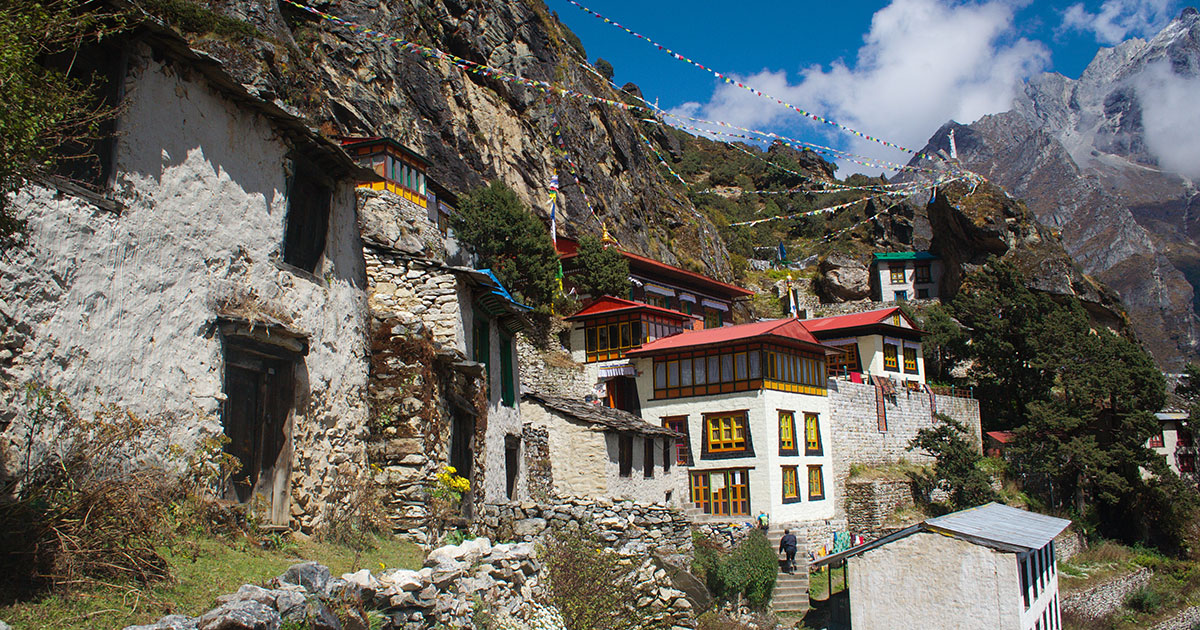
Mong La: A peaceful ridge village with exceptional sunrise views of Ama Dablam.
Pangboche: Home to one of the oldest monasteries in Khumbu, believed to house a relic of the “Yeti scalp.”
Phortse Thenga: Small settlement below Phortse, surrounded by rhododendron forests and waterfalls.
Mende Village: A quiet spot above Thame Valley, rarely visited by trekkers.
Less-Known But Iconic Phortse
Phortse doesn’t come across the leading destination of Everest region but it is truly worth visiting, especially if you are looking for authentic experience of Himalayas. It is haven for people who prefer peace over chaos of crowded trails.
And to top that off, the authentic experience of Sherpa culture and lifestyle is a must-see. You can closely see rich Sherpa architecture, visit monasteries adorned with quite stone path, spinning prayer wheels, and smiling Sherpas. It wouldn’t be wrong to say that Phortse village is a living museum of ancient Sherpa tradition.
Keep travelling to the heart of Himalayas, the Sherpa villages!
FAQs
Expand AllWhere is Phortse village located in Nepal?
Phortse Village is located in the Khumbu region of eastern Nepal, within the Sagarmatha National Park, at an altitude of about 3,810 meters (12,500 ft). It sits on a ridge above the Dudh Koshi River between Namche Bazaar and Pangboche
Why is Phortse called a hidden village?
Phortse is called a hidden village for being located away from the main hiking trail. Surrounded by cliffs and mountains, it remains peaceful and less commercialized, preserving its authentic Sherpa charm.
What ancient traditions are still practiced in Phortse?
Phortse villagers still follow Tibetan Buddhist rituals, mani stone carving, yak herding, and traditional Sherpa festivals. The residents practice ancient farming and herding as way of life.
How do locals preserve culture in Phortse?
Locals preserve culture through monastic education, festivals, and community rituals. The village also runs the Khumbu Climbing Center (KCC), which trains Sherpa climbers while promoting traditional values and sustainable tourism.
Is Phortse worth visiting compared to Namche?
Yes, Phortse is definitely worth visiting as it offers a more tranquil and authentic Sherpa experience. Visitors can enjoy panoramic views of Ama Dablam, Cho Oyu, and Thamserku, along with warm local hospitality.
What is unique about Phortse architecture?
Phortse homes are built with hand-cut stone walls and wooden beams, featuring small windows and flat or slanted roofs for insulation. The architecture follows traditional Sherpa craftsmanship, designed to withstand the harsh mountain climate.
How do I get to Phortse from Lukla?
From Lukla, you will have to trek via Namche Bazaar and Sanasa, then take the quieter trail toward Phortse Thenga and climb up to Phortse. The journey takes about 2–3 days depending on acclimatization stops.
Are there homestays in Phortse village?
Yes, several family-run homestays and lodges offer comfortable stays in Phortse. They provide traditional Sherpa meals, tea, and insight into local life and customs, making it ideal for cultural travelers.
What festivals are celebrated in Phortse?
Phortse celebrates Dumje, Mani Rimdu, and Losar (Tibetan New Year) with mask dances, prayers, and feasts. These festivals unite the community and honor Buddhist deities through music and rituals.
How has tourism affected Phortse traditions?
Tourism has brought better income and education, but locals strive to protect their customs by limiting over-commercialization. Many reinvest tourism earnings into cultural preservation and sustainable mountaineering training.
Can tourists participate in local rituals in Phortse?
Yes, tourists can participate in local rituals in Phortse as audience observing the ceremonies. But make sure to be respectful and do not intervene unless asked for.
What language do people speak in Phortse?
People primarily speak Sherpa language along with Nepali and basic English.
How old is the village of Phortse?
Phortse village is considered to be around 400 years old. Locals say the Sherpas who migrated from eastern Tibet founded the village and have been living for several generations.
What wildlife can you see near Phortse?
The forests around Phortse are home to Himalayan tahr, musk deer, pheasants, and snow pigeons. If lucky, you may even spot a snow leopard or red panda in the nearby Sagarmatha National Park area.
Are there schools or museums in Phortse?
Phortse has a primary school for local children and the Khumbu Climbing Center, which serves as both a training institute and cultural hub, preserving Sherpa mountaineering history.
How do Phortse villagers sustain their economy?
Most villagers rely on agriculture, livestock (yaks), and tourism. Many work as mountain guides, porters, or climbers on Everest expeditions, while others run lodges and tea houses.
What’s the best time to visit Phortse for culture?
The best time to visit Phortse is between April to May and October to November. You will be able to witness witness festivals like Dumje and Mani Rimdu.
Is Phortse on the Everest Base Camp trail?
Phortse is slightly off the main EBC trail, forming an alternate route between Namche and Pangboche. It’s quieter and scenic, often used by experienced trekkers seeking local immersion.
How is climate change affecting Phortse?
Rising temperatures and changing snowfall patterns are impacting farming, water sources, and glacial stability around Phortse. Thus, locals are adapting by diversifying livelihoods and promoting eco-friendly tourism.
Who are the famous climbers from Phortse?
The famous climbers from Phortse are Panuru Sherpa, Danuru Sheroa, Mingma Dorje Sherpa, Ngawang Tenjing Sherpa, Lhakpa Gyaljen Sherpa and more. These climbers have record breaking ascents of Everest.
Related blog posts
Discover a choice of tourist destinations loved by most of our visitors. Whether you're on a jungle safari to spot rare animals or walking through a world heritage site, these well-planned itineraries cover the major highlights of Nepal.
 call an expert at: