
Where is Mount Everest Located? Exploring the Geography and Significance

 Sujata Pokhrel
Where is Mount Everest located? It is a million-dollar question that every aspiring expediter searches for on the internet before planning an ascent of the world’s highest peak.
While some claim it is located in Nepal, the rest claim it is in the Tibetan province of China. However, the truth is that it’s actually spread across both countries, with its different faces turning towards different countries. This is why you can ascend to the peak from both sides.
Let’s dive deeper into the location of Mount Everest and its geographical significance.
Where is Mount Everest? Geographical Location
The mighty Mount Everest is located in the Mahalangur Range of the Himalayas. It spreads across the international border between Nepal and the Tibet Autonomous Region of China.
While the south side of Everest is located in the Nepalese side, the north side is situated in the Chinese side, making it a shared peak across the international border.
Nepal Side vs. China Side of Mount Everest
To be precise, Nepal has three different faces each with their own specification and challenges of climbing. While the South face sides towards Nepal, the North face and East face (also called Kangshung face) is both on the Tibetan side.
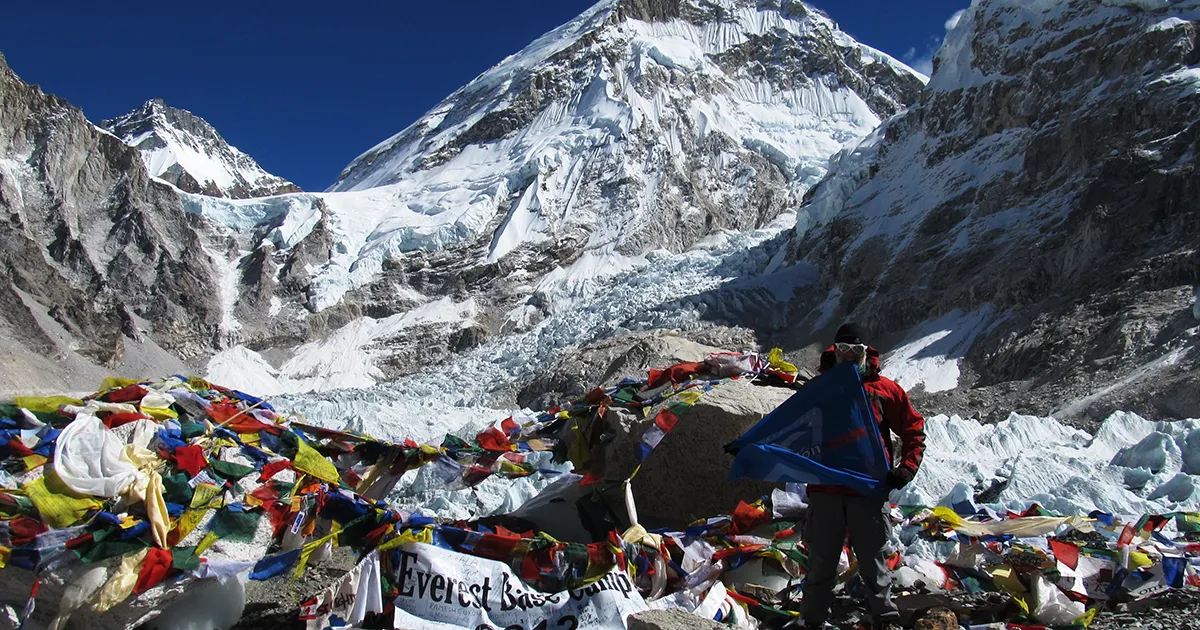
Whilst the legendary mountaineers have tried climbing on all three faces of Everest, the south face through Nepal is primarily preferred. And the reason behind it is the ease of climbing and also the better logistic, more hospitable accommodation, and comparatively more better weather conditions.
Besides, the terrains are comparably more difficult in China side despite the ease of transport to the base camp. The wind is more stronger and temperature can get extremely colder in the northern side of the peak. This is the reason why the summiteers prefer to climb the South face via Nepal.
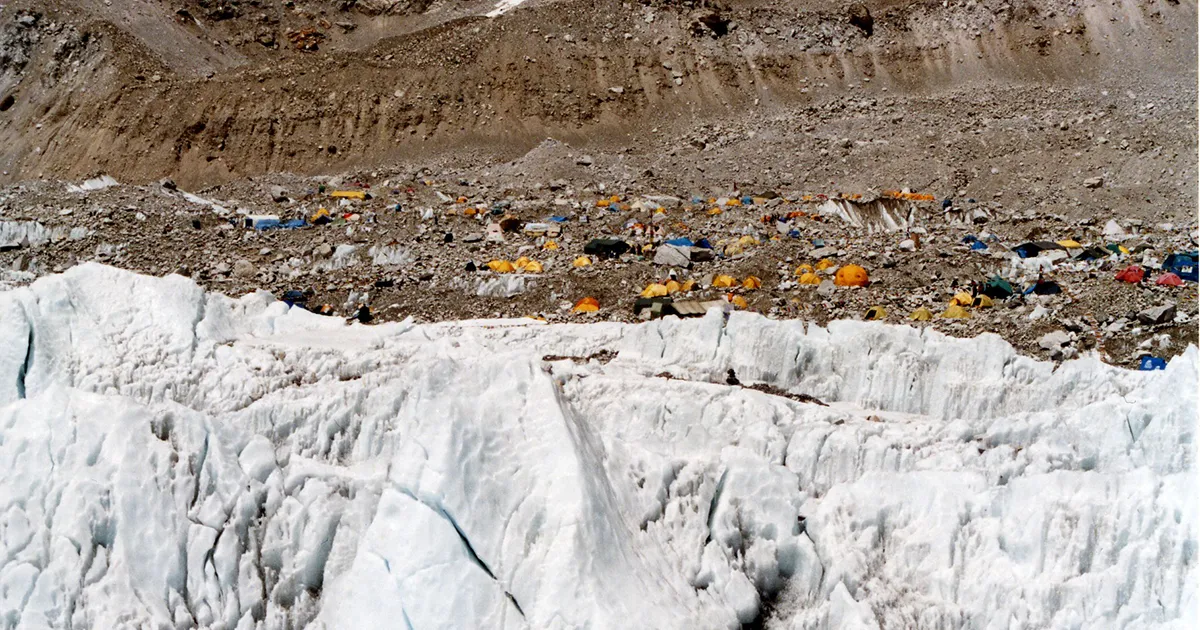
Not just the ascend of peak, even the base camp trek to Everest is more common in Nepal side. It is because the Tibetan side of base camp has road access and hence takes away the thrill of trekking to touch the foothills of mighty Everest.
Height and Structure of Everest
Fact About Everest
Height: 8848.86 meters (29031.7 feet) from sea level
Latitude: 27.9881°N
Longitude: 86.9250 °E
Mountain Range: Mahalangur Himal, Himalayas
North Base Camp: Located at 5150 meters (16,900 feet) in Tibet
South Base Camp: Located at 5364 meters (17, 598 feet) in Nepal
Structure of Mount Everest
Everest’s geological formation is equally fascinating as the peak ad its surrounding itself. The topmost soil of the peak is primarily composed of rocks that are made up of marine limestone and finely-grained sedimentary rock that is formed of mud, clay, and silt.
There marine sedimentary rocks are supposed to be a part of the ancient seas once upon a time. Thus, it is believed that these rocks that build up the geology of Everest was formed millions of years ago under the ancient ocean.
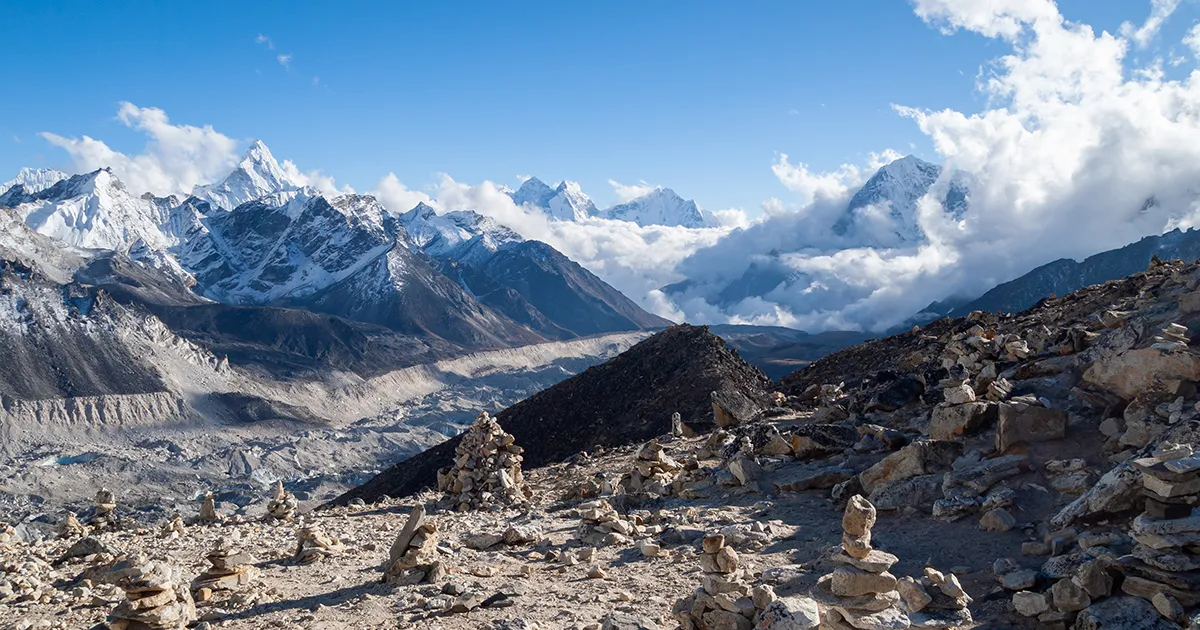
Coming to the middle sections, it primarily consists of marble and limestone layers. And the basement rocks primarily composes of metamorphic schist and gneiss.
Since the Indian and Eurasian tectonic plates that form the base of Himalayas are constantly on the move, the height of Everest keeps increasing continuously. It is believed to be rising 4 mm per year.
Significance of Everest
Besides being the highest peak of the world, Everest has a lot more significance than goes way beyond just its height. From being a political border to playing a role in climatic systems of the Himalayas, Everest carries a lot of importance.
Geographical Significance
The Everest serves as a natural boundary separating Nepal from the Tibet Autonomous region of China. In fact, the Himalayan ranges act as the Norther border that separates out the landlocked Nepal from the southern border of China. This boundary formed by Everest also serves as a common point where the Eurasian and Asian tectonic plates meet and often collide changing the structure of landmasses.
Besides, the geography of Everest also impacts the hydrological systems and controls the climatic conditions. Majority of rivers that flow through Nepal and India like Indus, Ganges, Dudh Koshi, Brahmaputra, Arun etc. originate from the glaciers and snowfields of Everest, supporting the life below on lower elevations.
Cultural Significance
Everest often is synonymously known as the home to Sherpas, the brave warriors of high mountains. Since most of these Everest residents follow Tibetan Buddhism, they worship Everest as the goddess mother of the world, “Chomolungma”.
Global Significance
For all the residents around the globe, Everest symbolizes as a testament of determination, endurance, and human resilience. Every year adventurers around the world visit the Everest region just to witness the grandeur of the peak. While it symbolizes a sense of achievement to trek just to the base camp, some seek to conquer the summit testing out their capability.

Besides, the mountain also serves as natural laboratory for studying the change in climate due to human intervention. The accelerated glacial melting, change in biological specimens of the region and more such changes clearly indicate how climate change is risking lives of people.
A Borderline Legend
Mount Everest isn’t just a mere peak that stands out being the tallest in the Himalayan range. It is a legendary borderline between two unique nations who serve the visitors coming to witness the majestic mountain serving as the roof of the world.
Whether you climb to summit to enjoy the view of world below or adore the peak itself from high-altitude valleys or plateaus of Tibet, the mountain appears the same.
Indifferent to the location, Everest always remains the most wanted destination for adventurers all around the globe. So next time someone asks you where Mount Everest is located, simply say in the hearts of adventurers.
Love adventuring!
FAQs
Expand AllWhere is Mount Everest located ?
Mount Everest is located on the border between Nepal and Tibet Autonomous region of China.
Where is Mount Everest base camp?
Mount Everest base camp is across China and Nepal as the mountain lies on both the countries. While the South base camp is in Nepal side and requires you to trek, the Northern base camp is in China side and is accessible to road transport.
Is Mount Everest in China?
Yes, Mount Everest is partially located in China. However, the northern side of the peak is in Nepal.
Is Mount Everest in India?
No, Mount Everest isn’t located in India even though the country shares its borders with both Nepal and China, the countries where Mount Everest is located.
Where is Mt Everest located on the map?
On map, Mount Everest is locate both in Nepal and China. In fact, the peak itself sits between Nepal and Tibet acting as a border between two countries.
In which country Mount Everest is located?
Mount Everest shares its location between two countries, Nepal and China. So it would only to be fair to say Mount Everest is located in both Nepal and Tiber Autonomous Region (TAR) of China.
Is Mount Everest the tallest mountain globally?
Yes, Mount Everest is the tallest mountain globally with an elevation of 8848.86 meters from sea-level.
How high is Mount Everest, and why is climbing so challenging?
Mount Everest rises 8,848.86 meters (29,031.7 feet) above sea level.
Climbing this peak is challenging due to extreme altitude, low oxygen levels (only one-third of sea level oxygen), freezing temperatures, and unpredictable weather. The risk of altitude sickness, frostbite, and avalanches adds to the difficulty.
What are the two main routes for reaching Mount Everest’s summit?
The two main routes for reaching Mount Everest summit are through the South Col route that falls in Nepal and the North Ridge route that falls in Tibet.
While the North Ridge route is technically harder, it is less crowded than the easier south face route.
How does altitude sickness affect climbers, and how can it be prevented?
Altitude sickness occurs when the body fails to adapt to low oxygen at high altitudes. It’s symptoms include headache, nausea, dizziness, and fatigue.
It can be prevented by following simple tips while climbing:
- Ascend slowly and take acclimatization days.
- Stay hydrated and avoid alcohol.
- Use medications like Diamox if recommended.
- Descend immediately if symptoms worsen.
What are the facts of Mt. Everest?
Some of the interesting facts about Everest are:
- Stands at an elevation of 8848.86 meters from sea level
- Lies on the border of Nepal and Tibet
- Falls on Mahalangur range of Himalayas.
- Was first ascended by Edmund Hillary and Tenzing Norgay Sherpa in 1953.
- It was formed by collision of Indian and Eurasian plates.
- Annually 600 to 800 adventures climb the peak.
What is the historical significance of Mount Everest?
Mount Everest symbolizes human endurance and exploration. The first successful ascent in 1953 by Sir Edmund Hillary (New Zealand) and Tenzing Norgay (Nepal) marked a milestone in mountaineering. Since then, it has become a global symbol of ambition, adventure, and international cooperation.
How to get to Mount Everest from other Himalayan countries?
To get to Mount Everest from Tibet, you will have to fly to Lhasa/ Shigatse then drive to North Base Camp and then begin climbing.
From rest of the Himalayan countries, you will have to follow standard route via Nepal which encompasses of a flight to Lukla then trek to Everest Base Camp and then the summit.
What is Mount Everest in multiple languages?
The name for Mount Everest in multiple languages are as following:
- Nepali- Sagarmatha (सगरमाथा)
- Tibetan- Chomolungma (ཇོ་མོ་གླང་མ
- Chinese (Mandarin)- 珠穆朗玛峰 (Zhūmùlǎngmǎ Fēng)
- Hindi- एवेरेस्ट पर्वत (Everest Parvat)
- German – Berg Everest
- French – Mont Everest
- Spanish- Monte Everest
What city is close to Mount Everest?
The capital of Nepal, Kathmandu is the closest city to Mount Everest.
Can you get to Everest from Tibet?
Yes, you can get to Everest from Tibet. The Tibet (China) side offers road access to Everest North Base Camp at 5,150 meters. Visitors need a Tibet Travel Permit and Alien Travel Permit issued by Chinese authorities.
Does Mount Everest lie in India?
No, Mount Everest doesn’t lie in India. In fact, it lies on the border between Nepal and Tibet (China), though India is close to the Himalayan range where Everest is located.
Which country is close to Mount Everest?
Since the peak is located in the border between Nepal and Tibet, these two countries are closer to it.
How many people have climbed Mount Everest and survived?
As of recent data, over 6,600 climbers have successfully summited Mount Everest, with more than 11,000 total summits recorded (some climbers multiple times). Around 300+ climbers have died attempting it, but the majority survive and safely return.
Is Mount Everest still growing?
Yes, Mount Everest is continuously growing. Due to the ongoing collision between the Indian and Eurasian tectonic plates, Mount Everest continues to rise by about 4 millimeters per year. This slow but steady growth shows that the Himalayas are geologically active and still evolving
How much does it cost to go to Mount Everest?
It can easily cost anything between USD 40000 to USD 65000 and more to summit the Mount Everest. However, to reach the base camp, you can do it easily in few thousand dollars depending on the customization of the package.
Related blog posts
Discover a choice of tourist destinations loved by most of our visitors. Whether you're on a jungle safari to spot rare animals or walking through a world heritage site, these well-planned itineraries cover the major highlights of Nepal.

 call an expert at: